


Third party visa services like iVisa promise to simplify one of the most stressful parts of international travel: dealing with government forms, confusing requirements, and tight deadlines. Used wisely, they can save time and reduce anxiety. Used blindly, they can also lead to overpaying for documents you could have obtained yourself for far less. Before you hand over your passport details and credit card, it is worth understanding how iVisa actually works in practice, what you are paying for, and where travelers sometimes run into trouble.
Get the latest updates straight to your inbox!
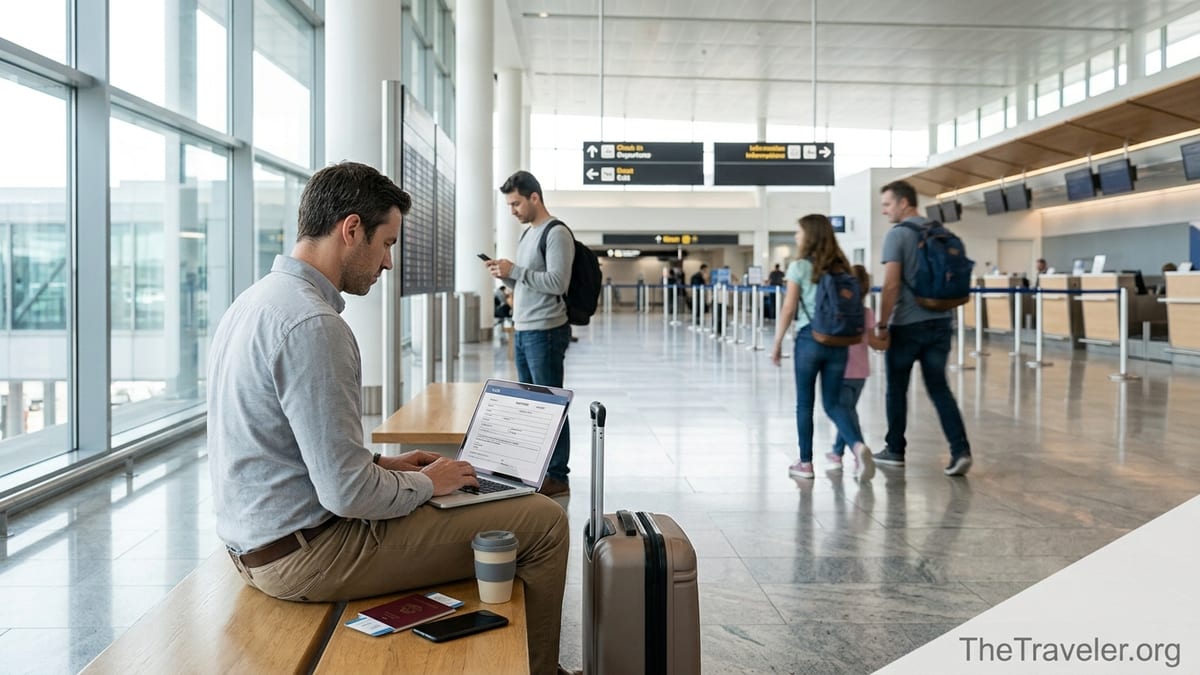
1. iVisa is a private service layered on top of government systems
iVisa is not a government agency and does not issue visas or travel authorizations itself. It acts as an intermediary: you provide your details through their platform, they check and organize your application, then submit it to the relevant government system or give you instructions for an in-person appointment. This is why, for example, a traveler applying for a Turkey eVisa through iVisa still ends up with a visa issued by the Turkish authorities, just delivered after iVisa has processed the request.
In practice, this means any approval or refusal ultimately comes from the destination country, not from iVisa. If an American traveler uses iVisa to get a Kenya eVisa and makes a mistake in their travel dates, the Kenyan government is the one that can refuse entry at the border, even if the document looks correct on the iVisa dashboard. Understanding this separation helps set realistic expectations: iVisa can guide, organize, and chase, but it cannot override government rules.
Because iVisa sits in the middle, communication may involve three layers when something goes wrong: you, iVisa support, and the immigration authority. For straightforward eVisas this rarely becomes complicated, but for more complex paper visas that require appointments and in-person biometrics, travelers should be prepared for additional back-and-forth. If you already find consular processes stressful, having a third party manage paperwork may feel reassuring, but it does not erase the government’s role or requirements.
Travelers who assume iVisa is an official channel sometimes only discover the truth when they compare prices or read the small print. Before paying for any service, look for clues such as “.gov” domains for official sites, and remember that iVisa operates as a commercial company, much like a visa agency on a city street.
2. Fees include both government charges and iVisa service costs
One of the first shocks many travelers report is discovering that the total they paid through iVisa is significantly higher than the underlying government fee. This is by design. The total price usually combines the official visa or travel authorization fee charged by the destination country with iVisa’s own service fee for handling the application. For example, in recent years the government fee for a Vietnam eVisa has often been under 30 US dollars, but a traveler using a third party might pay two to three times that amount once service and “rush” options are added.
On the positive side, iVisa has made efforts to explain that it is not the cheapest way to apply, but a guided one. The company’s own materials compare applying on a government site with paying extra for its platform, positioning the higher cost as payment for convenience. Reviews on consumer platforms reflect that trade-off clearly: many travelers praise how easy the process feels, while others criticize paying high fees for something the government offers directly at a much lower price.
For a real-world example, imagine a family of four applying for electronic travel authorizations to visit Canada. The official government fee per person is modest. Using iVisa, the final checkout amount will include those four government fees, plus four sets of service charges. What might have cost under 120 dollars if done directly could easily approach 250 dollars or more when processed through a third party. For some families, the time saved is worth it; for others, especially budget travelers, that difference might pay for a night or two of accommodation.
The key for travelers is to treat iVisa’s price like any other travel purchase. Before paying, quickly search for the official portal of the destination country and check the standard government fee. If the difference between that amount and the iVisa total seems uncomfortable, you may prefer to apply yourself. If you value a guided, hand-held experience, the extra charge may still feel like good value.
3. Processing speeds depend on governments, not just on iVisa
Many travelers are drawn to iVisa because of the promise of quick processing, including “rush” and “super rush” options for certain documents. It is important to understand what these upgrades actually buy you. iVisa can prioritize how quickly its own staff review and submit your file, or how fast automated systems check for missing details. It cannot force a government immigration system to move faster than its own published timelines.
Real experiences illustrate this clearly. Some travelers applying for straightforward eVisas, such as for Mexico or Egypt, report receiving approvals within a few hours after paying for expedited service. Others purchasing a rush option for countries with slower or less predictable systems, such as India or certain African destinations, find that their visa still takes days because the bottleneck is on the government side, not with iVisa.
This distinction matters most when time is tight. If you decide to visit a country that requires a visa just a few days before departure, paying extra to have iVisa review your documents the same day may increase your chances of success, but it is not a guarantee. Governments can suffer system outages, holiday delays, or sudden changes in rules. There are online reports of travelers paying high rush fees and still waiting far beyond the advertised window, only to be told that the hold-up sits with the embassy or immigration authority.
When you are planning, treat iVisa’s fastest option as a way to minimize delays on the application side, not as a magic key to approval. Apply as early as you reasonably can. If you are inside a 48-hour window for departure and your destination has a reputation for slow or erratic processing, understand that any third party, no matter how efficient, is working against the same hard limits.
4. iVisa’s subscription model can be useful but easy to overlook
In recent years iVisa has introduced subscription-based products marketed to frequent travelers, sometimes branded as plans that allow unlimited standard processing for certain documents. Instead of paying a separate standard service fee for each eVisa or health declaration, subscribers pay a recurring fee and then only cover government charges when they apply. For a traveler who hops between regions that rely heavily on eVisas, this can be a practical way to smooth costs over a year.
Consider a digital nomad who spends one month in Georgia, then three months in Southeast Asia, then a season in Latin America. Over a year they might apply for six or seven different electronic visas and entry forms. At full retail service fees, those applications can add up rapidly. With a subscription, the same traveler might pay a single up-front membership fee and then focus only on government costs each time, which could work out cheaper overall.
However, subscriptions also introduce new pitfalls. Some travelers sign up for a discounted plan while completing one urgent application and then forget to cancel. Months later, they notice renewal charges on their bank statement despite not having any trips planned. iVisa’s refund policy for subscriptions places clear conditions on when and how you can get your money back, often requiring that you have not used any benefits after renewal and that you act within a set number of days.
Before opting into any subscription, ask yourself realistically how many visa or travel document applications you expect over the next 6 to 12 months. If you are planning a single two-week vacation to one country, paying a one-time service fee is almost always simpler. Subscriptions start to make more sense for multi-leg itineraries or for families who expect to process multiple sets of documents together more than once in a year.
5. Refunds and complaints are possible, but tightly defined
Refunds are one of the biggest sources of frustration cited by unhappy customers. iVisa’s published policies distinguish between situations where your application has not yet been submitted to a government and those where it has. In many cases, if your file is still in internal processing and no government fee has been paid, you may be eligible for a partial or full refund of service charges. Once the application has been passed on to immigration authorities, however, refunds become much more limited.
A practical example helps clarify this. Imagine you start an application for a Saudi Arabia eVisa through iVisa, pay the fee, but realize within an hour that you misread the visa requirements and no longer need it because you qualify for visa-free transit. If iVisa has not yet forwarded your data or paid the government fee, there is a reasonable chance you can contact support quickly and secure a reversal of some or all of the service costs. If, on the other hand, the visa has already been issued by the Saudi system, neither iVisa nor the government will usually refund your payment, even if you never use the visa.
Refund rules also differ between one-off applications and subscriptions. For recurring plans, eligibility can hinge on whether you used any of the included benefits after renewal and whether you request cancellation within a short window. Travelers who only discover problems weeks or months later often find that their case falls outside the formal policy, even if they feel misled or disappointed.
Given this landscape, the safest strategy is to double-check your travel dates, passport details, and actual visa needs before placing an order. Immediately after paying, monitor confirmation emails and your account dashboard. If anything looks wrong, contact iVisa support through chat or email the same day. When you do ask for a refund, be specific about timelines and provide any documentation that backs up your case, such as screenshots of processing statuses or contradictory information from an embassy website.
6. Data security and document accuracy still require your attention
Using a third party like iVisa means sharing sensitive personal information, including passport scans, travel itineraries, and in some cases medical or employment details. The company publicly emphasizes its use of encryption and compliance practices, but no online system is entirely risk-free. Travelers should approach the process as they would any other serious financial or identity-related transaction.
Before you upload images of your passport, check that you are on the correct website or app and not a convincing imitation. Phishing clones of legitimate travel services do exist. Look for consistent branding, confirm that you reached the site by typing the address manually or via a trusted app store, and avoid following random links in search ads or social media messages claiming to represent iVisa support.
Even with a secure platform, document accuracy remains your responsibility. If you mistype your passport number or choose the wrong nationality in a drop-down menu, iVisa staff may not always catch the error before forwarding your details. There are online accounts of travelers arriving at an airport to discover that a single digit error in their passport or birthdate meant their eVisa did not match their documents, forcing them to buy another visa on arrival or abandon their itinerary.
To lower the risk, treat the review screens during an iVisa application as carefully as you would a tax return. Compare every field against your passport, check spelling of your name and birthplace, and verify that entry and exit dates align with your flights and accommodation bookings. A few extra minutes of concentration can save hours of stress later, whether you apply directly with a government or through an intermediary.
7. When iVisa is genuinely helpful, and when to apply yourself
Not every traveler or every trip benefits equally from using iVisa. The service tends to be most valuable in situations where government portals are confusing, unstable, or poorly translated, or where you are juggling multiple destinations with different requirements. For instance, a traveler planning a two-month overland route through East Africa might find it worthwhile to centralize multiple visa applications and health declarations in one dashboard, rather than navigating several outdated government sites, each with its own quirks.
Similarly, older travelers, people uncomfortable with online forms, or those with limited time before departure sometimes prefer to pay for a platform that walks them step by step through document uploads and eligibility questions. There are plenty of positive reports from travelers who say they would not have felt confident applying for visas to places like India, Saudi Arabia, or Russia without guided support, and for them the service fee felt comparable to paying a professional tax preparer.
On the other hand, for straightforward destinations with modern self-service systems, going directly to the government can be remarkably easy and much cheaper. Examples include popular eVisa and travel authorization programs for countries like New Zealand, many members of the European Union, and some Southeast Asian destinations. Travelers who take ten minutes to search for the official portal often discover that the entire application can be completed on a smartphone for a fraction of what third parties charge.
As a practical rule of thumb, start by searching for “[destination] official visa” and see whether there is a clear government-run site with instructions in a language you understand. If the process looks manageable, try completing the application yourself before paying an intermediary. If the site keeps crashing, demands uploads in obscure formats, or leaves you unsure which of several visa types to choose, that is the moment when a service like iVisa may earn its fee.
The Takeaway
Using iVisa is neither a guaranteed shortcut nor an automatic mistake. It is a trade-off between money and convenience, layered on top of an immigration system that still belongs entirely to each destination country. The company’s strengths lie in simplifying messy bureaucratic processes, centralizing multiple applications, and offering support to travelers who feel overwhelmed by online forms.
At the same time, common complaints about high prices, limited refunds, and misunderstandings around processing times underline the importance of going in with clear eyes. Before you pay, compare government fees with iVisa’s total cost, consider whether a subscription genuinely fits your travel pattern, and remember that no third party can promise faster decisions than a government is willing to make.
For many trips, particularly simple holidays to countries with good self-service portals, completing the visa yourself will be the cheapest and most direct option. For others, especially complex, multi-country itineraries or last-minute plans, paying extra for iVisa’s guidance can be a reasonable choice. The most important thing is that the decision is yours, made with a realistic understanding of what the service can and cannot do.
FAQ
Q1. Is iVisa a legitimate company or a scam?
iVisa is a long-established private visa assistance company used by many travelers worldwide. It is not a government service, and some users feel it is too expensive, but it is generally considered legitimate rather than an outright scam.
Q2. Why are iVisa prices higher than what friends say they paid for the same visa?
The total you pay through iVisa usually includes both the underlying government fee and iVisa’s own service fee for handling your application. If you apply directly on the government site, you only pay the government fee, which is why the cost can be significantly lower.
Q3. Can iVisa get my visa approved faster than applying on a government website?
iVisa can sometimes review and submit your documents more quickly than you might manage on your own, but it cannot control how fast a government processes your application. Any official decision time still depends on the destination country’s immigration system.
Q4. What happens if the government rejects my visa after I applied through iVisa?
If a government refuses your visa, the decision is usually final regardless of whether you applied through iVisa or directly. In most cases, government fees are not refundable, and iVisa’s own refund policy for service charges depends on the specific product and whether additional protection was purchased.
Q5. Is it safe to upload my passport and personal details to iVisa?
iVisa uses modern security practices to protect data, but sharing passport scans and personal information online always carries some risk. To reduce exposure, make sure you are on the official site or app, use secure networks, and avoid clicking on suspicious links that imitate the brand.
Q6. When is it worth paying for an iVisa subscription instead of one-off fees?
A subscription can make sense if you expect to apply for several eVisas or health declarations within a year, or if you are traveling as a group that will use the service multiple times. For a single short trip, one-off fees are usually simpler and cheaper.
Q7. Can I get a refund if I change my plans after applying through iVisa?
You may be able to get a refund of iVisa’s service fee if your application has not yet been submitted to the government, but once government processing has begun, refunds are usually limited. Always check the specific refund conditions for the product you are buying and act quickly if your plans change.
Q8. Will using iVisa improve my chances of visa approval?
iVisa can help reduce errors by guiding you through forms and checking that documents are complete, which can indirectly improve your chances of a smooth application. However, eligibility decisions rest entirely with the government, and no third party can guarantee approval.
Q9. How can I avoid overpaying when I only need a simple eVisa?
Before using iVisa, search for the official government portal for your destination and check the standard visa fee. If the site is clear and the process looks manageable, you can often apply yourself and pay only the government charge, using iVisa only if you run into problems.
Q10. What should I check before confirming an order with iVisa?
Before paying, confirm that you actually need a visa, compare the government fee with the total price, review every detail against your passport, and read the refund and processing time information carefully. Taking these steps helps you decide whether the service is worth the cost for your particular trip.