


More news on this day
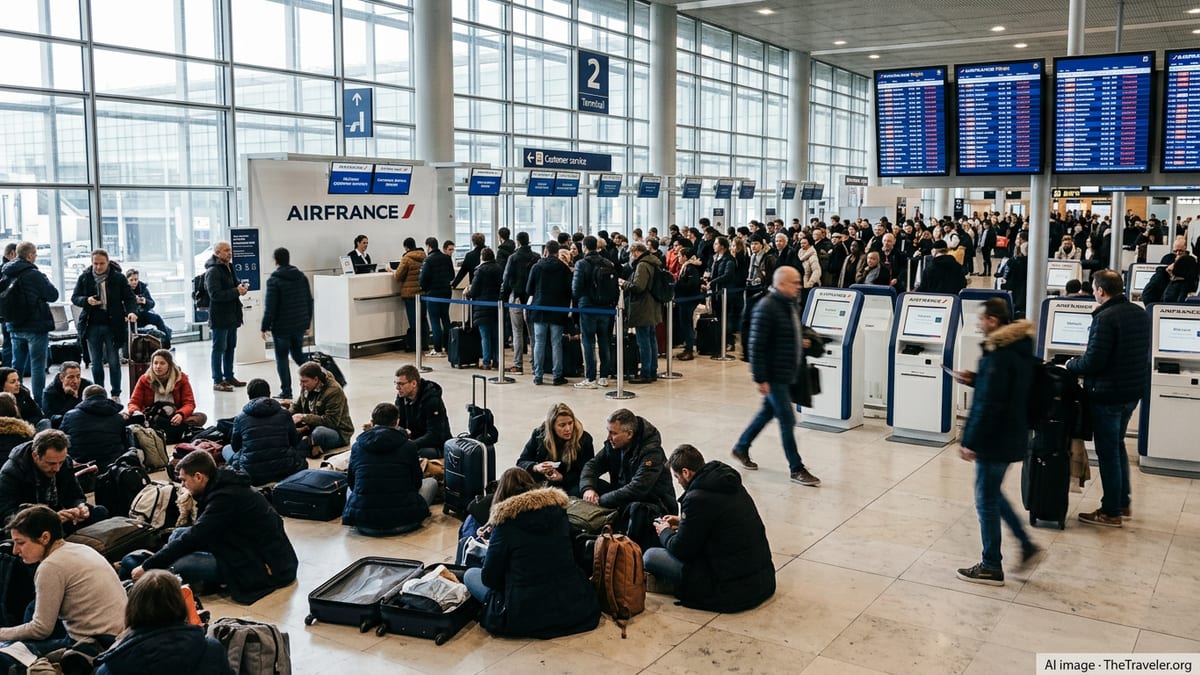
Air travel across Europe faced another difficult day as 99 flights were cancelled and 1,943 delayed, snarling operations for major carriers including Air France, Turkish Airlines, Qatar Airways and SAS at key hubs such as Paris, Munich and Vienna.
Get the latest news straight to your inbox!
Network Strain From Germany To The UK
Publicly available disruption trackers and aviation data providers indicate that the latest wave of irregular operations is concentrated in some of Europe’s busiest air corridors, with Germany, Austria, the United Kingdom, France, Denmark and Hungary among the hardest hit. Major hubs including Munich and Frankfurt in Germany, London’s airports in the UK and Paris Charles de Gaulle in France have reported elevated levels of late departures and arrivals, with knock on effects spreading across the continent.
The cancellation tally, though modest in absolute terms compared with past strike days, points to a network under strain. Recent reporting on June and early July operations shows several days with hundreds of cancellations and thousands of delays linked to a mix of weather disruption, capacity bottlenecks and aircraft positioning problems. Against that backdrop, 99 cancellations and nearly 2,000 delays in a single operating day are consistent with a pattern of repeated, medium scale disturbances rather than an isolated incident.
Germany has been a recurring focal point. Data published this week by specialist passenger rights firms highlights that Frankfurt, Munich and Berlin Brandenburg together have seen close to a thousand delays and dozens of cancellations in a single day of operations, placing pressure on airlines that use these airports as transfer hubs. When schedule buffers are thin, even a relatively small outage window can ripple into surrounding countries, notably Austria, Denmark and the UK.
In the UK and France, high traffic volumes at London Heathrow and Paris Charles de Gaulle have similarly amplified the impact of modest schedule interruptions. Flight monitoring snapshots for late June and early July show that once departure banks at those hubs begin to slide, reactionary delays can cascade onto evening and overnight rotations connecting to Scandinavia, Central Europe and long haul destinations in the Middle East and Asia.
Major Carriers Face Rolling Disruptions
Reports from delay analytics platforms show that full service network airlines are again bearing a significant share of the latest disruption. Air France, Lufthansa Group carriers, SAS, Turkish Airlines and Qatar Airways all appear in daily rankings of delayed and cancelled flights as they work through congested hubs and challenging weather patterns.
Air France in particular has featured prominently in recent daily overviews, with earlier episodes in April and June linking the carrier to clusters of cancellations and more than one hundred delayed departures in France and neighboring states on peak disruption days. While those events were larger in scale than the current tally of 99 cancellations, the airline’s network structure means even a moderate operational shock can lead to missed connections and extended rebookings for passengers transiting Paris.
Scandinavian operator SAS has also been exposed. Recent analysis of disruptions tied to Copenhagen Airport in Denmark pointed to a relatively small number of cancellations but a substantial number of delays, which then affected connecting flights across Northern and Central Europe. The new figures suggest that a similar dynamic is at play as SAS and other carriers manage tight turnarounds during the busy summer period.
For Turkish Airlines and Qatar Airways, the impact is often felt on European legs that connect to long haul services through Istanbul and Doha. Publicly available passenger accounts and schedule data indicate that when European feeder flights into hubs such as Paris, Munich or Vienna run late or are cancelled, onward itineraries to the Middle East, Africa and Asia can be disrupted, forcing airlines to rebook travelers and reposition aircraft on already full routes.
Weather, Capacity And Knock On Effects
The causes of the latest disruption appear to be multifaceted. Recent summaries from aviation consultancies and passenger claims services point to a combination of adverse weather over parts of Germany, France and the UK, airspace and runway capacity constraints, and the lingering effects of earlier storms and technical issues at major hubs. In several recent cases, thunderstorms over Central Europe and the western Mediterranean sharply reduced arrival and departure rates at Munich, Amsterdam and Barcelona, prompting hundreds of cancellations and more than a thousand delays across the wider network.
Even when the immediate trigger for cancellations lies outside an airline’s control, such as severe weather or air traffic flow restrictions, the structure of European airline networks can magnify the impact. Aircraft and crew arriving late into one hub are often scheduled to operate onward services within a short window. When those inbound flights are delayed or diverted, subsequent departures may also be delayed or cancelled, creating a chain reaction that can take days to unwind.
Capacity at key airports is another factor. Data from Eurocontrol and other regional aviation bodies over the past year has highlighted that traffic levels in Europe have returned to or exceeded pre pandemic volumes on many days, while staffing and infrastructure upgrades have not always kept pace. During peaks, relatively small operational hiccups can therefore cause queues on the ground and in the air, limiting the ability of airlines to recover from early morning disturbances.
The result is that disruption often appears as a patchwork of problems. A storm system over Germany or the North Sea may immediately affect departures in Munich or Hamburg, but the secondary effects repeatedly show up hours later in Paris, Vienna, Copenhagen or Budapest as aircraft and crews are out of position and connecting banks are no longer aligned to their planned schedules.
Airports From Paris To Vienna Under Pressure
Today’s figures highlight the role of several major hubs in shaping the passenger experience. Paris, Munich and Vienna feature prominently in disruption summaries spanning the past few weeks, often linked to broader European weather or airspace events. Earlier in the spring, strong winds and low cloud around Munich and Amsterdam led to more than five hundred cancellations and over a thousand delays in a single day, with Frankfurt and Vienna also reporting significant knock on effects.
At Paris Charles de Gaulle, Air France’s primary hub, published coverage in recent months has pointed to concentrated peaks of cancellations and delays during periods of bad weather or operational strain. When a large share of an airline’s daily departures and arrivals is funneled through a single airport, the chance that problems at that location will ripple to outstations in Austria, Denmark, Hungary or the UK is high.
Munich’s role as a key transfer point for southern Germany and Central Europe has made it a recurring hotspot. Disruption logs from late June and early July show days where the airport accounted for the highest cancellation total in Europe, with hundreds of delayed flights, as local weather combined with heavy schedules to push the system beyond its comfortable limits.
Vienna, while smaller than Paris or Munich, plays a similar role for Austria and parts of Eastern Europe. When Vienna International Airport experiences delays, they can quickly affect services into Hungary, the Balkans and onward connections to the Middle East. The latest cross continental snapshot, including the 1,943 delays recorded alongside 99 cancellations, suggests that Vienna has again been part of a chain of congested hubs dealing with tight turnarounds and limited slack in the system.
What Travelers Can Expect And Do Next
With European aviation operating close to full capacity in the peak summer period, analysts expect intermittent days of high disruption to continue. Traffic trend reports show daily movements in many weeks exceeding 31,000 flights across the continent, leaving limited room for airlines and airports to absorb weather or technical problems without visible impact on passengers.
Passenger rights organizations note that travelers on flights departing the European Union, the United Kingdom, Norway and several associated territories are covered by regulations that may provide compensation and care in cases of long delays or cancellations, depending on the cause and the length of the disruption. These rules can entitle passengers to meals, accommodation and in some cases financial compensation when flights are significantly delayed or cancelled for reasons within an airline’s control.
Industry guidance suggests that passengers with upcoming trips through hubs such as Paris, Munich, Vienna, Copenhagen or London should monitor flight status closely in the 24 to 48 hours before departure, allow extra time for connections and keep records of boarding passes and communications from airlines. While most flights continue to operate broadly on time, the recurring pattern of medium scale disruption days means that flexibility and preparedness remain important for anyone crossing Europe by air in the coming weeks.