


Vrbo can be a fantastic way to find a beach house in Gulf Shores, a ski condo in Breckenridge, or a family villa near Orlando. It can also turn into a stressful and expensive lesson if you rush through the booking process. With service fees, strict cancellation rules, and the reality of online rental scams, a little caution before you click “Book now” can save hundreds of dollars and a lot of frustration.
Get the latest updates straight to your inbox!
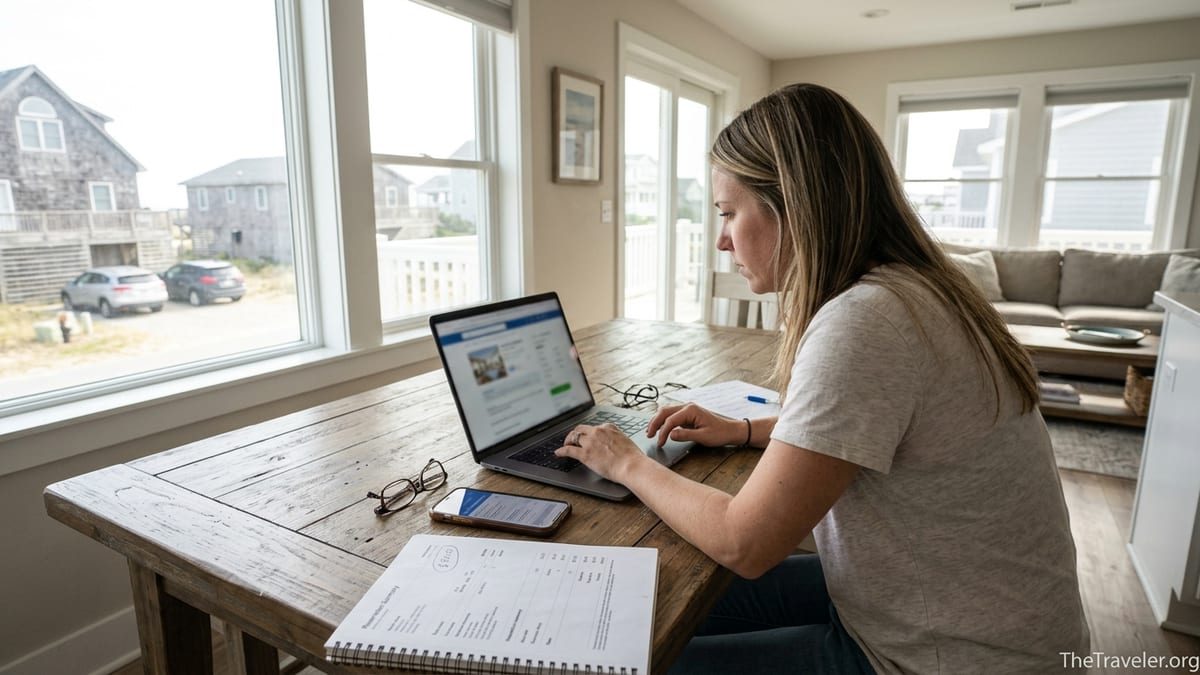
Not Reading the Full Price Breakdown Before You Commit
Many travelers focus on the nightly rate and overlook the full cost of a Vrbo stay. Vrbo adds a guest service fee as a percentage of the reservation total, and hosts can tack on cleaning fees, “resort” fees or pet charges. On a long weekend in Destin advertised at 250 dollars per night, the headline price for three nights looks like 750 dollars. By the time you add a 200 dollar cleaning fee, a pet fee, local occupancy taxes, and a Vrbo service fee that might run into the low hundreds on a high-value stay, the total can climb close to 1,200 dollars. If you only notice that number after you enter your card details, you can feel misled even if everything was disclosed.
Pricing confusion became even more common after recent updates to Vrbo’s fee and tax structures in different regions, and hosts using property-management software sometimes misconfigure which fees are collected upfront and which are due at check in. Travelers report arriving at mountain cabins in Colorado or lakeside homes in Michigan only to be told at the door about extra “linen” or “community” fees the host assumed Vrbo would collect in advance. Those surprises are harder to fight if you did not carefully review the “price details” line by line before confirming the booking.
Before you pay, always open the detailed cost breakdown Vrbo shows just above the “Book” button. Compare that final number with your nightly rate, and check whether any per-stay or per-guest fees look unusually high. For example, a 400 dollar “management fee” on a modest two-bedroom condo in Myrtle Beach should raise questions. If you are unsure about a fee, message the host through Vrbo and ask what it covers and whether there will be any additional charges on arrival. A legitimate host will answer clearly and will not insist that you pay anything in cash or via a separate transfer.
It is also smart to compare Vrbo’s final total to the same property on other major platforms or the property’s own website if it has one. You may find that the same Kauai condo costs 10 to 15 percent more on Vrbo once the service fee is included. That difference is not necessarily a reason to avoid Vrbo, especially if you prefer the interface or loyalty benefits in your region, but you should know exactly what you are paying for.
Skimming Over Cancellation Policies and Refund Rules
One of the most expensive mistakes on Vrbo is assuming you can cancel “like a hotel” when plans change. Vrbo allows hosts to choose from several cancellation policy types, ranging from relaxed to very strict. A moderate policy might offer a full refund up to 30 days before check in and a 50 percent refund up to two weeks before arrival. A firm or strict policy may offer no refund at all if you cancel inside 60 days. In some cases, hosts set seasonal policies, making summer week stays at a beach house much less flexible than winter weekends.
Travelers frequently get caught when life events collide with rigid policies. Imagine a family that books a five-night stay at a Cape Cod cottage in July for 3,000 dollars. The host has selected a strict policy with no refund within 60 days. When one parent is forced to change vacation dates for work in late May, Vrbo’s system shows “no refund” because they are now inside the deadline. Even if the host rebooks those July dates at a higher rate, they are not obligated to refund the original guest. Vrbo’s terms make clear that the agreement and cancellation terms are primarily between host and traveler, and the platform will generally side with the written policy.
Another common misunderstanding is thinking the Vrbo service fee will always be refunded even when the rental cost is not. In practice, the service fee is typically refunded only when the booking is canceled within the window that gives a full refund under the property’s policy. Cancel after that, and you can lose the fee as well as most or all of the rental amount. For a high-end villa in Napa or Maui where the total bill reaches 8,000 or 10,000 dollars, that service fee alone can be a painful loss if you pull out a few weeks before arrival.
Before you book, click through to the detailed cancellation policy and read the date thresholds carefully. Note the exact last day to cancel for a full or partial refund and put it on your calendar. If your plans are not fully locked in, favor listings with relaxed or moderate policies, even if the nightly rate is slightly higher. When you are booking for events like weddings, sports tournaments, or cruises that could move or be canceled, it is particularly important not to gamble on a nonrefundable Vrbo stay just to save a small amount upfront.
Ignoring Red Flags in Photos, Reviews, and Host Behavior
Vrbo itself is a legitimate platform, but like any large marketplace, it is not free of bad actors or low-quality listings. Travelers who rush through the vetting process are more likely to end up in properties that are misrepresented, poorly maintained, or in rare but serious cases outright fake. Recent complaints have described situations where guests arrived at an address in suburban Florida or coastal California only to find that the home was owner-occupied or had been sold years earlier, with the unsuspecting owner fielding repeated knocks on the door from confused Vrbo customers.
Scam listings often reuse photos from real estate sites and list prices far below market for peak periods. One traveler looking at a four-bedroom house near Disneyland for a July stay noticed that the interior photos matched a current real estate listing and that the Vrbo profile had no verified reviews. After calling the real estate agent, they learned the home was not legally available as a short term rental and that multiple parties had already reported similar fake ads. Taking ten extra minutes to search property photos or addresses can expose these copy-and-paste scams before any money changes hands.
Even when a listing is genuine, ignoring signals in the reviews can set you up for disappointment. Pay attention to patterns rather than isolated complaints. If several guests over the past year mention that air conditioning in a Phoenix condo did not work properly in summer, or that a Paris apartment faces an extremely noisy bar with music until 2 a.m., you should assume those issues are ongoing. Also watch for clusters of very short, overly enthusiastic reviews published within days of each other that do not mention concrete details. That kind of pattern can indicate incentivized or inauthentic feedback.
Host behavior before booking is another important clue. Be wary of anyone who pushes you to take communication off the Vrbo platform, asks you to pay by bank transfer, or offers a “special discount” if you send funds directly. Recent scam patterns documented by consumer protection agencies highlight fake “host” messages directing guests to call unofficial customer service numbers or click payment links sent by text. Legitimate Vrbo communication will route you through your account and secure payment flow, and you should not need to send your credit card details or passport images over email to book.
Overlooking House Rules, Extra Deposits, and Local Regulations
Another easily avoidable frustration comes from not reading the house rules and deposit details before booking. Vrbo allows hosts to specify quiet hours, maximum occupancy, age minimums for the primary renter, and restrictions on events. If you reserve a condo in Miami Beach for a bachelorette weekend without noticing a strict “no parties, no visitors” rule, the building’s security team may shut down your gathering on the first night and the host might retain part or all of your security deposit. In some buildings, repeated rule violations can even lead to eviction by building management, leaving you scrambling for last-minute hotel rooms.
Damage deposits and hold amounts also vary widely. While many suburban homes in places like Orlando or Phoenix set deposits between 300 and 500 dollars, some luxury villas in Europe or island destinations may list deposits in the thousands. Travelers have recently shared examples of European listings asking for 5,000 or 10,000 euros as a security deposit, which can mean a significant hold on your credit card. If you budget tightly and count on your full card limit for other expenses on a trip, such large holds can interfere with rental cars or in-destination spending.
Local rules can further complicate things. Popular destinations including New York City, Honolulu, and certain California beach towns have introduced strict regulations on short term rentals. Book a listing that does not comply with local law and you could show up to find the property shut down following an enforcement sweep. In some cases, city inspectors have issued fines directly to travelers who knowingly stayed in illegal rentals, although hosts are usually the primary target. If a price in a tightly regulated city seems too good to be true compared with nearby hotels, treat that as a sign to check how long the listing has been on Vrbo and whether it has a solid record of recent stays.
Before committing, read the house rules section carefully and think about how your group actually plans to use the space. If you are traveling with toddlers, look for mentions of stair gates, pool fencing, and whether breakable decor is scattered at low levels. If you are a remote worker, search for reviews mentioning Wi Fi speed and whether the host allows work equipment and video calls. Ask about any extra charges for things like pool heating in winter, parking permits, or late check out to avoid unexpected deductions from your deposit after you leave.
Failing to Cross Check Location, Access, and Amenities
Photos can be deceiving, and not just in terms of decor. Vrbo listings may describe a property as “steps from the beach” or “short walk to downtown,” but those phrases are not standardized. Travelers frequently book based on the promise of proximity, then arrive to discover a 20 minute uphill walk to the nearest tram stop or a busy highway between the house and the water. In sprawling destinations like Orlando or the Phoenix metro area, a rental described as “near the parks” may actually be a 35 minute drive without traffic, and much longer at peak times.
Before booking, use the approximate map pin and written description to estimate real travel times. Read reviews for mentions of how long it took guests to reach Disneyland gates, the Las Vegas Strip, or central Rome. If a listing simply says “great location” without specifics and has no guest comments about walking times, message the host to ask for actual distances in miles or minutes. If they avoid the question or answer vaguely, reconsider. You can also search the neighborhood name to check whether it aligns with your expectations on safety, noise, and available services like grocery stores.
Access logistics are just as important as geography. Some historic buildings in European city centers have no elevator, and many mountain cabins are reached via steep gravel driveways that can become hazardous after snow or heavy rain. Guests with mobility issues have reported booking charming second floor apartments in Lisbon or Barcelona only to find narrow staircases that are difficult or impossible to navigate. Similarly, travelers who plan to arrive late at night sometimes discover that key pickup requires meeting the host in person during limited hours or traveling to an off site office across town.
Pay close attention to check in instructions and any mention of self check in, lockboxes, or smart locks. If the listing refers to “complex” or “special” access, ask for clarification and consider whether that fits your arrival time and comfort level. Confirm critical amenities for your group like air conditioning, parking, laundry, and reliable internet instead of assuming they are included. In parts of coastal Northern California and the Pacific Northwest, for example, some older homes still lack full air conditioning, which can become uncomfortable during increasingly frequent summer heat waves.
Booking Without Protecting Yourself Financially
Even the most thorough traveler cannot eliminate every risk, but you can reduce the financial impact of problems by planning ahead. Many Vrbo guests assume that their credit card protections or travel insurance will automatically cover nonrefundable rentals, only to discover later that coverage is narrower than expected. Some basic travel insurance policies, for instance, only reimburse prepaid, nonrefundable costs if you cancel for specific covered reasons such as illness, injury, or severe weather that makes the property inaccessible. Work schedule changes, minor sickness, or fear of storms usually do not qualify.
When you are booking a high value stay, such as a 7,000 dollar ski chalet in Utah or a 4,000 dollar beachfront villa in Mexico for a milestone birthday, it is worth calling your credit card issuer or insurer before you book. Ask whether Vrbo stays are treated the same as hotels, what documentation you would need in a dispute, and whether they will cover both the rental amount and the platform service fee if a host fails to provide the property as described. In some reports, guests have found that disputes involving vacation rentals are more complex because payments may be processed through intermediaries and hosts in different jurisdictions.
It is equally important to keep all communication and payments inside Vrbo’s system. Scammers often try to lure guests into paying by wire transfer or peer to peer payment app, promising a discount in exchange for saving on platform fees. Once you send money outside the official checkout flow, Vrbo’s customer support will typically consider the transaction outside their protection programs. If a listing or host suggests any alternative payment method, treat that as a clear sign to walk away.
Finally, consider whether paying slightly more for a property with a strong history of recent five star reviews is worth the peace of mind compared to a cheaper but untested listing. New listings pop up all the time, but if you are putting thousands of dollars on the line for a once a year family reunion, choosing a place that has hosted dozens of guests in the past 12 months with consistent praise for communication and cleanliness is a simple way to reduce risk.
The Takeaway
Vrbo can deliver memorable stays in places that traditional hotels rarely reach, from secluded lake cabins in Minnesota to multi family homes on the Carolina coast. At the same time, the platform shifts more responsibility onto travelers to understand pricing, policies, and property quality before booking. Skipping those checks is where the most expensive mistakes happen.
Slow down before you confirm any reservation. Open the full price breakdown, scrutinize the cancellation and house rules, study photos and reviews for inconsistencies, and verify that the location and access fit your real world plans. Keep every message and payment on the platform and think about how to protect yourself with the right card or insurance when putting down large sums.
A few extra minutes of homework can be the difference between arriving to a clean, accurately described home that anchors a great trip and arriving to a locked door, a surprise fee, or a nonrefundable bill for a vacation you cannot take. With eyes open and expectations grounded in the details, Vrbo can be a useful tool instead of a costly gamble.
FAQ
Q1. Is Vrbo safe to use compared with booking a hotel?
Vrbo is a legitimate platform, but the experience depends heavily on individual hosts and listings. Hotels are generally more standardized. On Vrbo you need to read reviews carefully, verify details, and keep all communication and payments on the platform to reduce risk.
Q2. How can I tell if a Vrbo listing might be a scam?
Watch for copied photos from real estate sites, prices that are dramatically below similar properties, a lack of detailed reviews, or hosts who want to move communication or payment off Vrbo. If anything feels off, step back and choose a better documented listing.
Q3. Does Vrbo refund its service fee if I cancel?
Vrbo usually refunds the service fee only when you cancel within the timeframe that qualifies for a full refund under the property’s cancellation policy. If you cancel later, you may lose both the rental amount and the service fee.
Q4. What kind of cancellation policy should I look for?
If your plans are uncertain, favor listings with relaxed or moderate policies that allow refunds closer to check in. Strict or firm policies can mean losing most or all of your money if you cancel inside the deadline, even for understandable personal reasons.
Q5. Are the cleaning and other fees on Vrbo negotiable?
Hosts set their own fees and some may be willing to adjust them for longer stays or repeat guests, but many will not. You should treat the fee breakdown you see at checkout as the price you will pay and only book if you are comfortable with that total.
Q6. What should I check in the house rules before booking?
Look closely at quiet hours, visitor and party rules, pet policies, smoking restrictions, and any age minimums. Make sure those rules fit how your group actually plans to use the property so you do not risk deposit deductions or eviction.
Q7. How important are reviews when choosing a Vrbo?
Reviews are one of your best tools. Focus on recent feedback and patterns. Consistent comments about cleanliness, communication, location accuracy, and working amenities are a good sign. Repeated mentions of the same problems or vague, generic praise without details are red flags.
Q8. Should I buy travel insurance for a Vrbo stay?
Travel insurance can be worthwhile for expensive, nonrefundable stays, but you need to read the policy carefully. Many plans only reimburse for specific covered reasons and may not cover changing your mind or work schedule shifts.
Q9. What if a host asks me to cancel my reservation so they are not penalized?
Be cautious. If you cancel, you could lose protection and may not be entitled to a full refund. Ask the host to cancel on their side or contact Vrbo support directly and get any resolution in writing through the platform.
Q10. How early should I contact the host with questions before booking?
Reach out as soon as you notice anything unclear about fees, rules, location, access, or amenities. A responsive, transparent host who answers detailed questions before booking is usually a better bet than one who replies slowly or avoids specifics.