


More news on this day
Turkish Airlines is moving to expand cargo capacity from Spain, Italy and Germany into Brussels Airport, aligning its fast-growing freight business with a wave of new routes by European and Gulf carriers that are transforming the Belgian gateway into a more sustainable cargo hub and feeding a broader tourism upswing.
Get the latest news straight to your inbox!
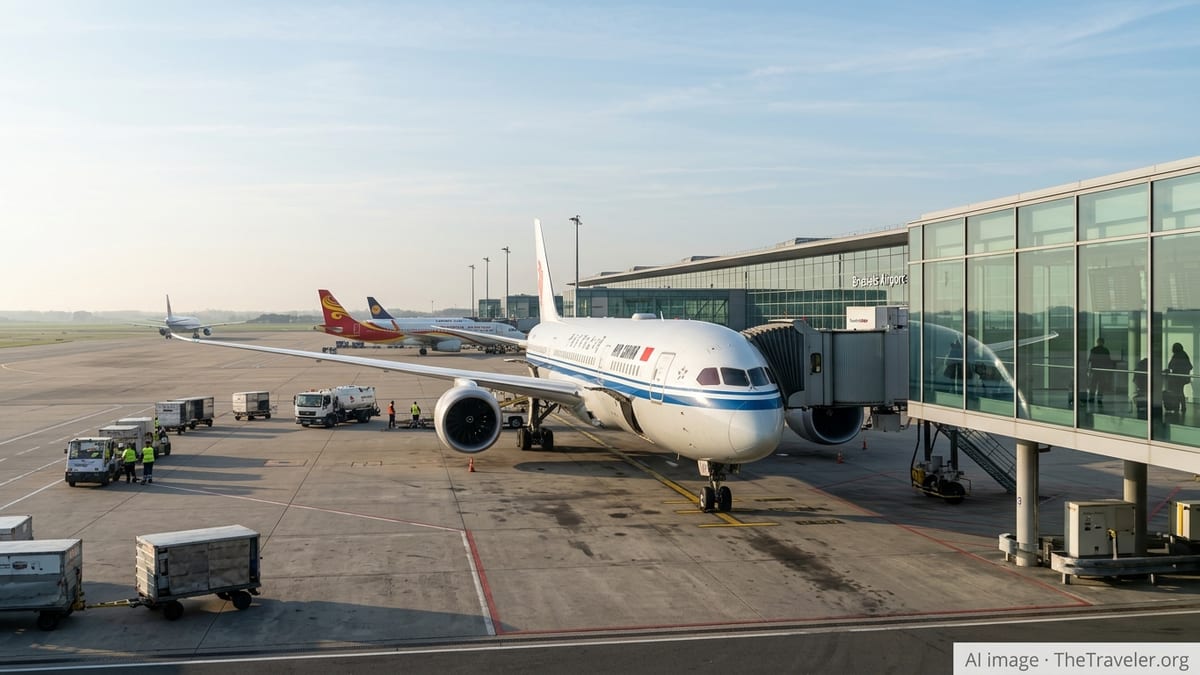
Brussels Airport Emerges as a Sustainable Cargo Pivot
Brussels Airport has been steadily positioning itself as a preferred European node for freight, combining traditional integrator operations with an expanding portfolio of bellyhold cargo on passenger flights. Airport data for 2024 indicate cargo volumes around three quarters of a million tonnes, reflecting an increase on the previous year and underscoring Brussels’ role as a logistics engine for Belgium’s export-driven economy.
The airport’s growth strategy is closely tied to sustainability initiatives, notably a multi‑year program to incentivise the use of sustainable aviation fuel on both passenger and cargo flights. Publicly available information shows that the scheme is open to all airlines operating from Brussels, rewarding carriers that link verifiable SAF purchases to departures from the hub. The airport has also leveraged its access to the Central Europe Pipeline System to simplify large-scale SAF deliveries.
In parallel, logistics operators are deepening their presence. Recent coverage of the express sector highlights arrangements for tens of thousands of tonnes of SAF to be delivered into Brussels annually, signalling that air cargo is taking the lead in early adoption of lower-carbon fuels. For airlines such as Turkish Airlines, whose cargo arm already markets itself on energy-efficient infrastructure at its Istanbul hub, Brussels offers a natural counterpart on the western edge of its network.
Turkish Airlines Joins a High-Profile Cargo Lineup
Turkish Airlines’ decision to reinforce its cargo links from Spain, Italy and Germany into Brussels places it alongside a roster of major players already funnelling freight through the Belgian capital. Lufthansa, Iberia, Air France, KLM, Emirates and United all operate significant passenger services into Brussels that support belly cargo flows, while several maintain dedicated freighter networks across Western Europe.
Industry data show that Turkish Airlines has been growing both passenger and cargo activity at a rapid pace, with transfer traffic through Istanbul recording double-digit increases and cargo and mail volumes surpassing two million tonnes in 2025. Its cargo division, operating under the Turkish Cargo brand from the SMARTIST facility at Istanbul Airport, now combines widebody freighters with a dense passenger network linking Southern and Central Europe with Africa, the Middle East and Asia.
By strengthening services from key Spanish, Italian and German gateways into Brussels, Turkish Airlines effectively plugs more of Southern Europe directly into its intercontinental freight grid. Publicly available schedules and route announcements point to a steady rise in services from cities such as Madrid, Barcelona, Milan, Rome, Munich and Frankfurt that can support higher cargo loads into Belgium, complementing existing flows operated by its European and Gulf rivals.
Southern Europe Feeds a Tourism and Trade Upswing
The shift is unfolding against a backdrop of robust demand from Southern Europe. Figures from European air traffic reports for late 2024 highlight that Spain and Italy are among the fastest-growing major aviation markets on the continent, with passenger volumes expanding at stronger rates than many northern peers. Germany, while growing at a slower pace, still contributes a substantial share of intra-European and long-haul traffic.
For Brussels, this momentum has translated into rising visitor numbers and increased seat capacity from the Iberian and Italian peninsulas. Tourism bodies in the Belgian capital have reported intensified promotion campaigns in Spain, Italy and Germany, often developed in partnership with airlines and the airport to spotlight Brussels as both a city-break destination and a convenient transfer point.
As carriers upgauge aircraft and add frequencies on leisure-heavy routes, the additional belly space is being put to commercial use. Fresh produce, fashion, pharmaceuticals and high-value industrial components moving from Southern European production clusters now have more options to reach Northern Europe and beyond via Brussels. The result is a virtuous circle in which tourist demand justifies more flying, while cargo revenues help underpin route economics during shoulder seasons.
Germany’s Industrial Base Strengthens the Corridor
Germany’s role in this emerging network is primarily industrial. As one of Europe’s largest exporters of machinery, automotive components and chemicals, the country depends on resilient airfreight corridors to supplement seaborne trade. Airlines such as Lufthansa, Turkish Airlines and United already treat cities like Frankfurt, Munich and Düsseldorf as core cargo gateways, deploying widebody passenger aircraft that offer substantial lower-deck capacity.
Brussels’ proximity to major German manufacturing regions allows it to act as a secondary hub, relieving pressure on congested airports while shortening the trucking legs that connect factories to global markets. According to logistics sector reports, forwarders increasingly pair overnight road feeder services from Germany with early-morning departures from Brussels to intercontinental destinations, taking advantage of the airport’s slot availability and specialised handling facilities.
As Turkish Airlines reinforces its links between German airports and Brussels, the carrier can capture time-sensitive shipments that benefit from Istanbul’s geographic reach into the Middle East, South Asia and East Africa. This gives German exporters additional routing flexibility, particularly when capacity is tight or when specific markets are better served via Turkey than through traditional Western European hubs.
Brussels Bets on Green Growth to Stay Competitive
The acceleration of cargo activity has sharpened the focus on how Brussels can grow while aligning with European climate objectives. Regulatory initiatives at EU level, including mandates to increase the share of SAF in jet fuel from 2025 onward, are pushing airports and airlines to adapt operations and investment plans. Brussels has responded by embedding sustainability into its cargo strategy, viewing lower-carbon logistics as a competitive differentiator rather than a burden.
Airport documentation describes targets for increasing the proportion of SAF used on-site by the middle of the decade and highlights collaborations with fuel suppliers to ensure reliable volumes. The SAF incentive program, scheduled to run through 2025, is designed to narrow the cost gap between conventional jet fuel and sustainable alternatives, making it more attractive for carriers that base parts of their network planning on environmental performance.
For airlines such as Turkish Airlines, which promote modern fleets and certified green cargo facilities, aligning with Brussels’ sustainable hub ambitions can reinforce brand positioning with shippers and passengers who are increasingly attentive to climate impact. As more carriers from Spain, Italy and Germany channel both tourists and freight through Brussels under similar frameworks, the airport’s bet on green growth appears set to shape the next phase of competition among Europe’s major hubs.