


More news on this day
Travel across East Asia is facing fresh disruption as Shenzhen Bao’an International Airport records three flight cancellations and more than one hundred delays, affecting services operated by major Chinese carriers and impacting connections across China, South Korea and neighboring markets.
Get the latest news straight to your inbox!
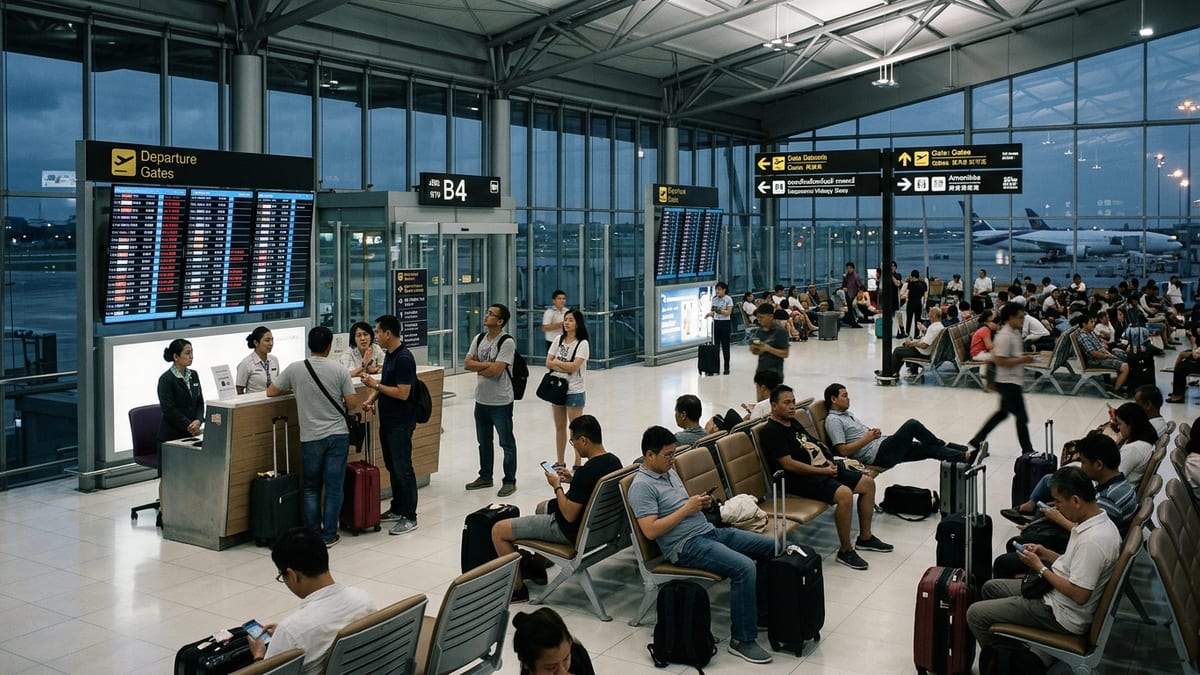
Delays Mount at Key Southern China Hub
Shenzhen Bao’an International Airport, one of mainland China’s busiest aviation hubs, has seen disruption intensify over the first weekend of June 2026. Publicly available data from airport tracking platforms and airline status pages indicate a combined total of three cancellations and at least 108 delayed departures and arrivals within a recent 24 hour period, disrupting domestic and short haul international traffic.
The affected flights are concentrated among Chinese full service operators that use Shenzhen as a hub or focus city, including Shenzhen Airlines, China Southern, China Eastern, Air China, Hainan Airlines and XiamenAir. Additional regional partners and codeshare services have also been caught in the congestion, creating knock on effects for itineraries that rely on tight connections through Shenzhen.
Operational statistics show Shenzhen handled more than 52 million passengers in 2023, ranking among the top airports in mainland China by traffic. That scale means even a relatively small number of cancellations and a triple digit tally of delays can quickly ripple through the network, particularly on high frequency routes to Beijing, Shanghai, Chengdu and other large metropolitan centers.
Flight history tools tracking routes such as Shenzhen to Haikou and Shenzhen to Hanoi in early June highlight a pattern of late departures and extended arrival delays, with some services operating more than two hours behind schedule. While the overall on time performance rating for the airport remains relatively strong, the latest cluster of disruptions underscores the sensitivity of the system to short term strain.
Impact on Routes Across China and Northeast Asia
The new wave of delays has been most visible on core domestic corridors linking Shenzhen with Beijing, Shanghai, Wuhan, Nanjing and other major cities, where China Southern, China Eastern, Air China and Shenzhen Airlines operate dense schedules. Real time monitoring on several of these routes over recent days shows flights departing well behind timetable, compressing turnaround times and reducing flexibility for carriers to recover from further irregular operations.
Short haul international services have also felt the impact, particularly flights connecting Shenzhen to Southeast Asian gateways such as Hanoi and Ho Chi Minh City. Status updates for selected China Southern and Air China flights on June 5 and June 6 point to pushed back departure slots and revised arrival estimates, suggesting pressure on runway and airspace capacity as carriers work through backlogs.
The disruption is complicating travel plans for passengers bound for South Korea and Japan as well. Shenzhen functions as a key transfer point for itineraries linking smaller Chinese cities to Seoul, Busan and Tokyo via domestic legs into the southern hub. When those feeder flights depart late or miss their scheduled banks, onward connections become more difficult to secure on the same day, especially during peak hours.
Travel discussion forums and user generated updates in recent weeks have reflected growing frustration with schedule changes and last minute rebookings on Chinese carriers, including Shenzhen based airlines and their partners. While comments point out that such problems are not unique to China, they underline the particular challenges that arise when disruption hits a high growth hub with limited slack in the timetable.
Multiple Carriers, Shared Operational Pressures
The current pattern of irregular operations at Shenzhen involves a broad mix of airlines rather than a single operator facing an isolated issue. Shenzhen Airlines and China Southern remain the most visible players given their hub presence, but China Eastern, Air China, Hainan Airlines and XiamenAir all appear in delay statistics and flight status reports for the first days of June.
Aviation analysts note that China’s large network carriers share similar exposure to congestion, weather and air traffic management constraints at major coastal airports. Timetables built around tight rotations and heavy utilization of narrow body fleets mean that an initial delay in one city can cascade through several subsequent legs, leaving passengers far from the original point of disruption.
Historic delay research for Chinese airlines at major hubs shows that average departure and arrival delays in the range of 15 to 30 minutes are not uncommon for some carriers, with occasional spikes into much higher territory when conditions deteriorate. Recent anecdotal accounts from travelers flying with China Southern, China Eastern and XiamenAir point to overnight misconnects, forced stopovers and same day rebookings when storms, crew rest rules or airspace restrictions intersect with already busy schedules.
At Shenzhen, the presence of multiple hub and focus carriers amplifies the effect. When one airline adjusts its operations in response to a delay, it can trigger gate changes, towing moves and runway slot reshuffles that affect rivals operating in the same banks. The result is often a sequence of mid range delays instead of a small number of heavily affected flights.
Underlying Drivers: Weather, Congestion and Network Growth
Available meteorological data for Shenzhen on June 6 indicate overcast skies, high humidity and warm overnight temperatures, but no extreme weather event large enough on its own to explain the spike in delays and limited cancellations. Industry observers instead point to a combination of seasonal storms, air traffic control measures and the sheer volume of flights moving through China’s coastal airspace as likely contributing factors.
In recent years, the rapid rebound of air travel within China, together with expanding international links from hubs like Shenzhen, has increased pressure on airport infrastructure and en route corridors. While runway capacity and terminal facilities have been upgraded, growth in passenger numbers and aircraft movements has been strong enough that short disruptions can still create long recovery times.
Published analyses of delay patterns at major Chinese airports have highlighted structural factors such as constrained airspace, military no fly zones and complex sequencing of arrivals and departures as persistent challenges. These constraints can force airlines and controllers to hold aircraft on the ground or in the air even when local weather at the destination appears manageable from a passenger’s perspective.
Shenzhen’s role as a key node in networks operated by several airlines adds complexity. As carriers continue to rebuild and expand schedules following the pandemic period, some routes are operating close to capacity, with limited spare aircraft or crews available for rapid substitution when irregular operations occur.
What Travelers Are Experiencing and How They Are Adapting
For travelers, the current mix of three cancellations and more than one hundred delays at Shenzhen is translating into longer waits at departure gates, missed connections and unplanned overnight stays in transit cities. Passenger accounts across travel forums describe a patchwork of outcomes, from automatic rebookings on next day flights to same day transfers onto alternative services within the same airline group.
Many travelers are turning to airline mobile applications, third party flight trackers and airport display feeds to monitor real time status as disruption unfolds. Guidance documents about Chinese carriers recommend checking flight status repeatedly in the 24 hours before departure, citing the potential for last minute changes linked to crew scheduling and air traffic control directives.
Some passengers report shifting future trips from marginal domestic routes to high speed rail where convenient, particularly along the busy coastal and east west corridors. Others are building longer connection buffers into itineraries that require transfers at Shenzhen or other major Chinese hubs, accepting longer total journey times in exchange for a higher chance of making onward flights.
With the summer travel season approaching, the situation at Shenzhen Bao’an International Airport illustrates the broader fragility of regional aviation networks when multiple carriers face simultaneous operational pressure. While the number of outright cancellations remains relatively low, the scale of delays recorded in recent days signals ongoing challenges for airlines and passengers alike as they navigate one of Asia’s busiest air travel systems.