


More news on this day
Travel between New York and several major U.S. and Canadian cities was heavily disrupted on Friday as a fresh wave of delays and cancellations at LaGuardia Airport left passengers stranded from Chicago to Boston, Richmond, Fort Lauderdale and beyond.
Get the latest news straight to your inbox!
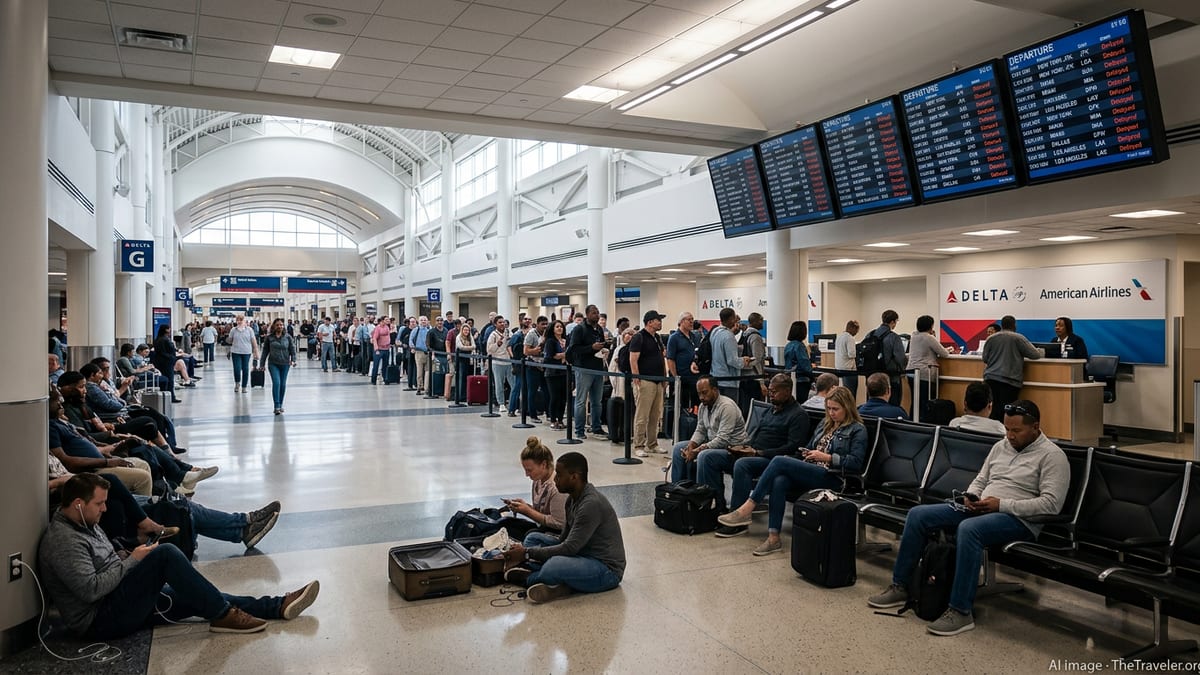
Dozens of Flights Delayed and Canceled at LaGuardia
Publicly available flight-tracking data for Friday indicates at least 89 departures and arrivals connected with LaGuardia Airport were delayed and six were canceled across a mix of domestic and transborder routes. The disruptions affected operations at United Airlines, Delta Air Lines, American Airlines, Southwest Airlines, Air Canada, regional affiliate Jazz and other carriers serving the busy New York hub.
The pattern of delays showed up across both mainline and regional jets, with shorter-haul routes among the hardest hit. Flights between New York and Chicago, Richmond, Boston and Fort Lauderdale experienced rolling departure pushes, extended time on the tarmac and, in some cases, outright cancellation as schedules compressed throughout the day.
While the total of six cancellations is modest compared with some recent severe-weather events, the concentration of nearly 90 delayed flights at a single constrained airport created a ripple effect across multiple airline networks. Passengers who relied on LaGuardia as a connecting point for Midwest, Southeast and Canadian destinations saw itineraries unravel as late-running aircraft and crew time limits compounded the initial disruptions.
Recent Infrastructure Strains Set the Stage
The latest wave of delays arrives as LaGuardia is still recovering from a series of infrastructure and safety incidents in recent months. In late March, an international Air Canada Express flight collided with an airport fire truck on a runway, prompting temporary closures and schedule reductions while investigations and safety reviews proceeded. Publicly available information shows that airlines implemented travel waivers at the time and thinned schedules on select routes serving LaGuardia.
Then, in late May, a sinkhole discovered near Runway 4/22 forced that runway out of service for days at the height of the Memorial Day travel period. Media coverage at the time described hundreds of cancellations and delays tied directly to the runway shutdown, with average delay times for inbound flights to LaGuardia stretching to well over an hour as traffic was compressed onto remaining capacity.
Although repairs have allowed more normal operations to resume, LaGuardia has remained under closer scrutiny from aviation planners and carriers, with little room for error when additional strains such as summer thunderstorms or temporary staffing imbalances emerge. The renewed disruption on Friday highlights how even a relatively small number of cancellations and sub-two-hour delays can have outsized impact at a slot-controlled, high-utilization airport.
Key Routes Impacted Between New York, Midwest and East Coast
Friday’s disruptions were most visible on high-frequency shuttle-style routes linking LaGuardia with Chicago, Boston and mid-Atlantic cities such as Richmond. These markets are typically served by multiple daily frequencies, a pattern that allows airlines to consolidate passengers onto fewer flights when schedules compress but also raises the risk of cascading rebooking challenges when delays start stacking up.
Flights between New York and Chicago, a crucial corridor for United, American and Southwest, reported a mix of ground delays, airborne holding and missed connections as aircraft arrived late into both hubs. Travelers attempting to reach Boston and Richmond from LaGuardia faced similar frustrations, with later departures filling quickly as earlier flights slid past their scheduled times.
Routes to leisure-heavy destinations such as Fort Lauderdale also experienced knock-on effects, as late-arriving aircraft and crew duty limits forced timetable reshuffles. Passengers expecting straightforward evening departures southbound from New York reported multiple schedule changes and extended waits in terminal gate areas as airlines worked through revised operating plans.
Transborder Links With Canada Also Affected
LaGuardia’s role as a gateway for shorter-haul cross-border services meant that disruptions were felt north of the U.S. border as well. Publicly available schedules showed delays on services operated by Air Canada and its regional partner Jazz between New York and Canadian cities, including Montreal and Toronto, where aircraft and crew rotations are tightly connected to LaGuardia’s operating rhythm.
These transborder flights often operate with limited daily frequencies, leaving travelers with fewer same-day alternatives when a departure is significantly delayed or canceled. As Friday’s disruptions unfolded, passengers connecting onward within Canada or returning to the United States found that a single missed link at LaGuardia could add an unplanned overnight stay or force a reroute through other hubs.
The impact was not limited to any one carrier. With multiple airlines sharing similar departure banks and arrival waves into LaGuardia, scheduling issues at the New York end spilled into Canadian operations, tightening connection times and pushing some itineraries beyond their planned windows.
Systemwide Pressures and Advice for Travelers
Friday’s experience at LaGuardia fits into a broader pattern of elevated delay risk at major U.S. airports heading into the peak summer travel season. Government and industry data from recent months show that LaGuardia, Chicago airports and Fort Lauderdale consistently rank among airports with higher percentages of delayed arrivals and longer average delay durations, particularly when convective weather and air traffic management initiatives are in play.
Aviation planners have repeatedly signaled that ground delay programs, airborne flow constraints and occasional ground stops are likely to remain common tools for managing congestion at New York-area airports when storms or capacity reductions arise. For passengers, that means that itineraries connecting through LaGuardia to cities like Chicago, Boston, Richmond and Fort Lauderdale may carry added schedule risk during busy periods or unsettled weather.
Travel experts generally recommend that passengers build additional buffer time into itineraries involving LaGuardia, especially when onward connections or same-day events are critical. Choosing earlier departures where possible, keeping a close watch on airline and airport status updates, and being prepared with alternative routing options such as rail on the Northeast Corridor can help mitigate the impact when disruptions like Friday’s spike in delays and cancellations occur.