


More news on this day
Flight delays and marathon waits on airport tarmacs in the United States have climbed to their worst levels in more than a decade, according to newly compiled data that points to a growing strain on the nation’s air travel system just as the busy summer season ramps up.
Get the latest news straight to your inbox!
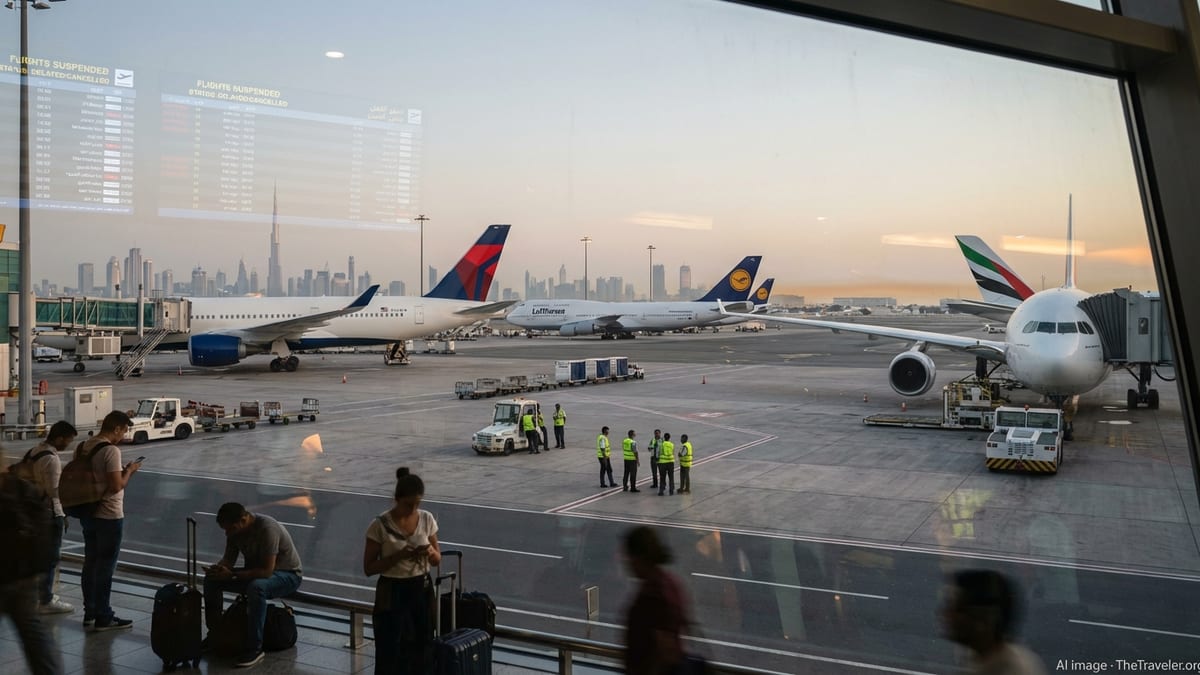
Report Shows Worst On-Time Performance Since 2014
The latest consumer analysis of federal aviation data finds that 2025 delivered the weakest on-time performance for U.S. flights since 2014, reversing improvements seen in the immediate post-pandemic years. According to published coverage of the findings, just over three quarters of flights arrived within 15 minutes of schedule last year, with performance deteriorating notably during peak travel months.
The report draws on monthly Air Travel Consumer Reports and other publicly available statistics, which track delays, cancellations and mishandled baggage across major airlines. While overall cancellation rates have eased from the highs of 2022, late arrivals and departures have become more frequent and more prolonged, leaving travelers stuck at gates, in terminals and on taxiways.
Analysts note that 2025’s on-time rate lagged both 2023 and 2024, years when carriers were still rebuilding schedules and staffing. The results suggest the system is now grappling with a different challenge: record passenger demand layered on top of infrastructure and staffing limitations that have been slower to resolve.
Industry watchers say the trend matters because even modest slippage in punctuality can cascade across a tightly scheduled network, magnifying disruptions for millions of passengers over the course of a year.
Long Tarmac Delays Jump 63 Percent
Perhaps the most striking finding in the new analysis is a 63 percent increase in long tarmac delays in 2025 compared with the previous year. Publicly available summaries of the data indicate that the number of flights holding on the ground beyond federal time thresholds reached its highest volume since the U.S. tarmac delay rule took effect in 2010.
Under that rule, domestic flights generally may not keep passengers on board for more than three hours before takeoff or after landing, with limited exceptions for safety, security or air traffic control. Carriers are required to report long tarmac events to the government, allowing consumer groups and researchers to track trends over time.
The sharp rise in tarmac waits suggests that airlines and airports are struggling to manage congestion at gates and in the airspace around major hubs. It also points to the fragility of day-of-operations planning, where a single thunderstorm line, ground stop or staffing gap can leave aircraft stranded without available parking positions.
For passengers, extended tarmac delays are among the most uncomfortable forms of disruption, often involving limited access to food, water and restrooms and little clarity about when the aircraft will move again. Advocates argue that the renewed spike in such incidents underscores the need for stronger contingency planning and clearer communication standards.
Staffing, Weather and Crowded Skies Drive Disruptions
Several overlapping factors appear to be feeding the current wave of delays and tarmac waits. Published coverage from aviation analysts points to continued shortages of air traffic controllers in key regions, which can force flow restrictions and ground delays even in clear weather. Airlines, meanwhile, are operating tight schedules with high aircraft utilization, leaving less flexibility when things go wrong.
Weather remains a central force behind disruptions, particularly during the summer thunderstorm season and winter storms that affect hub airports. Recent summers have also delivered record volumes of travelers, according to federal data and industry forecasts, meaning that any constraint in the system affects more flights and more people.
Operational strains at individual carriers have added to the mix. High-profile technology outages and schedule misalignments in recent years have demonstrated how quickly a localized problem can evolve into days of rolling delays across an airline’s network. When gates fill up and taxiways back up, tarmac waits become more likely and harder to clear.
Experts who track reliability say the current environment is characterized less by a single cause than by a series of stress points that interact: aging infrastructure, tight staffing, complex weather patterns and elevated demand. Together, they create what some describe as a thinner margin for error than at any point in recent memory.
Passenger Protections Expand but Frustration Grows
As delays and tarmac holds mount, regulators have moved to expand passenger protections, particularly for controllable disruptions. The U.S. Department of Transportation has promoted an online dashboard summarizing what major airlines say they will provide during significant delays, including rebooking, meal vouchers and hotel accommodations when the problem is within the carrier’s control.
In 2024 and 2025, the department also advanced new rules to clarify refund rights when flights are canceled or significantly changed. While portions of these measures have faced legal challenges from airlines and trade groups, consumer advocates say they reflect a broader shift toward codifying practices that were previously voluntary.
At the same time, frustration among travelers has intensified as social media amplifies images of packed gate areas, crowded customer-service lines and passengers confined to aircraft for hours. Travel advisors and fare trackers increasingly urge fliers to build buffer time into itineraries, avoid tight connections and choose morning departures, which multiple analyses show are less likely to be delayed than evening flights.
Even with stronger disclosure and refund rules, however, compensation for delays in the United States remains more limited than in some other regions. Analysts note that most protections focus on refunds and practical assistance rather than cash payments, leaving travelers to shoulder many of the indirect costs of disrupted plans.
What Travelers Can Expect This Summer
Early indicators suggest that the upcoming summer season could again test the resilience of the U.S. air travel system. Forecasts from booking platforms and airline capacity schedules point toward near-record passenger volumes through August, concentrated around holiday weekends and popular vacation corridors.
Industry and government briefings ahead of past peak seasons have highlighted efforts to improve performance, including schedule adjustments, added reserve crews, upgraded technology and closer coordination with air traffic control. Yet the latest consumer report showing a deterioration in 2025 on-time performance suggests that these steps have not fully offset the pressure created by high demand and structural constraints.
Travel analysts advise passengers to pay close attention to airline track records on delays and cancellations, which are routinely summarized in federal statistics and independent rankings. Choosing less congested airports, building longer connection times and traveling with carry-on luggage only are among the commonly cited strategies for reducing risk when delays ripple through the system.
With long tarmac waits rising and punctuality slipping to the weakest levels in years, travelers heading into the heart of the 2026 vacation season face an environment where getting from point A to point B on time may require more planning, flexibility and patience than in the past.