


More news on this day
American Airlines Flight AA1850, an Airbus A320 operating from Philadelphia to Fort Lauderdale on July 12, diverted to Charlotte Douglas International Airport after an unexpected route change that triggered an aviation alert and disrupted travel plans for passengers across the United States.
Get the latest news straight to your inbox!
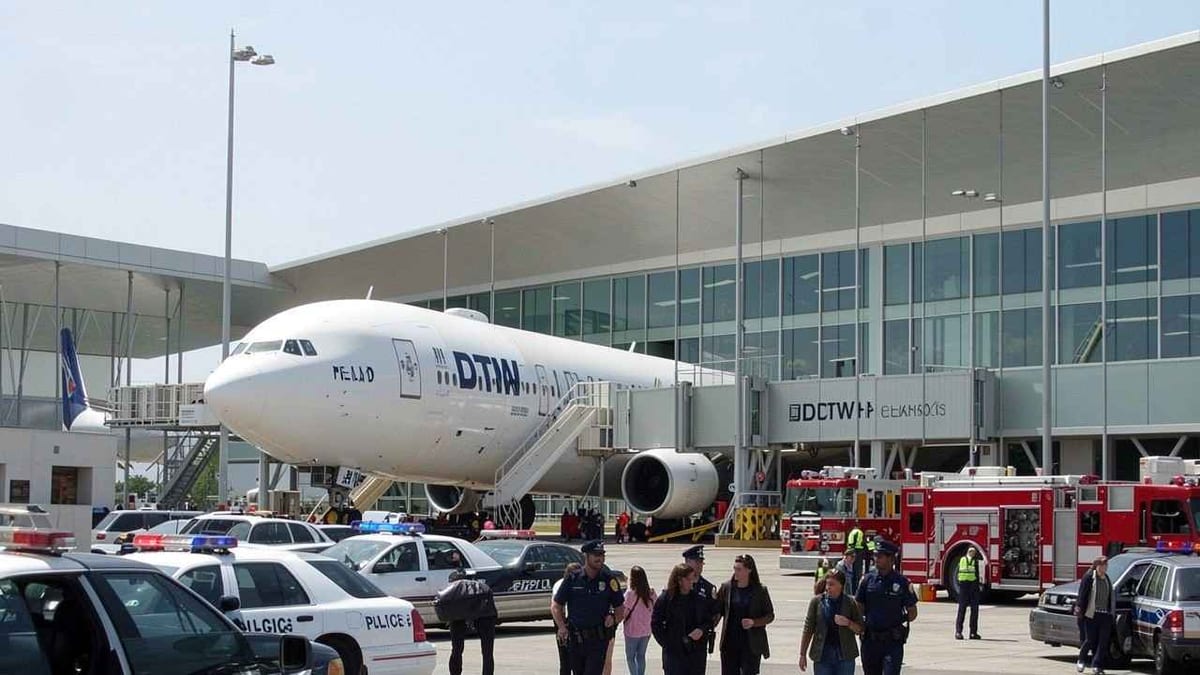
Unexpected Route Change on a Busy Summer Corridor
Publicly available flight-tracking data shows that American Airlines Flight AA1850 departed Philadelphia International Airport on July 12 as a regularly scheduled service to Fort Lauderdale, operating with an Airbus A320 on one of the airline’s busiest East Coast leisure routes. Shortly after departure, the flight’s route shifted from its planned southbound track toward South Florida and instead began trending southwest toward North Carolina.
The altered trajectory prompted an aviation alert within standard monitoring systems as the aircraft deviated from its published routing and filed destination. Such alerts are designed to flag route changes for air traffic managers, airline operation centers and airport planners, particularly during peak summer traffic when airspace and gate capacity are already stretched.
The aircraft continued safely under air traffic control guidance and proceeded toward Charlotte Douglas International Airport, one of American Airlines’ largest hubs. The change in destination brought the flight into one of the most heavily utilized connection points in the carrier’s network, where operations were already busy with afternoon arrivals and departures.
Data available on July 12 indicates that the diversion occurred against a backdrop of broader flow-management measures in the national airspace system, including routing changes and gate constraints at several major airports. These system-wide dynamics likely influenced how quickly the diverted flight could be accommodated once it arrived in Charlotte.
Diversion to Charlotte Douglas and Operational Impact
Upon arrival at Charlotte Douglas International Airport, Flight AA1850 joined a stream of American Airlines operations tightly scheduled through the hub. Flight records and operational summaries for July 12 point to active traffic flows at Charlotte, with numerous Airbus A320-family aircraft cycling through gates for short turnarounds, onward connections and repositioning flights.
Charlotte’s role as a primary hub means it is often used as a preferred diversion point along the East Coast, offering maintenance facilities, crew bases and a dense bank of onward flights. While that can help minimize long-haul disruptions, it also places pressure on ramp space, gate assignments and available aircraft stands when an unplanned arrival like AA1850 needs to be slotted into an already full sequence.
Reports from flight-data services show that other American flights involving Charlotte on July 12 operated with varying degrees of delay, reflecting how a single diversion can ripple across the schedule. When an unplanned arrival occupies a gate or requires additional ground handling time, subsequent departures can be held, resulting in rolling delays throughout the afternoon and evening bank of flights.
Although specific turnaround times for AA1850 in Charlotte were not immediately detailed in public data, the pattern of minor to moderate delays across related American flights suggests that accommodating the diverted Airbus A320 required schedule adjustments, aircraft swaps or crew reassignments to keep the broader operation moving.
Knock-on Delays and Passenger Rebooking
The diversion of a point-to-point flight such as AA1850 can quickly translate into missed connections, extended layovers and last-minute rebooking, particularly during mid-July when aircraft are heavily booked and spare seats are limited. Passengers expecting a nonstop Philadelphia to Fort Lauderdale journey faced an unplanned stop in Charlotte, with many likely needing new itineraries or revised arrival times into South Florida.
Based on how airlines typically manage diversions, travelers from AA1850 would have been redistributed onto later services to Fort Lauderdale or nearby airports in South Florida, including Miami or West Palm Beach, depending on seat availability and scheduling. This process often forces airlines to prioritize passengers with tight onward international connections, families traveling together and those with limited alternative options the same day.
Broader passenger experiences shared in recent months for similar American Airlines diversions highlight a range of outcomes, from relatively quick rebookings to significant waits for open seats and hotel vouchers when disruptions extend into the night. While each event is unique, AA1850’s timing on a high-demand summer weekend likely complicated efforts to place all affected travelers on convenient same-day alternatives.
In addition to rebooking, diverted passengers may face logistical challenges on the ground, such as coordinating ground transportation at the eventual arrival airport, updating hotel reservations and communicating delays to cruise departures or tour groups. These secondary impacts often extend the disruption well beyond the flight’s revised touchdown time.
Context: Weather, Airspace Constraints and Safety Protocols
National airspace planning documents for July 12 describe a complex operating environment across multiple regions of the United States, with flow programs, ground delays and other traffic-management initiatives in place to mitigate congestion. Such measures, combined with localized weather or airspace constraints along the East Coast, can contribute to reroutes, extended holds and, in some cases, diversions when conditions evolve after departure.
Diversions like that experienced by AA1850 are generally treated as precautionary or operational decisions intended to keep flights within safe operating margins while also optimizing the airline’s ability to manage its network. Factors can include weather along the route or at the destination, airspace saturation, runway availability, fuel considerations or limitations on crew duty time.
Aviation incident summaries and safety analyses in recent years consistently indicate that unscheduled landings and diversions are a normal aspect of commercial aviation and are typically managed without injury to passengers or crew. Aircraft such as the Airbus A320 are designed with multiple redundancies, and pilots are trained to coordinate with air traffic control and airline operations to select the most appropriate alternate airport when conditions warrant.
For travelers, the most visible effect of these safety-first protocols is time: longer flight durations, missed connections and unplanned overnight stays. While frustrating for passengers, the underlying objective is to balance safety, regulatory requirements and the practical realities of a busy air traffic system, particularly during peak travel periods.
What Travelers Should Know After a Diversion
Events like the diversion of Flight AA1850 offer several practical lessons for passengers flying during the summer peak. First, diversions can occur even on short-haul, domestic routes with otherwise routine histories, so leaving extra buffer time before critical engagements remains advisable, especially for cruises, weddings or same-day business commitments.
Second, public flight-tracking tools and airline apps have become essential for real-time awareness when routes change midflight. These platforms typically update the aircraft’s destination and estimated arrival time before gate agents or call centers can respond to all affected travelers, giving passengers valuable time to explore backup options or coordinate with contacts on the ground.
Third, passengers on diverted flights are often rebooked on a rolling basis as aircraft, crews and gates become available at the diversion airport. Travelers who monitor seat availability and stay alert to new flight options are sometimes able to secure better alternatives, such as flights to nearby airports with more open inventory.
Finally, while diversions are disruptive, they also demonstrate the layered safeguards embedded in commercial aviation. Flight AA1850’s unplanned landing in Charlotte on July 12 illustrates how a routine domestic service can be reshaped in real time by operational and safety considerations, leaving passengers delayed but underscoring the priority placed on safe outcomes over schedule integrity.