


More news on this day
Flight operations at Hartsfield-Jackson Atlanta International Airport began to recover late Sunday after a Federal Aviation Administration ground stop, put in place as severe thunderstorms passed through metro Atlanta, expired and airlines cautiously resumed departures and arrivals.
Get the latest news straight to your inbox!
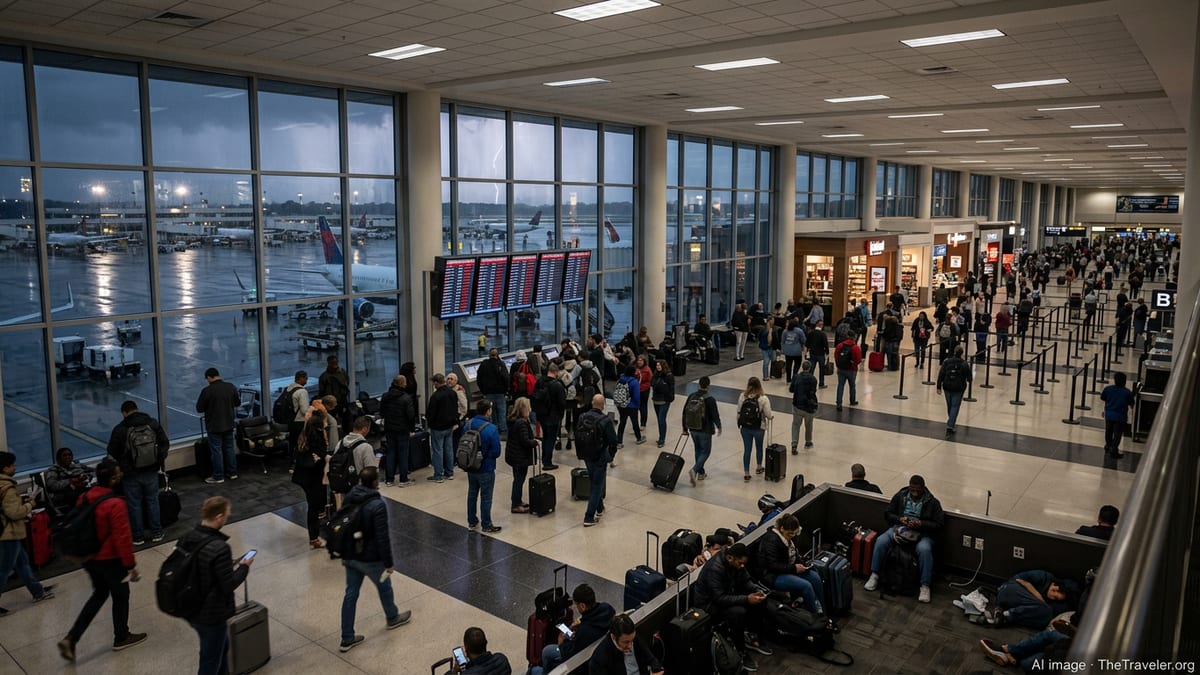
Ground stop ends as storms move east of Atlanta
According to publicly available FAA traffic management advisories and local broadcast coverage, a nationwide air traffic control center ordered a ground stop for flights bound for Hartsfield-Jackson on Sunday afternoon as a line of strong thunderstorms crossed the airport and nearby approach paths. The measure temporarily halted most inbound departures from other airports destined for Atlanta and sharply reduced takeoffs from the field while lightning, heavy rain and low clouds impacted visibility and ground operations.
Reports indicate that the restrictions were eased after the most intense cells moved east of the airport and weather radar showed improving conditions in the immediate vicinity of the airfield. Once the stop expired, airlines began pushing back aircraft that had been held at gates and accepting more arrivals that had been circling or slowed en route.
Even with the formal end of the stop, traffic did not return to normal immediately. Air traffic managers typically meter the flow of aircraft into a hub after such a disruption to prevent a sudden surge that could overwhelm available gates, taxiways and ramp crews. That process left many flights operating with extended delays even as the weather overhead appeared calmer.
Ripple effects for passengers across the network
As the primary hub for Delta Air Lines and one of the world’s busiest connecting airports, disruptions at Hartsfield-Jackson tend to cascade across the domestic and international network. Flight-tracking boards on Sunday afternoon showed dozens of delayed departures and arrivals into Atlanta, with some flights held at origin cities for more than an hour while the ground stop and follow-on flow controls were in effect.
Travelers connecting through Atlanta reported missed connections, rebookings and gate changes as airlines attempted to rebuild schedules. Because many afternoon and evening departures carry passengers who began their trips at smaller regional airports earlier in the day, any pause at the hub can quickly consume available seat capacity and complicate crew assignments.
Published coverage of previous weather-related ground stops at the airport shows that airlines often prioritize long-haul and international flights once operations resume, due to the difficulty of reaccommodating those passengers and the limited frequency of those routes. Shorter domestic segments may experience rolling delays or cancellations as carriers reposition aircraft and crews and work within federally mandated duty-time limits for pilots and flight attendants.
Stormy pattern underscores Atlanta’s weather vulnerability
Meteorological forecasts for Sunday highlighted an active pattern over north and central Georgia, with high humidity, daytime heating and an approaching disturbance combining to produce repeated rounds of showers and thunderstorms. Forecasts centered on the airport area indicated storms likely in the afternoon and evening hours, with periods of heavy rainfall, gusty winds and frequent lightning.
Hartsfield-Jackson’s role as a high-volume hub makes it especially sensitive to convective weather. Even when severe weather is not directly over the runways, storm cells along key arrival and departure corridors can force air traffic controllers to close certain routes into the airport, sharply reducing the number of aircraft that can arrive each hour. That constraint often triggers tools such as ground stops and ground delay programs, which limit how many flights can be dispatched toward the airport until conditions improve.
Recent academic and operational analyses of delay patterns in the U.S. airspace system have identified Atlanta among the airports where summer thunderstorms regularly disrupt tightly packed schedules. The combination of high traffic volume, intersecting arrival and departure flows, and the need to maintain safe separation around storm cells can quickly lead to backlogs on taxiways and in holding patterns when storms flare over Georgia.
Operational recovery likely to extend into the evening
Once a ground stop is lifted, the speed of recovery depends on several factors, including how long the restriction was in place, how many flights were already in the air and whether additional storms threaten the region. Publicly available FAA planning documents show that traffic managers typically increase the arrival rate in stages after a major weather event rather than restoring full capacity immediately.
For passengers, that gradual ramp-up often translates into ongoing delays even after radar images show fewer storms near Atlanta. Aircraft waiting for gates may sit on taxiways, while inbound flights are routed along longer paths around lingering cells or placed into airborne holding stacks until space becomes available. Crews that reach their maximum duty limits during extended delays may time out, requiring airlines to find replacements or, in some cases, cancel flights.
Airports and airlines also contend with the physical effects of heavy rain and lightning on ramp operations. Lightning in the immediate vicinity of the airfield can force ramp closures that prevent ground staff from loading bags, fueling aircraft or guiding jets into position, further slowing the recovery. Pooled water on taxiways and service roads, along with visibility reductions, can require more cautious movements on the ground even after the worst of the storm has passed.
What travelers can expect for the rest of the day
Travel experts who track airline performance note that severe midafternoon disruptions at a major hub often take most of the remaining operating day to unwind. With aircraft and crews out of their planned positions, later flights may depart behind schedule even in clear weather. Some evening departures to smaller markets may be consolidated or canceled if demand and crew availability dictate.
Passengers scheduled to travel through Atlanta are being advised, through airline apps and public advisories, to monitor flight status closely throughout the day, check for gate changes and allow additional time for connections. Same-day rebooking options, including alternative routings that bypass Atlanta, may be offered when space allows, particularly for long-haul international and last departures of the night.
Given the unsettled weather pattern over the Southeast, further rounds of showers and thunderstorms remain possible into the night, increasing the risk of additional short-term flow restrictions. While the initial ground stop at Hartsfield-Jackson has expired, the broader system effects are expected to linger, and travelers may continue to encounter longer lines, crowded gate areas and delays as airlines work to restore their schedules.