


More news on this day
Air travel across the United States faced another day of widespread disruption on Sunday, as more than 150 flights were cancelled and over 2,600 delayed nationwide, with major hubs in California, Massachusetts, Colorado, Pennsylvania and Tennessee reporting significant knock-on effects for American, Southwest, Delta, Frontier and other carriers.
Get the latest news straight to your inbox!
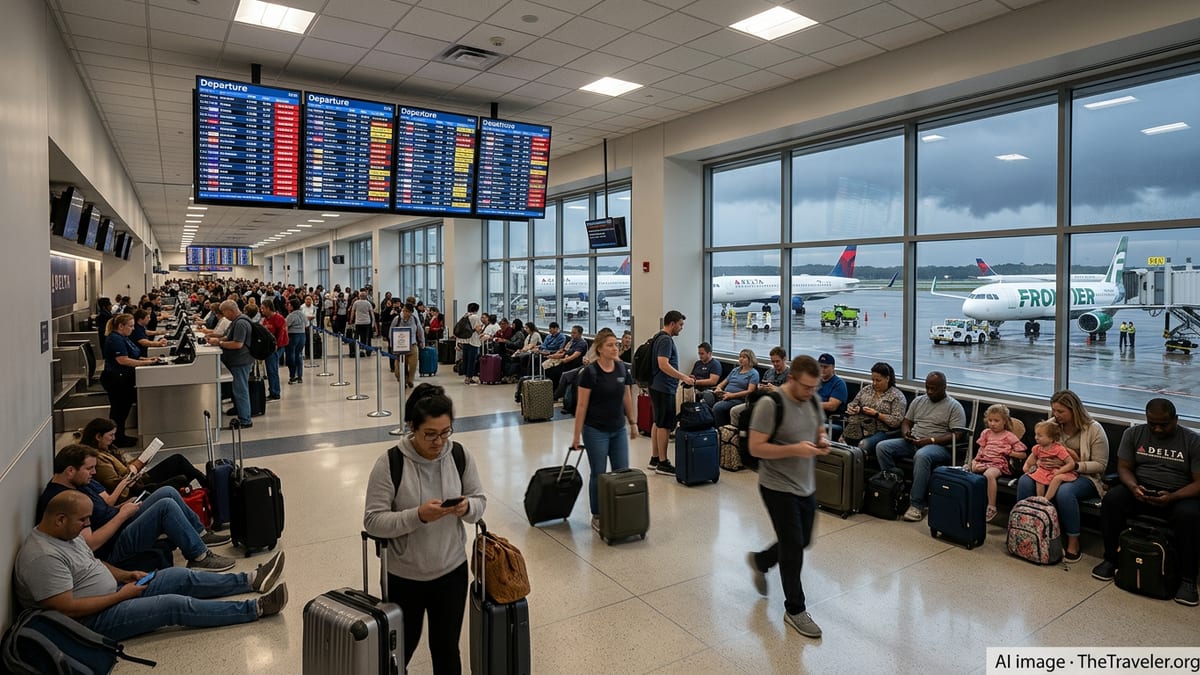
Weather, Congested Skies and Strained Systems Collide
According to live tracking data from multiple aviation platforms, a combination of severe summer storms, airspace congestion and ongoing operational bottlenecks has pushed US flight disruption well above typical midseason levels. The latest tallies show 156 cancellations and at least 2,626 delays across the domestic network, affecting large legacy airlines and low cost carriers alike.
Publicly available information indicates that thunderstorms over key corridors in the Northeast and mid South remain a major driver of the latest disruption, forcing air traffic managers to impose spacing and routing restrictions that ripple across the country. When hubs in states such as Massachusetts, Pennsylvania and Tennessee slow down, aircraft and crews arrive late to secondary airports in California, Colorado and beyond, triggering further delays and cancellations later in the day.
Operational data and industry analyses suggest that the system is particularly vulnerable in peak summer, when schedules are tightly packed and aircraft utilization is high. Once an early wave of flights is pushed back by storms or ground restrictions, there is limited slack in the network to absorb the shock, causing delay statistics to climb rapidly through the afternoon and evening.
Travel analysts note that, while the headline numbers for cancellations may appear modest compared with major holiday meltdowns, the concentration of delays on specific routes and time windows can create severe disruption for individual travelers, especially those relying on tight connections or smaller regional airports.
Major Hubs in California, Massachusetts and Colorado Under Pressure
Large coastal and mountain gateways again feature prominently in today’s disruption picture. In Massachusetts, Boston Logan International has been coping with days of irregular operations, after a combination of fueling system issues and high profile harbor events earlier in the week led to waves of delays and localized cancellations. Current statistics show the airport still experiencing an elevated level of schedule changes as airlines work to reposition aircraft and crews.
In California, a mix of coastal marine weather, inland thunderstorms and heavy summer demand continues to strain operations at airports such as Los Angeles, San Francisco and San Diego. Reports from tracking services show late running transcontinental departures from the West Coast feeding into further congestion at East Coast hubs already managing storm related restrictions.
Colorado’s primary hub in Denver has also seen knock on effects. As a central connecting point between West Coast, Midwest and East Coast traffic flows, delays there have outsized impact on national statistics. When Denver experiences convective weather or brief ground stops, aircraft can miss onward slots at airports in Pennsylvania, Tennessee and other states, further complicating recovery efforts.
Industry observers say this pattern reflects a broader shift in US air travel, where weather at a handful of geographically strategic hubs can quickly cascade into system wide disruption, particularly when combined with tight staffing and infrastructure constraints.
Knock On Impacts for American, Southwest, Delta and Frontier
The latest data shows cancellations and delays scattered across nearly all major US carriers, with American Airlines, Southwest Airlines, Delta Air Lines, Frontier Airlines and others all reporting affected flights. The impact varies by route structure: large network carriers feel the brunt at congested coastal and mid continent hubs, while low cost operators see disruption concentrate on high frequency leisure routes.
Publicly available federal on time performance data for recent periods underline how sensitive the system is to such shocks. Even in relatively stable months, the largest US networks report thousands of delayed flights and a measurable percentage of cancellations, with weather, national airspace constraints and late arriving aircraft featuring as leading causes. Today’s figures, while still unfolding, fit that broader pattern of volatility in peak travel periods.
For travelers booked on American, Southwest or Delta, delays at one or two critical hubs can quickly erase the benefit of frequent daily departures, as aircraft cycle through affected airports multiple times per day. Frontier and other low cost carriers, which tend to operate thinner schedules with less backup capacity, may face an even tougher challenge restoring normal operations once rotations slip badly out of sync.
Analysts point out that, although airlines have added buffers and adjusted schedules following previous years of disruption, staffing levels in some support roles and at key federal facilities remain tight. That leaves limited margin when multiple factors converge, as appears to be the case with the current mix of storms, ground system issues and heavy passenger demand.
States Across the Map Feel the Ripple Effects
Today’s figures specifically highlight disruption in California, Massachusetts, Colorado, Pennsylvania and Tennessee, but the real story is the spread of knock on effects far beyond those states. Modern airline networks rely on complex webs of connections, meaning a delayed aircraft in Boston or Denver can cause missed flights hours later in smaller markets in the Midwest or Southeast.
Public dashboards from tracking services show scattered cancellations and heavy delay clusters at airports from the Mid Atlantic to the Rockies, with regional jets and narrowbody aircraft disproportionately represented. These workhorse aircraft types operate the bulk of domestic sectors for American, Delta, United and their regional partners, as well as for low cost carriers that focus on point to point leisure routes.
Travelers in Pennsylvania and Tennessee, where airports such as Philadelphia and Nashville function as important connecting points, are seeing longer waiting times and tight connection windows erode. Some itineraries that depend on short hops to or from nearby hubs like Charlotte, Atlanta or Chicago are especially exposed when storms or ground restrictions hit those larger fields.
The timing of today’s disruptions, concentrated heavily in the middle and late portions of the day, also plays a role. Research based on federal on time data indicates that cancellation and delay risk generally climbs as the day progresses, as aircraft accumulate small setbacks from each previous sector. Once widespread thunderstorms or airspace constraints are added late in the day, there is often little opportunity to reset the system before the evening wave of departures.
What Travelers Should Expect in the Coming Hours
With storms still active in several regions and residual congestion lingering around major hubs, aviation analysts expect the national delay tally to remain elevated into the evening local time. While the number of outright cancellations may not spike dramatically beyond current totals, rolling delays and missed connections are likely to continue for passengers on affected routes.
Published guidance from airlines and airports consistently urges travelers to rely on official apps or direct airline notifications for the latest gate and schedule information, rather than airport departure boards alone. Same day schedule changes, aircraft swaps and ad hoc rebookings are now common features of disruption days, as carriers work within capacity and crew duty limits to keep as many flights moving as possible.
Regular flyers and data driven travel enthusiasts increasingly recommend early morning departures and longer connection times as ways to reduce exposure to days like this, citing federal on time statistics showing lower cancellation and delay rates earlier in the day. However, with summer demand surging and weather patterns becoming more erratic, even well planned itineraries can be caught up in cascading disruptions.
For now, the combination of 156 cancellations and more than 2,600 delays underscores the fragile balance underpinning US air travel during peak season. As airlines, airports and federal agencies continue to refine schedules and staffing, days of widespread disruption remain an unavoidable feature of the summer travel landscape.