


More news on this day
Holiday air travel across Europe is again under strain as more than 2,500 flights were reportedly delayed and at least 51 cancelled in a single day, with Spain, Greece, Romania, Germany, Switzerland and several neighboring countries experiencing widespread disruption affecting hubs such as Zurich, Athens and Frankfurt.
Get the latest news straight to your inbox!
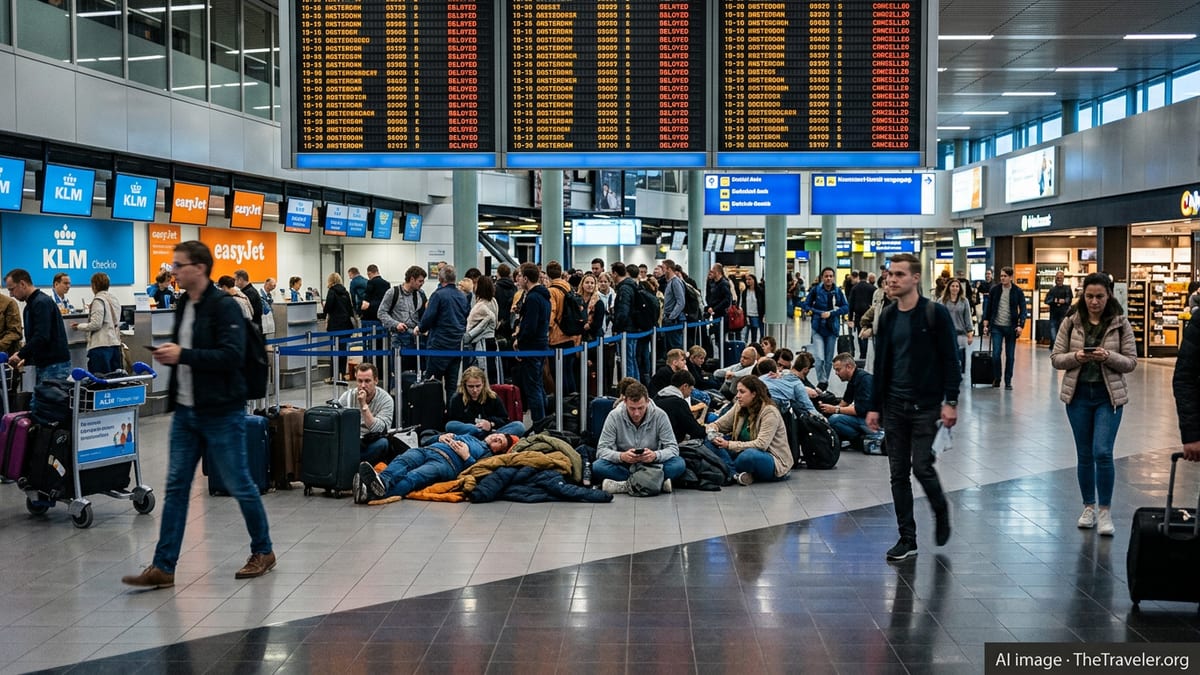
Network-Wide Knock-On Delays Hit Key European Hubs
Operational data from flight tracking and passenger rights platforms indicates that European skies are facing another period of heavy disruption, with 2,575 delays and 51 cancellations recorded across the continent over a 24 hour window. The impact has been felt most acutely at major hubs in Germany and Switzerland, where dense schedules mean even modest disruptions ripple quickly through the network.
Frankfurt, one of Europe’s busiest transfer airports, has seen a cluster of late arrivals and altered rotations, contributing to missed connections and late departures on short haul routes. Zurich has experienced similar strain, with long-haul and European services forced into schedule changes after delayed inbound aircraft, leaving passengers facing missed meetings, curtailed holidays and hastily rebooked itineraries.
The disruption has coincided with peak summer traffic, when airports and airlines are already operating close to capacity. Publicly available arrival and departure boards show rows of services classified as late, rescheduled or cancelled, underscoring how fragile operations remain in a season of record leisure demand.
While the overall number of outright cancellations is lower than during previous years of heavy industrial action or severe weather, the sheer scale of delays is placing pressure on airport infrastructure, ground handling and customer service desks as passengers seek rerouting and accommodation.
Lufthansa, Vueling and Swiss Among Airlines Most Affected
Large European carriers with extensive regional networks, including Lufthansa, Vueling and Swiss, are prominently represented among delayed and cancelled services in the latest disruption figures. Schedules show that short haul intra-European flights, which typically operate multiple rotations a day, are particularly vulnerable when the first sectors of the morning run late.
Lufthansa’s Frankfurt and Munich operations are especially exposed. Industry analyses published this year point to the cumulative effects of previous capacity cuts, staffing challenges in parts of the group, and ongoing adjustments after the shutdown of some regional operations. When combined with congested airspace and summer thunderstorms, even a limited number of early delays can cascade into dozens of affected flights.
Swiss, operating from Zurich and Geneva, has also had to contend with residual knock-on effects from earlier system disruptions and tight aircraft utilisation. Vueling, a key player in Spain and an important carrier at several Mediterranean leisure airports, features frequently in delay statistics where traffic is concentrated around peak morning and evening waves.
Although low cost and network carriers alike are impacted, travelers booked on airlines with complex hub-and-spoke systems can be particularly affected when a missed connection at a central hub leads to long onward delays or overnight stays.
Hotspots in Spain, Greece, Romania, Germany and Switzerland
According to operational overviews and consumer-focused tracking services, the worst disruption has clustered around specific national markets. Germany’s busiest airports, including Frankfurt, Munich, Düsseldorf and Stuttgart, have collectively seen hundreds of delays and several dozen cancellations in recent days, affecting domestic services as well as links to neighboring countries.
In Switzerland, Zurich’s role as a hub for both European and intercontinental traffic has amplified the impact of even a small number of cancellations or airspace constraints. Several long-haul services have been recorded as significantly delayed or cancelled in recent days, forcing airlines to re-accommodate passengers on later departures or alternative routings through other hubs.
Southern Europe has not been spared. In Spain and Greece, high seasonal demand to coastal and island destinations has collided with air traffic control constraints, thunderstorms and localized operational challenges. Reports from Athens and several Spanish airports show large numbers of delayed departures, with some services to and from popular holiday spots arriving more than three hours behind schedule.
Romania and other Eastern European markets have also contributed to the tally, as aircraft and crews rotate through multiple countries in a single day. A delay originating in Central or Eastern Europe can later surface as a late departure from Frankfurt, Zurich or Barcelona, highlighting how interconnected the network has become.
Passengers Face Missed Connections and Overnight Disruptions
The latest wave of delays and cancellations has had a tangible impact on passengers, particularly those traveling on complex itineraries connecting through Frankfurt, Zurich and other hubs. Social media posts and travel forum reports describe missed long haul connections, last minute rebookings and extended waits at customer service counters as airlines work to reassemble itineraries.
Travel experiences shared publicly over recent weeks include cases of journeys extended by more than 24 hours after missed connections in Frankfurt, or rerouting from Athens and Zurich via entirely different hubs. In some instances, travelers have reported being moved between Lufthansa Group carriers such as Swiss or other alliance partners in order to reach their final destination.
For many, the most immediate consequence is the loss of valuable holiday time or business appointments. Families heading to Mediterranean resorts have reported arriving in the early hours instead of mid-afternoon, while business travelers have faced overnight stays and rescheduled meetings. The strain is particularly evident at peak times, when hotel availability near major airports can quickly tighten and queues for customer assistance grow.
Travel advisers note that even when flights ultimately depart, persistent delays of more than three hours can have knock-on costs for passengers, from missed prepaid transfers to rearranged accommodation bookings at the destination.
Know Your Rights Under European Air Passenger Rules
Consumer organizations and passenger rights specialists are again highlighting the importance of understanding European air travel protections in light of the latest disruption. Under European Union Regulation EC 261 and similar rules adopted by countries such as Switzerland and Norway, travelers departing from EU or associated airports, or flying with eligible airlines, may be entitled to compensation and assistance in specific circumstances.
Public guidance from passenger rights platforms explains that, depending on the length of the delay, distance of the flight and reason for disruption, travelers can in some cases claim financial compensation, meal and hotel vouchers, and rebooking at the earliest available opportunity. However, exceptions apply when the cause of disruption is deemed outside the airline’s control, such as certain types of severe weather or air traffic control restrictions.
Specialists advise passengers to keep boarding passes, booking confirmations and any written communications regarding delays or cancellations, as these documents can be important when filing a claim. Travelers are also encouraged to check whether their itinerary falls under EC 261 or related national rules, especially when journeys involve non-European carriers or airports outside the region.
With summer travel in full swing and the latest figures showing more than 2,500 delayed flights in a day across Europe, industry observers expect passenger rights frameworks to remain a central reference point for travelers seeking redress for disrupted journeys.