


More news on this day
American Airlines passengers traveling from Orlando to Dallas on flight AA2172 faced unexpected disruption on July 12 when the Airbus A321 diverted to Panama City, prompting a cascade of missed connections and schedule changes across the carrier’s domestic network.
Get the latest news straight to your inbox!
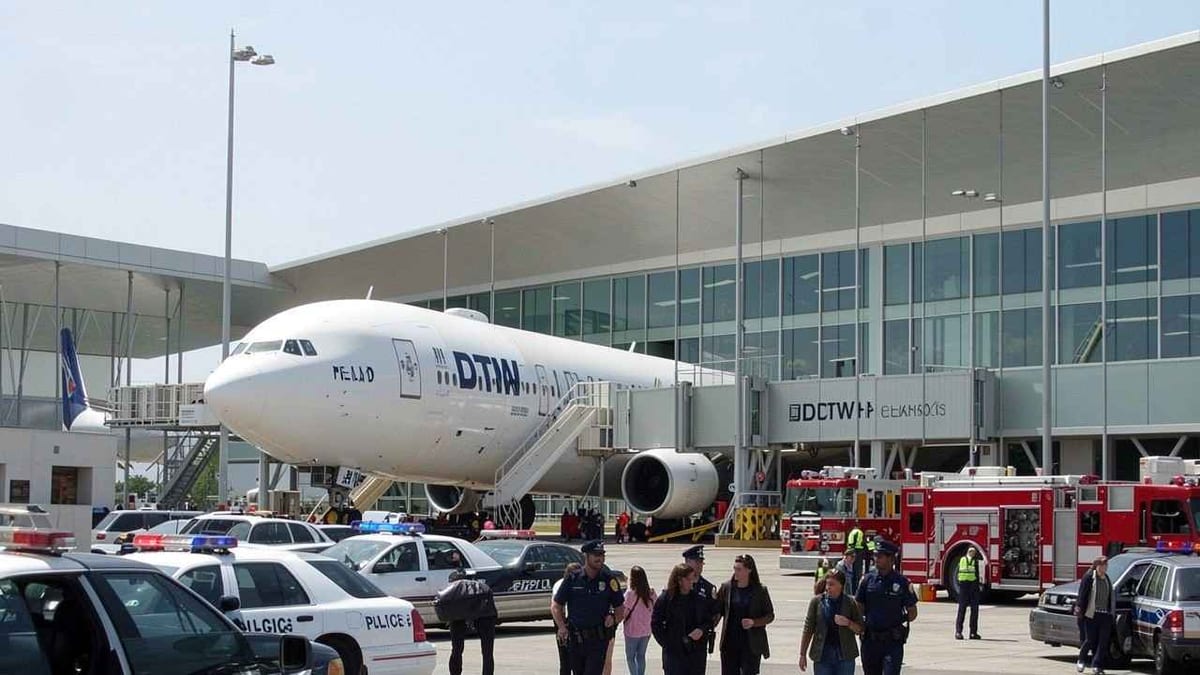
What Is Known About Flight AA2172 and the Diversion
Publicly available flight schedules list American Airlines flight AA2172 as a regular service on the busy Orlando to Dallas Fort Worth corridor, typically operated by a narrowbody aircraft such as the Airbus A321. On July 12, the flight departed Orlando International Airport bound for Dallas but did not follow its usual routing into the Texas hub. Instead, tracking data indicate that the aircraft diverted and landed at Northwest Florida Beaches International Airport serving Panama City, Florida.
The precise sequence of events in the air, including the timing of the route change and the initial cause that prompted the diversion, has not been fully detailed in publicly accessible reports. However, the unscheduled landing effectively transformed what is normally a straightforward domestic hop into a multi-stage journey, forcing passengers to wait for onward arrangements from a small Gulf Coast airport that is not a primary connecting hub for the airline.
The diversion came on a midsummer travel day when Orlando and Dallas both typically experience heavy traffic, meaning that even a single off-schedule arrival can ripple through operations. In this case, the unplanned Panama City stop not only delayed travelers aboard AA2172 but also created knock-on effects for their onward flights out of Dallas Fort Worth.
Possible Reasons Behind the Unscheduled Stop in Panama City
At the time of the diversion, Dallas Fort Worth has recently seen periods of rapidly changing summer weather, which can trigger flow restrictions, airborne holding and, in some cases, reroutes and diversions for inbound flights. Industry data and previous disruption patterns show that thunderstorms in North Texas and along arrival corridors frequently push airlines to temporarily divert aircraft to alternate airports until conditions stabilize or air traffic constraints ease.
Operational issues unrelated to weather can also play a role. Airlines sometimes divert when an onboard medical situation requires quicker access to ground-based assistance, or when technical concerns arise that flight crews and dispatchers decide are better addressed after landing. In addition, fuel management, congestion around Dallas Fort Worth, and airspace saturation over the southeastern United States can combine to make a closer alternate such as Panama City preferable in certain scenarios.
In the case of AA2172, publicly available information as of July 12 has not identified a single, definitive cause. Coverage and flight-tracking references instead point to a combination of operational constraints that made continuation to Dallas on the original timing impractical. The result was an early termination of the inbound segment in Panama City, with the airline required to reorganize both the aircraft’s routing and customers’ onward travel.
Impact on Passengers Traveling Through Dallas Fort Worth
For travelers booked on AA2172, the diversion translated into a range of disruptions, from missed connections to unplanned layovers. Dallas Fort Worth serves as a major connecting point for American Airlines, feeding onward flights throughout the United States and to international destinations. When a key inbound flight diverts, passengers relying on tight connections to the West Coast, Midwest, Northeast, and international routes often find that their onward flights depart without them.
Accounts from similar diversion events in the Dallas network highlight that some customers can be protected on alternative same-day departures if seats remain available, while others may face extended waits or overnight stays. In a midsummer peak period, spare capacity is limited, particularly on popular domestic routes. That dynamic likely shaped the experience of AA2172 passengers on July 12 once they reached Panama City and waited for revised itineraries.
The disruption also has secondary effects on baggage handling and seat availability. Checked luggage may remain on the original aircraft until it can continue toward Dallas or be manually rerouted, creating a lag between a traveler’s arrival at their final destination and their bags. Meanwhile, rebooking displaced travelers onto other flights can lead to fuller cabins and fewer options for seat changes or upgrades on subsequent segments.
How Airlines Typically Handle Diversions and Passenger Options
Airlines have established playbooks for diversion scenarios, drawing on internal operation manuals and customer service policies. When a flight does not reach its ticketed destination, publicly available guidance shows that carriers generally prioritize rebooking passengers on the next available services to their final destinations, sometimes via new connecting cities if the original hub becomes too congested or if onward options from an alternate airport are limited.
In many cases, carriers attempt to keep the same aircraft and crew with passengers so the flight can press on once conditions allow, treating the diversion as a refueling or holding stop. In other instances, especially when crew duty-time limits or maintenance requirements come into play, travelers are moved to different flights or even different airports using ground transportation. American Airlines’ general customer information indicates that travelers affected by diversions may need to work with airport service desks or digital channels to obtain updated boarding passes, revised seat assignments, and information about baggage routing.
Whether passengers receive meal vouchers, hotel stays, or additional compensation often depends on the cause of the disruption and local regulations. Events classified as outside the airline’s control, such as severe weather or air traffic restrictions, are typically treated differently from issues related to crew or equipment. As of July 12, publicly available commentary on the AA2172 diversion has not indicated any broad, system-wide compensation program specific to this event.
What Travelers Can Learn From the AA2172 Diversion
The AA2172 diversion underscores how quickly a routine domestic flight can change course, especially during the volatile summer travel season. For passengers, it is a reminder that itineraries passing through major hubs like Dallas Fort Worth are particularly sensitive to weather and congestion, even when conditions at the departure airport appear calm and flights initially board on time.
Travel planners often recommend building extra connection time into itineraries that rely on busy hubs, particularly on afternoon and evening departures when delays can accumulate. Flexible plans, travel insurance, and familiarity with airline apps or online rebooking tools can help travelers navigate days when diversions occur. Having essential items in carry-on bags rather than checked luggage also becomes more important when there is a possibility of unplanned stops at alternate airports.
While diversions like the one affecting, AA2172 are disruptive, they are also a standard part of modern aviation’s safety and operational framework. Aircraft are dispatched with alternate airports precisely so crews and operations centers can adapt to changing conditions. For travelers on the Orlando to Dallas route and beyond, understanding how and why such decisions are made can help set expectations when an ordinary flight suddenly takes an unexpected turn toward a city like Panama City.