


More news on this day
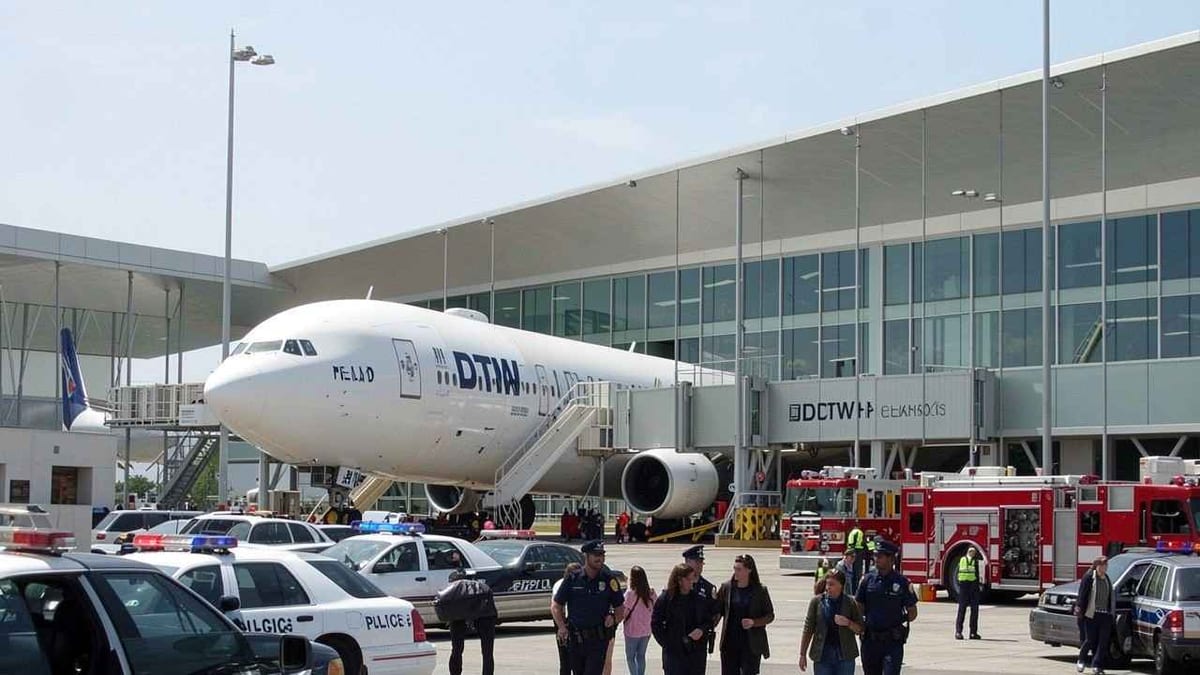
A SkyWest-operated American Airlines flight from Dallas Fort Worth to Grand Island, Nebraska, diverted to Omaha’s Eppley Airfield and landed safely following an in-flight issue involving its Mitsubishi CRJ-900LR regional jet, according to live flight tracking data and local reporting.
Get the latest news straight to your inbox!
Dallas–Grand Island Service Interrupts Midroute
Flight AA4823, operated by SkyWest Airlines on behalf of American Airlines, was scheduled to operate from Dallas Fort Worth International Airport to Central Nebraska Regional Airport in Grand Island using a Mitsubishi CRJ-900LR aircraft. Publicly available schedules list the route as part of American’s regional network linking north-central Nebraska with the carrier’s main Dallas hub.
During the northbound sector, the aircraft deviated from its planned track and descended toward Omaha instead of continuing along its usual path to Grand Island. Flight-tracking platforms showed the jet turning toward eastern Nebraska and lining up for arrival at Omaha’s Eppley Airfield, the state’s busiest commercial airport.
The diversion added distance to the scheduled itinerary but placed the flight at an airport with longer runways, a wider array of services, and extensive regional jet activity. Eppley Airfield regularly handles SkyWest-operated services for several major U.S. carriers, making it a logical alternate for flights operating across the central United States.
Reports indicate the aircraft landed without incident, with no immediate information about injuries or medical transports. Available data instead focuses on the altered routing and arrival time compared with the original schedule to Grand Island.
Safe Landing at Omaha’s Eppley Airfield
Omaha’s Eppley Airfield served as the diversion point for AA4823, offering multiple paved runways and a full complement of commercial aviation facilities. Public documentation from Nebraska’s state aviation planning describes Eppley as the primary commercial gateway for the region, with 22 gates and frequent regional jet movements providing a strong operational base for handling unscheduled arrivals.
Weather reports for Omaha around the time of the diversion pointed to relatively benign local conditions, with no immediate indication that storms or poor visibility triggered the route change. Instead, the decision to divert appears to be associated with an onboard issue that made a precautionary landing prudent at a larger airport.
Eppley Airfield sees regular operations by SkyWest on behalf of multiple major airlines, which means maintenance personnel, ground equipment, and regional jet support infrastructure are typically available. Aviation planning documents and traffic statistics highlight SkyWest as one of the more significant regional operators at the field, positioning Omaha as an important technical and operational stop for its fleet.
After arrival, the aircraft remained on the ground while handling agents, maintenance personnel, or dispatchers determined next steps. Publicly accessible departure boards and schedules did not immediately list a rapid continuation to Grand Island, suggesting that any onward travel for passengers would be managed through rebooking or separate repositioning of the aircraft.
The Mitsubishi CRJ-900LR at the Center of the Diversion
The aircraft involved in AA4823’s diversion is a Mitsubishi CRJ-900LR, part of a family of regional jets originally developed by Bombardier and later acquired by Mitsubishi Heavy Industries. Fleet reference materials list SkyWest as one of the principal North American operators of the CRJ-900 series, including the longer-range LR variant used on routes such as Dallas to Grand Island.
The CRJ-900LR typically seats around 76 passengers in a mixed-class configuration when operated for major U.S. airlines, balancing first class, extra-legroom economy, and standard economy seating. The type is widely used on essential air service routes and thinner regional markets where demand does not justify larger narrowbody jets.
Technical documentation emphasizes that the LR version is designed for improved performance on longer regional sectors and at airports with challenging weather patterns. Its popularity across the United States has made it a familiar presence at mid-sized hubs and regional airports, including Eppley Airfield and Central Nebraska Regional Airport.
While diversions involving regional jets are not uncommon, each event draws attention because smaller aircraft often serve communities with limited alternative flight options. For residents of Grand Island and surrounding areas, the CRJ-900LR operating as AA4823 is a vital link to American’s broader network through Dallas.
Impact on Passengers and Grand Island Connectivity
The diversion of AA4823 underscores the vulnerability of smaller communities when a single daily or near-daily regional service encounters operational disruptions. Grand Island’s Central Nebraska Regional Airport supports scheduled flights primarily through regional partners, meaning a diverted or canceled service can immediately affect onward connections, overnight plans, and local ground transportation.
Passengers on the diverted flight faced an unexpected change of destination to Omaha, more than 140 miles from Grand Island by road. In such situations, airlines typically arrange alternate travel options that may include ground transfers, rebooking on later services, or overnight accommodations, depending on the timing and the nature of the disruption.
Federal documents tied to essential air service contracts for Grand Island highlight the role of regional jets like the CRJ-700 and CRJ-900 in sustaining connectivity between Nebraska communities and major hubs. These contracts emphasize reliability and schedule continuity, though they also acknowledge that diversions for safety reasons remain a core part of standard operating procedures.
For local travelers, the incident is a reminder of the importance of leaving buffer time for connections at larger hubs and monitoring flight status closely, particularly on evening and overnight departures when recovery options can be more limited.
Operational Context and Next Steps
Regular schedule data shows AA4823 as a repeating service in American’s timetable, with SkyWest operating the flight over multiple days between Dallas and Grand Island. That pattern indicates that the carrier expects the route to continue despite the disruption associated with the diversion to Omaha.
Regional jet operators and major airlines routinely review any diversion to determine contributing factors, whether related to minor mechanical alerts, passenger medical events, weather concerns, or air traffic management. Publicly available information at this stage focuses on the track of the flight and its safe landing, without detailed disclosure of the specific trigger for AA4823’s route change.
Travelers booked on upcoming AA4823 departures are typically encouraged, in comparable situations, to monitor their reservations and live flight status channels for any signs of equipment swaps or schedule adjustments. Flight-tracking and airport departure boards often provide the earliest public indication of whether operations have fully normalized after a diversion event.
The safe arrival of the CRJ-900LR at Omaha’s Eppley Airfield, coupled with the absence of immediate reports of serious injury, frames the incident as a precautionary interruption rather than a major accident. Even so, the event adds another data point to the operational story of regional aviation across Nebraska, highlighting how airports in Omaha and Grand Island work together within a wider network to keep smaller communities connected when flights do not go exactly as planned.