


More news on this day
British travelers heading to the Gulf are being urged to review plans after the UK Foreign Office updated its guidance for Bahrain and Kuwait in response to ongoing hostilities between the United States and Iran and the risk of further missile and drone attacks across the region.
Get the latest news straight to your inbox!
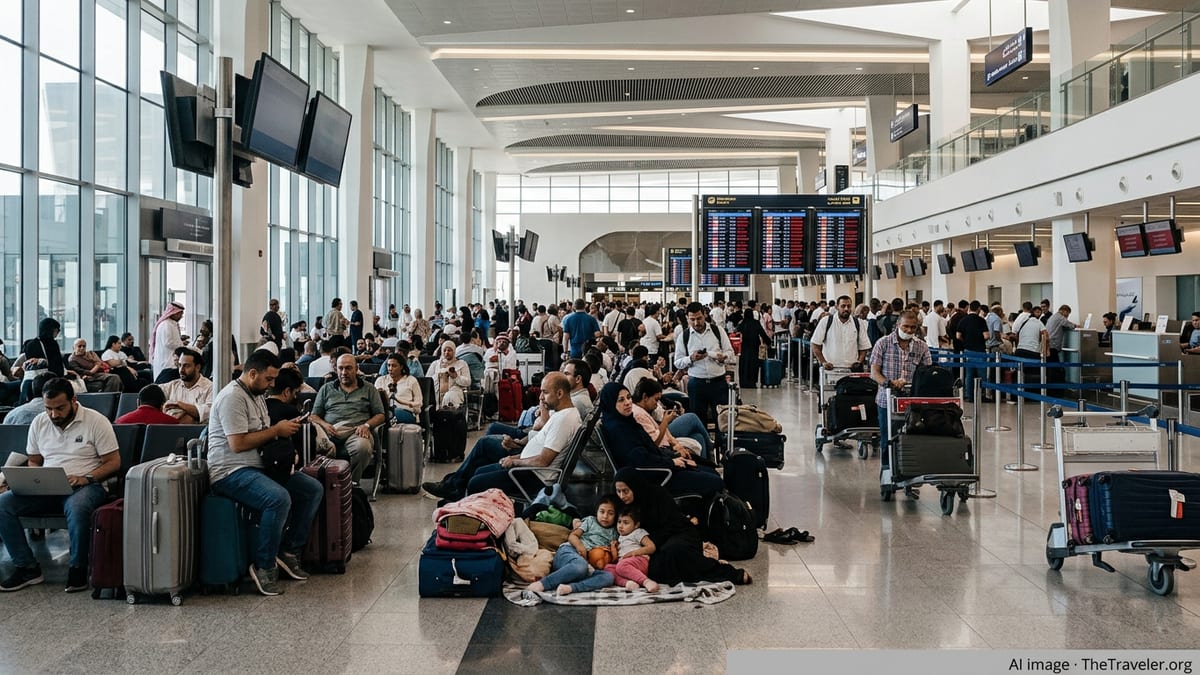
Foreign Office updates highlight shifting risk in the Gulf
The latest Foreign, Commonwealth and Development Office updates for Bahrain and Kuwait, published in mid and late July 2026, underline how quickly security conditions around the Gulf are changing as the confrontation between the United States and Iran continues to play out across regional airspace and key transport hubs.
In its Bahrain travel advice, the UK now foregrounds the danger from Iranian strikes and retaliatory attacks, noting that locations in and around Manama have been targeted in recent months and that further incidents cannot be ruled out. Publicly available information points to ballistic missile and drone attacks linked to Iran’s response to US military activity, including strikes aimed at areas close to facilities used by American forces.
For Kuwait, the UK guidance draws attention to the proximity of the country to potential flashpoints and highlights recent reports of missile and drone activity near border crossings and energy infrastructure. The tone of the advice reflects a broader concern that any escalation involving US and Iranian forces could quickly affect civilian areas and transport links throughout the northern Gulf.
The changes come against the backdrop of wider international warnings. The United States has reiterated its own global caution for citizens travelling or living overseas, citing heightened regional tensions and the possibility of sudden, hard to predict security incidents tied to the conflict with Iran.
Bahrain: security incidents and disruption to travel plans
Bahrain’s role as a host to US naval facilities and its position close to vital maritime routes has placed it near the centre of recent hostilities. Open source reporting describes multiple Iranian missile and drone strikes against targets in and around Manama since late February, including attacks close to the US Fifth Fleet headquarters and other sites associated with Western military activity.
In response, the UK Foreign Office’s Bahrain advice now stresses the potential for further long-range attacks and urges travellers to remain alert to local warning systems, movement restrictions and possible protective security measures. Previous episodes have already led to short notice airspace closures and the temporary disruption of flights into and out of the kingdom, as carriers adjust routes around areas of perceived risk.
The updated guidance also refers to the possibility that exit options could narrow if tensions spike. Earlier in the year, regional airspace restrictions combined with closures of land links such as the King Fahd Causeway to Saudi Arabia briefly reduced the number of viable routes for travellers seeking to leave Bahrain, illustrating how quickly the situation can evolve.
Travel risk specialists note that even if daily life in much of Bahrain continues with a degree of normality, the presence of high-value military and political targets increases the chance that future strikes may occur with limited warning, potentially impacting civilian infrastructure, hotels or transport corridors in the vicinity.
Kuwait: renewed focus on border and infrastructure vulnerabilities
The Foreign Office’s latest Kuwait travel advice highlights a different, but related, set of concerns. Publicly available reporting indicates that cross-border areas and strategic installations in and around Kuwait have experienced indirect effects from the confrontation between US and Iranian forces, including reported strikes near key crossing points with Iraq.
While the UK does not currently advise against all but essential travel to Kuwait, the language of the notice underscores that regional tensions remain elevated and that further attacks on or near Kuwaiti territory are possible. The guidance encourages travellers to be prepared for rapid changes, including heightened security at sensitive sites, checkpoints on main roads and potential restrictions on movement near government or military locations.
International travel advisories from other governments have taken a similarly cautious line. The United States, for example, has told its citizens to reconsider travel to Kuwait, citing the threat of missile and drone attacks linked to the conflict with Iran and the risk that long-range weapons could reach populated areas or critical infrastructure.
For visitors and expatriates, the net effect is a more complex operating environment. Pre-planned itineraries that involve long-distance driving, onward travel to neighbouring states or visits to remote desert locations may need to be reviewed in light of the possibility of sudden closures or heightened military activity.
Impact on flights, insurance and practical trip planning
The evolving guidance for Bahrain and Kuwait comes on top of weeks of broader disruption to air traffic across parts of the Middle East. Airspace over multiple countries has periodically been restricted or closed as regional militaries respond to missile launches and as commercial airlines adjust routings away from perceived threats.
Travel industry updates have recorded temporary suspensions or diversions on routes transiting the Gulf, with some carriers reducing frequencies or consolidating services until the risk picture becomes clearer. These shifts can have a knock-on effect on connections for travellers heading to or from Bahrain and Kuwait, even when local airports remain open.
Insurance considerations are also becoming more prominent. The Foreign Office routinely notes that travelling against its formal advice could invalidate many standard travel insurance policies, leaving travellers exposed to the cost of medical care, evacuation or trip disruption. While the current wording for Bahrain and Kuwait differs from more severe advisories issued for Iran and certain other regional states, travellers are being urged to check policy terms closely and to confirm whether cover remains in place if the security situation deteriorates.
Specialist policies that explicitly include conflict or terrorism-related disruption are available on the market, but they often carry higher premiums and may impose strict conditions. For many leisure travellers, this financial calculation is now an important part of deciding whether to proceed with a trip to the northern Gulf in the coming weeks.
What UK travellers are being encouraged to do now
Across its published travel advice, the Foreign Office is encouraging British nationals with plans for Bahrain or Kuwait to monitor updates frequently, register for email alerts and pay close attention to local news and official announcements in destination countries. The guidance stresses that conditions can change at short notice and that formal advisories may be revised rapidly if new attacks or significant escalations occur.
Prospective visitors are being urged to keep departure plans under close review, to ensure that passports and visas are valid for alternative routes, and to consider the practicalities of leaving at short notice if travel becomes difficult. Those already in Bahrain or Kuwait are advised in public information materials to identify safe places they could move to in the event of strikes, to familiarise themselves with shelter locations in accommodation and workplaces, and to follow any instructions issued through local alert systems.
For tour operators and corporate travel managers, the latest guidance is prompting a re-examination of itineraries, staff deployments and duty-of-care arrangements. Many organisations are updating internal risk assessments, reinforcing check-in procedures for travellers in the region and considering contingency plans in case of a rapid deterioration in US Iran relations.
For now, commercial flights to both Bahrain and Kuwait continue to operate, and many journeys take place without incident. Yet the sharpened tone of official advice, set against continuing missile activity and diplomatic friction, underlines that trips to these Gulf states now demand a higher level of preparation and situational awareness than in more stable periods.