


More news on this day
British families heading overseas this summer are being urged to check their hand luggage more carefully after travel commentator Simon Calder highlighted how liquid-filled children’s toys risk falling foul of shifting airport security rules.
Get the latest news straight to your inbox!
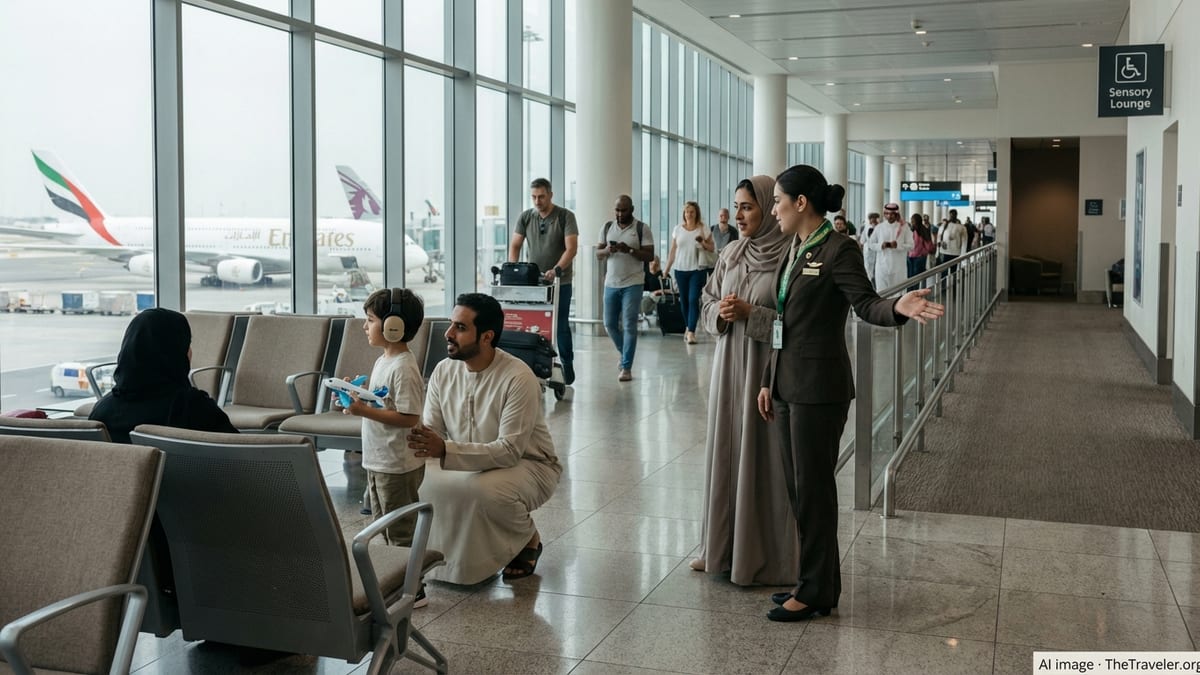
Squishy toys caught in airport security squeeze
Calder’s latest warning follows reports that some young travellers have had their favourite “squishy” toys confiscated at security because they contain gels or liquids. The toys, which can act as comfort objects for anxious children, are increasingly being treated in the same way as other liquid items when screened in cabin bags.
According to recent broadcast coverage, the issue surfaced after a travel blogger described how such toys were being removed from hand luggage at certain UK airports. For children who rely on the soft, squeezable items as a form of reassurance in crowded terminals, the loss can be particularly distressing at the very start of a holiday.
Responding to the concerns, Calder focused on the fast-changing liquid rules at UK airports and their impact on families. He warned that for parents travelling with young children, assuming toys will be allowed through security could lead to upset at the checkpoint.
Calder’s three-word summary of the situation – “it wouldn’t matter” – referred to the fact that, at some airports with updated security scanners and higher liquid allowances, a small toy containing gel should not pose a problem. However, the reality for families is complicated by the fact that not all UK airports are applying the same standards.
Patchwork rules on liquids leave parents guessing
The core of Calder’s warning is that liquid and gel rules now vary significantly from one UK airport to another. While some hubs have introduced new-generation scanners that permit passengers to travel with containers of up to two litres in their hand luggage, others still enforce the long-standing 100 millilitre limit.
Reports indicate that airports including Belfast, Birmingham, Bristol, Edinburgh, Gatwick and Heathrow are among those where passengers may encounter different approaches to liquid screening. In some terminals, liquids must still be removed from bags and placed in a clear resealable pouch, whereas others are beginning to relax that requirement.
For parents, that patchwork of rules makes it difficult to know whether a toy filled with gel or liquid will be treated as an acceptable item or as a security risk. Even where larger volumes of liquids are technically allowed, a security officer may still flag an item for additional checks if it is not clearly identifiable or if it blocks the scanner’s view of other objects.
Calder has repeatedly highlighted that the current rules originated two decades ago as a temporary anti-terrorism measure and yet continue to shape everyday travel. Families travelling in 2026 now find themselves navigating a complex transition period, in which some airports are embracing new technology and others remain tied to older screening practices.
Emotional stakes for children at the checkpoint
The latest debate underscores how small security decisions can have a disproportionately large effect on children. Travel commentators note that sensory toys and squishies often play a crucial role in helping young passengers manage crowded terminals, security queues and unfamiliar surroundings.
Parents have described these toys as the equivalent of a “security blanket” for some children. When they are removed without warning at airport security, the upset can ripple through the entire journey, particularly at the very start of a family holiday when stress levels may already be high.
Travel industry observers point out that airport staff must balance security rules with sensitivity to younger travellers, but decisions at the scanner are frequently made in a matter of seconds. In such an environment, families who have not checked policies in advance may be more vulnerable to unexpected confiscations.
Against this backdrop, Calder’s comments function as a broader reminder that security procedures are not just a practical concern. For parents, they also shape how safe and supported children feel when entering the highly regulated world of international travel.
What families can do before they travel
Publicly available guidance from the UK Department for Transport and individual airport operators consistently advises travellers to check security rules on liquids before departing for the airport. In light of the latest confusion over toys, commentators suggest that parents take extra time to review the hand luggage guidance for their specific departure airport, rather than relying on general assumptions.
Where rules are unclear, many travel experts recommend placing liquid- or gel-filled toys in checked baggage wherever possible. While this may reduce the chance of a child having the item available during the flight, it also lowers the risk of last-minute confiscation at the security belt.
Families who prefer to keep a comfort toy in the cabin are being encouraged to opt for solid, non-liquid alternatives that are unlikely to trigger concern in the scanners. Soft toys without internal gels, small blankets or familiar books can sometimes offer similar reassurance without falling into the liquids category.
Parents are also being reminded that other children’s items, such as drinks, baby formula and medication, may be treated differently under security rules. Reviewing these categories carefully before travel can help reduce the number of surprises at the checkpoint and make it easier to explain the process to younger travellers.
A summer of scrutiny for airport security changes
The warning over squishy toys arrives during a broader period of change for UK aviation security. Several airports are rolling out advanced scanners and updated screening procedures, with the aim of eventually relaxing strict limits on liquids across the board. However, the timetable for these changes is not uniform, leading to inconsistent experiences for passengers.
Recent coverage of summer travel has already highlighted how shifting security and border rules in Europe are causing queues, missed flights and confusion for British holidaymakers. Calder and other analysts have described the current period as a challenging transition, in which technology, regulation and passenger expectations are not yet fully aligned.
For now, families are being urged to plan around the possibility of extra checks and occasional inconsistencies. Packing children’s bags with security in mind, arriving early at the airport and preparing youngsters for the idea that some items might not be allowed through are all being presented as practical steps to limit disruption.
As peak holiday season gathers pace, the seemingly small question of whether a child can keep hold of a favourite squishy toy at security has become a symbol of a wider issue. With rules still evolving from airport to airport, Calder’s three-word warning serves as a timely reminder that for families, careful preparation remains one of the most reliable tools for a smooth journey.