


More news on this day
Saudi Arabia’s Abha International Airport has extended the suspension of flights to Dubai and Sharjah into a fourth day, as continuing regional security tensions force airlines to keep key UAE links offline and leave Gulf travellers facing renewed uncertainty over itineraries that rely on the Asir region’s main gateway.
Get the latest news straight to your inbox!
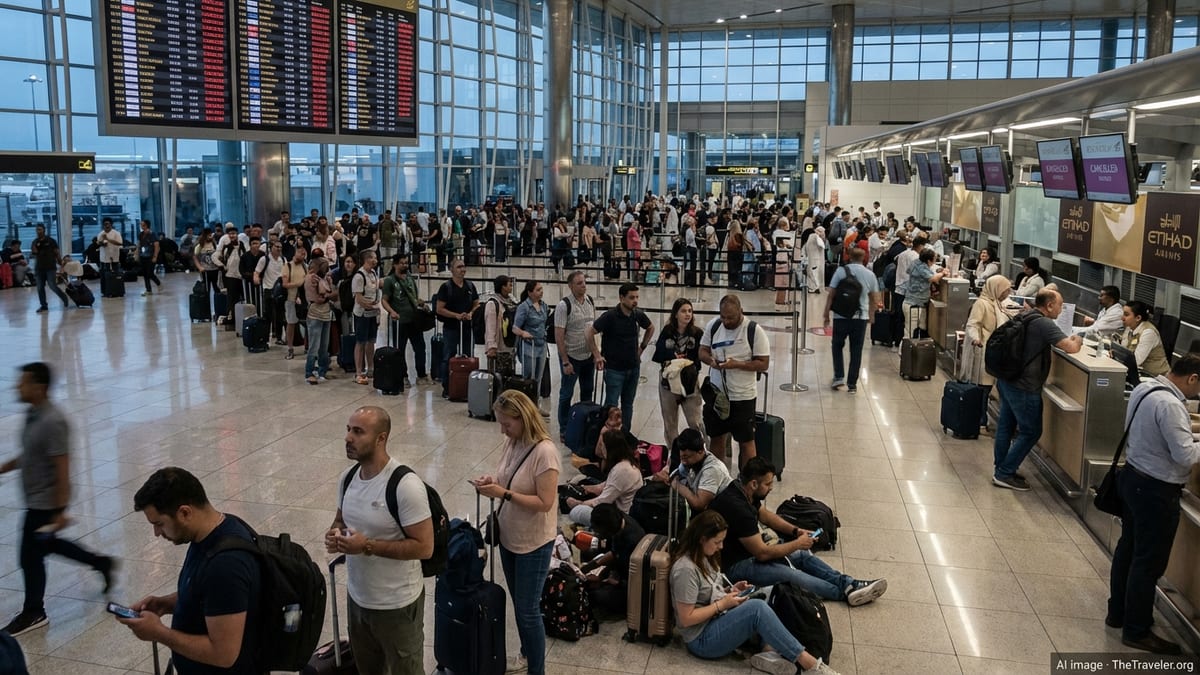
Fourth Day of Cancellations on Abha–UAE Routes
Published coverage from regional aviation outlets on July 17 indicates that services between Abha International Airport and the United Arab Emirates remain heavily disrupted, with flights to Dubai and Sharjah cancelled again on Friday. The move extends a suspension that began earlier in the week after an attack on the southern Saudi airport and has now stretched into a fourth consecutive day.
Reports show that flydubai departures FZ816 and FZ812 from Abha to Dubai, along with Air Arabia flight G9 196 from Abha to Sharjah, were among services listed as cancelled. Several Saudia and flyadeal flights to domestic hubs such as Jeddah and Riyadh, as well as a Nile Air service to Cairo, also did not operate, although much of Abha’s internal Saudi network has gradually resumed.
Airline timetable data and airport departure boards suggest that, prior to the current disruption, the Abha–Dubai route was typically served multiple times per day by flydubai, while Air Arabia maintained near-daily frequencies to Sharjah. The multi-day interruption therefore represents a substantial break in connectivity on what is normally a busy short-haul corridor for both point-to-point and connecting traffic.
Flight-tracking portals show that at least one recent flydubai rotation, FZ816 from Abha to Dubai, scheduled for July 16, was cancelled rather than operated with a delay. For travellers in both directions, that pattern underlines that the issue is not minor timekeeping but a temporary removal of capacity as carriers react cautiously to the evolving risk environment.
Security Tensions After Missile and Drone Attack
The extended suspensions follow a missile and drone strike on Abha International Airport earlier this week that regional media widely attributed to Yemen’s Houthi movement. News reports describe the incident as a sharp escalation in cross-border hostilities after a period of relative calm in southern Saudi Arabia’s airspace.
The attack prompted an immediate shutdown of the airport and triggered the first wave of cancellations on July 13 and 14, affecting flights from Dubai, Sharjah and several Saudi cities. Aviation-focused coverage from the Gulf highlights that some services were diverted to alternative Saudi airports, while others were cancelled outright as operators reassessed routing and insurance implications.
Subsequent days have seen a partial restoration of domestic operations at Abha, but international links to the UAE have remained suspended, reflecting the added scrutiny that cross-border sectors attract when regional tensions rise. Analysts note that routes connecting Saudi regional airports with major Gulf hubs are particularly exposed to changes in airline risk calculations and government-level advisories.
The security backdrop has also resulted in updated travel guidance from several Western governments. Publicly available advisory summaries from Canada, the United Kingdom and the United States have all drawn attention to elevated risks in areas near the Yemen border and, in some cases, have singled out Abha Airport and its surroundings for heightened caution.
Impact on Gulf Travellers and Connection Strategies
For Gulf travellers, the suspension of Abha’s links to Dubai and Sharjah is having an outsized impact because those two UAE airports function as powerful connection points for destinations across Asia, Europe and Africa. Passengers who normally rely on a short hop from Abha to pick up long-haul services now face missed onward flights, rebooking costs and significant detours.
Passenger accounts on social platforms and travel forums over the past several days describe disrupted itineraries involving onward journeys from Dubai and Sharjah to India, Europe and North America. Many of those travellers had built their trips around tight connections that assumed the reliability of the Abha–UAE shuttle flights and are now being forced to reroute via Jeddah, Riyadh or Dammam, adding hours and in some cases overnight stays.
Airlines operating from the UAE have responded by advising customers to monitor booking management tools and flight-status pages closely, with regional news outlets citing guidance that passengers should not proceed to the airport for Abha-related flights unless their service is clearly showing as operating. For those already in Saudi Arabia, travel agents are reporting increased demand for domestic sectors that can link travellers into larger Saudi hubs with more robust international schedules.
In parallel, travel-insurance providers are reminding policyholders to check coverage terms related to security events and airspace closures. While some plans include benefits for missed connections caused by third-party operational decisions, others classify missile or drone incidents as excluded war-risk events, leaving passengers to negotiate directly with their airline for refunds or credits.
Asir Tourism Gateway Temporarily Constrained
Beyond immediate passenger disruption, the issues at Abha International Airport are reverberating through the tourism economy of Saudi Arabia’s Asir region. In recent years Abha has been promoted as a key highland escape, with cooler summer temperatures, mountain resorts and cultural festivals aimed at both domestic and Gulf visitors, many of whom arrive via UAE hubs.
Marketing campaigns by Saudi tourism bodies and airlines have positioned Abha as a convenient long-weekend destination from Dubai and Sharjah, relying on short direct flights and seamless onward connections. With those routes currently paused, industry observers expect a near-term dip in visitor arrivals from the UAE, particularly among leisure travellers who booked summer stays in response to promotional fares and package deals.
Hotel operators and tour providers in Abha and the surrounding Asir highlands are beginning to feel the effects, according to commentary in regional business media. Bookings from the UAE and other Gulf Cooperation Council countries are reportedly facing cancellations or date changes, even as domestic tourism remains relatively resilient thanks to still-operating flights from larger Saudi cities and increased road traffic.
For the Asir region’s longer-term tourism strategy, the episode is a reminder of its dependency on a single primary airport and a limited set of international routes. Some analysts argue that diversifying access, whether through expanded domestic air services or improved overland links from Jeddah and coastal cities, could help mitigate the impact of future aviation shocks.
What Aviation Professionals and Travellers Should Watch Next
Aviation professionals tracking the situation around Abha are focusing on several indicators that could point to a gradual restoration of UAE services. Among these are changes in security assessments for southern Saudi airspace, adjustments to airline schedules loaded into global distribution systems, and any updated travel advisories issued by foreign ministries in key source markets.
Industry specialists note that reinstating flights to Dubai and Sharjah will depend not only on the physical condition of Abha’s infrastructure but also on carrier-level risk appetite, insurance constraints and coordination with air-navigation service providers. In previous regional flare-ups, airlines have sometimes resumed operations in stages, starting with reduced frequencies or daylight-only flights before returning to full schedules.
For Gulf travellers with upcoming itineraries involving Abha, routing flexibility will be essential in the short term. Travel experts recommend planning for the possibility that the Abha–UAE links could remain offline beyond the current four-day mark and suggest building in longer connection windows or considering alternative Saudi gateways when booking time-sensitive long-haul trips.
With peak summer travel underway and demand through UAE hubs already elevated, any prolonged suspension at Abha is likely to ripple across seat availability and fares on alternative routes. As the security situation evolves, both leisure and corporate travellers are expected to keep a close eye on airline announcements and airport departure boards before locking in their plans.