


On paper, the high speed train from Madrid to Segovia looks unbeatable: Renfe services cover the distance between Madrid Chamartín and Segovia Guiomar in about half an hour. Yet Segovia’s AVE station sits on the outskirts of town, several kilometres from the Aqueduct and the medieval streets most visitors actually come to see. Once you factor in connections to and from both stations, the slower Avanza bus from Madrid’s Moncloa interchange, which arrives much closer to Segovia’s historic centre, can rival or even beat the train for total door to door convenience. This guide breaks down the real world trade offs with current examples so you can choose the option that genuinely saves you time, money and stress.
Get the latest updates straight to your inbox!
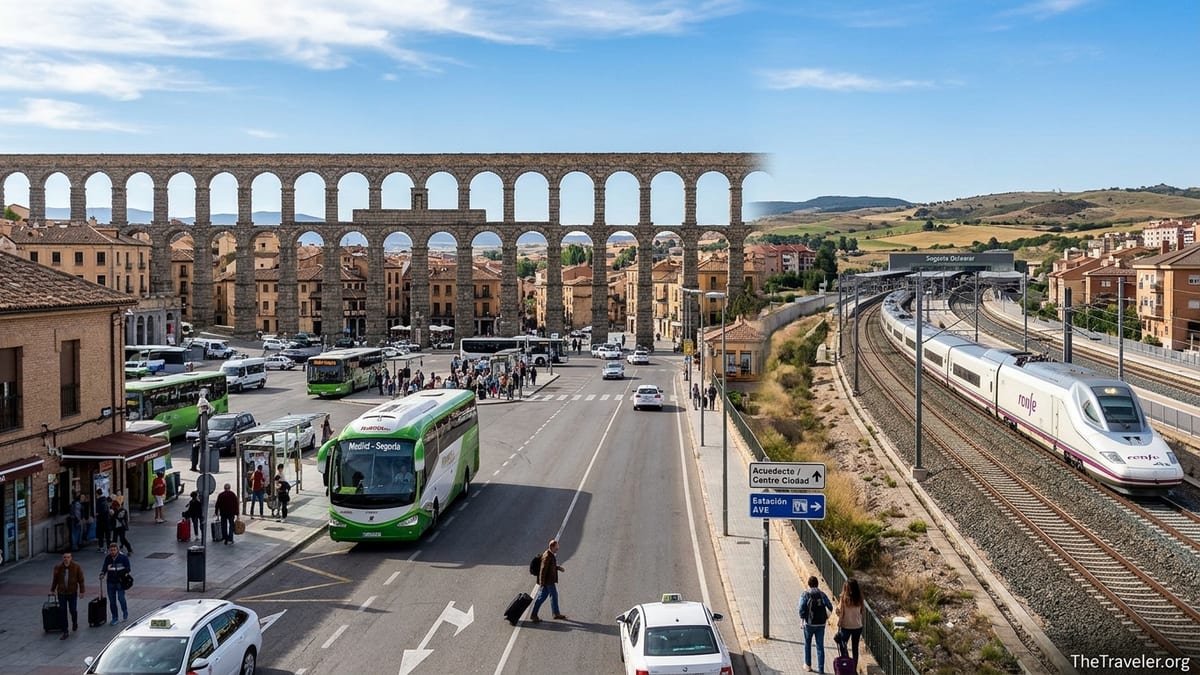
Train versus bus: journey times that matter in the real world
High speed trains between Madrid Chamartín Clara Campoamor and Segovia Guiomar are fast. Recent timetables show multiple AVE, Alvia, Avant, Avlo and OUIGO departures each day taking roughly 25 to 30 minutes, with a few regional services taking around two hours for a cheaper, slower alternative. A typical morning sample includes departures around 06:30, 06:36 and 07:51, all arriving in Segovia Guiomar less than half an hour later. Base one way fares on popular Avant services in late 2026 generally fall around 15 to 16 euros, with some low cost Avlo or OUIGO tickets starting near 10 euros when bought in advance and flexible AVE or Alvia tickets climbing above 40 euros at peak times.
The Avanza bus from Madrid’s Moncloa transport hub to Segovia’s central bus station looks slower on paper. Current schedules list frequent departures from early morning into the evening, with many direct buses taking about 1 hour 15 to 1 hour 20 minutes for the full run. A common morning departure such as 08:00 from Moncloa to Segovia bus station arriving at 09:20 illustrates the pattern. Sample one way online fares around 7 euros are typical for standard tickets purchased a few weeks out, with slightly higher prices at very popular times or on the day of travel.
However, headline journey times only tell part of the story. Segovia Guiomar station stands several kilometres from the Aqueduct, while the bus arrives at Segovia’s central bus station, roughly 10 minutes’ walk from the Roman Aqueduct and the edge of the old town. Once you add urban transport at both ends, the total door to door timing can shift dramatically, especially if you are staying near Madrid’s Gran Vía or Puerta del Sol rather than in the northern districts close to Chamartín.
For a concrete example, imagine a visitor staying by Puerta del Sol aiming to reach the Aqueduct by mid morning on a weekday. A typical metro ride from Sol to Chamartín involves a change and takes about 20 to 25 minutes platform to platform, plus another 10 to 15 minutes for walking, tickets and waiting times. Add a 25 minute high speed train and 15 to 20 minutes for a city bus or taxi from Segovia Guiomar and you often reach a realistic centre to centre travel time of about 1 hour 20 to 1 hour 35 minutes door to door. That is very close to the modest looking 1 hour 15 to 1 hour 20 on the direct Avanza bus from Moncloa, especially when Moncloa can be reached by a single metro line from Sol in roughly 15 minutes with minimal walking.
Schedules, fares and discounts on Renfe and Avanza
Renfe’s Madrid to Segovia Guiomar route is shared by several brands. Avant services are designed for frequent regional high speed trips and in autumn 2026 timetables show roughly hourly frequencies during the core of the day, with more departures in rush hours. Other operators like AVE, Avlo, Alvia, Intercity and OUIGO add further departures, so across all brands you can often find a suitable departure every 30 to 60 minutes between about 06:30 and 22:00. Advance purchase fares on Avant trains typically hover around 15 or 16 euros one way in standard class, while low cost Avlo or OUIGO tickets can sometimes be found near or just above 10 euros for off peak times if booked ahead. Fully flexible AVE or Alvia seats at the same hours can cost considerably more.
Renfe maintains various discount schemes that can apply to this route. Children usually benefit from reduced or even free fares up to a certain age when accompanied by an adult, and seniors holding Spain’s national discount cards or specific Renfe loyalty products can often see reductions in the range of 25 to 40 percent on flexible or semi flexible fares, though the exact discount and eligible trains vary by product. For families or regular visitors staying several days, it is worth checking Renfe’s official pages or at a staffed station in Madrid for current terms, as offers can change only slightly from season to season but make a noticeable difference if you are buying four or more tickets at once.
Avanza holds the long distance concession between Madrid Moncloa and Segovia, operating what is technically the VAC 246 line. Recent booking engines list buses roughly every 30 to 60 minutes across much of the day, with earlier and later departures on weekdays to serve commuters and students. Standard one way fares cluster around 7 to 9 euros in late 2026 for direct Madrid Segovia services without intermediate stops, though some discounted seats can appear at quieter times. There are also subscription passes and monthly products primarily aimed at commuters, and in recent years various regional and national travel subsidies have affected effective prices for registered residents and students.
Children and seniors on Avanza services may access reduced fares on certain tickets. Conditions can depend on age ranges and whether the traveller holds a regional travel card issued by the Madrid transport authority or similar documentation from Castile and León. Because these schemes are periodically updated and occasionally linked to government policies, travellers planning one or two leisure trips should check conditions at the time of booking but should not rely on deep long term commuter discounts that require local registration.
Reaching Chamartín and Moncloa from central Madrid
From the tourist heart of Madrid around Puerta del Sol, Plaza Mayor and Gran Vía, Chamartín and Moncloa sit in different directions and connect via different metro lines. Chamartín is a major rail hub in the north of the city. To reach it from Sol, many travellers simply take metro line 1 to Plaza de Castilla and change to line 10 for one stop, or follow current metro routing suggestions that sometimes include line 10 directly, depending on works. Journey times inside the metro system usually fall around 20 to 25 minutes from central stops, not counting a few extra minutes for station access, security controls in the railway station and potential queues at ticket machines. Chamartín itself is large, so expect a brief walk from metro platforms to the main concourse and high speed departure gates.
Moncloa sits to the west of central Madrid and functions both as a metro station and as a large underground bus interchange. From Sol, line 3 offers a straightforward direct ride to Moncloa in about 12 to 15 minutes, and from Gran Vía the combination of lines 1 and 3 or a surface bus along Calle Princesa can be nearly as quick. The Moncloa intercambiador is compact compared to Chamartín; once you exit the metro ticket gates and follow signs to long distance buses you generally reach Avanza’s Segovia platforms in a matter of minutes. For travellers with luggage, this single change from hotel to Moncloa, then straight to Segovia, can feel simpler than navigating Chamartín’s mix of commuter and long distance areas.
Accessibility is a more nuanced question. Both Chamartín and Moncloa have lifts and escalators serving most platforms. However, metro interchanges can still involve long corridors and occasional stairs, depending on which station you start from and any temporary works. Older travellers, families with pushchairs or anyone with mobility challenges may find the single metro line to Moncloa easier than negotiating line changes and the larger circulation spaces at Chamartín, although this depends on your exact starting point in Madrid. In all cases, it is wise to leave a generous buffer before any fixed train or bus departure, especially during the morning commuter rush or on weekend subway maintenance days.
When you fold these approach journeys into the picture, a pattern emerges. Guests at hotels in the northern business districts near Chamartín or Plaza de Castilla are very well positioned for the high speed train. Visitors staying in Malasaña, Chamberí or around Argüelles might find Moncloa significantly closer by foot or by a short metro hop. For classic city centre stays around Sol, either option works, but many travellers appreciate the more compact interchange at Moncloa and the fact that the Segovia bus station deposits them near the old town without any further connection.
From Segovia Guiomar to the Aqueduct: buses and taxis
Segovia Guiomar station lies in open countryside a short drive from town. To bridge the gap, Segovia’s urban bus network operates a dedicated line between the Aqueduct and the AVE station, listed in current summaries as line 11. This service is scheduled around train arrivals and departures and typically runs from early morning to late evening. Journey time between the Aqueduct stop and Segovia Guiomar is roughly 15 minutes depending on traffic. Buses are standard city vehicles with space for small luggage but can feel crowded around peak commuter trains, particularly in the university term.
The cash fare on Segovia’s urban buses in 2026 is reported around 1 euro 30 cents per trip, with slightly lower prices for frequent users who hold rechargeable cards. For a simple day visit using two single rides, budget roughly 3 euros per person for the round trip between the Aqueduct and the AVE station. Tickets are purchased from the driver on boarding, and contactless payment options may be available but are not guaranteed on every vehicle, so carrying small notes or coins is sensible.
Taxis wait directly outside Segovia Guiomar whenever high speed trains arrive. Fares into town vary with traffic and exact drop off point, but a realistic current range is often around 10 to 15 euros to the Aqueduct or Plaza Mayor. The drive usually takes 10 to 15 minutes. For a couple or a family of four, the difference in cost between four single bus tickets and a taxi can be modest, and many visitors arriving with small children or heavier luggage opt for a taxi to reach their accommodation or the historic centre quickly. The reverse applies on the way back if you are leaving from the Aqueduct after a day’s sightseeing.
By contrast, Segovia’s central bus station sits only a short walk from the Aqueduct. Allow 10 to 12 minutes on foot from the terminal to the base of the Roman monument, following flat streets through the lower part of the city. This proximity means that once your Avanza bus pulls in, you are effectively already at the edge of the tourist area, and you can immediately start your walking itinerary without an extra transfer. For travellers who dislike changing modes or who are watching every euro, that single direct leg from Madrid Moncloa to Segovia bus station is one of the bus option’s biggest practical advantages.
Walking Segovia: Aqueduct to Cathedral to Alcázar
Segovia is compact but far from flat. A classic route starts at the Aqueduct, climbs to Plaza Mayor and the Cathedral, then continues to the Alcázar. From the Aqueduct up to Plaza Mayor is roughly 900 metres of walking, with a noticeable uphill gradient along pedestrian streets such as Calle Real. At a relaxed sightseeing pace that includes photo stops, shop browsing and a pause at viewpoints like Mirador de la Canaleja, most visitors take about 25 to 35 minutes to reach Plaza Mayor. The final stretch near the square involves some short, steeper sections but uses well maintained pavements.
Segovia Cathedral stands directly on Plaza Mayor. Current ticket information for 2026 shows a standard adult entry price in the region of 7 euros for the basic visit to the cathedral interior, with reduced fees for certain students and seniors and free admission for young children below a set age. Separate guided visits to the bell tower cost extra and are organised in timed groups, often holding a supplement of several euros on top of the basic ticket. Reservations for the tower are advisable in high season or on weekends, while the main cathedral can usually be visited without advance booking except at rare moments of religious services or special events.
From the Cathedral to the Alcázar is a further 700 to 800 metres, following slightly descending cobbled streets past viewpoints like the Mirador del Valle del Eresma and the outside of the ancient city walls. Walking time is typically 15 to 20 minutes if you do not stop, longer if you linger at outlooks over the surrounding countryside. The Alcázar occupies a rocky promontory at the far western end of the historic core, and its entrance area includes sloping ramps as well as staircases. That last approach has some uneven stones and can be tiring for travellers with reduced mobility.
The Alcázar of Segovia offers several ticket combinations. For 2026, online references show an adult ticket that includes the palace and museum around the low teens of euros, with an option that adds the Tower climb for a modest extra charge that still keeps the combined price under 20 euros. Children under a certain age, usually around six, often enter free to the palace portion, and older children and students enjoy discounts when presenting identification. Tower access involves climbing well over 150 narrow stone steps, which are steep and unsuitable for many visitors with knee, heart or balance issues. Those who skip the Tower still find plenty of panoramic photo opportunities from the Alcázar’s lower terraces and from ground level viewpoints outside the castle.
Best viewpoints and photography spots in Segovia
The Aqueduct is most impressive when you can see several of its arches at once. One of the easiest vantage points sits on the upper terrace that runs alongside Avenida del Acueducto, where a set of stairs or ramps leads above street level. From here you can photograph the Aqueduct head on with the city and hills behind. Another fine angle comes from the steps near Plaza del Azoguejo looking up toward the highest section of arches, with buses and cars largely hidden from view. In the early morning or late afternoon light, stone blocks catch the sun and crowds are somewhat lighter than at midday.
For the Alcázar, some of the best photographs do not come from inside the complex but from paths in the Eresma valley below. A popular walk descends from the city walls toward viewpoints such as the Mirador del Alcázar y los dos Valles or the Mirador del último pino. These paths are often steep and include sections of dirt track and uneven steps. The climb back up to the old town can be demanding on hot days, and those with mobility limitations may prefer to reach certain miradores by taxi. If you do tackle the walk, allow at least 30 to 40 minutes for a leisurely loop from the castle down to a viewpoint and back.
Within the Alcázar itself, terrace balconies overlooking the valley offer dramatic views of the castle’s towers and spires. However, space is limited and can become crowded on weekend afternoons when tour groups converge. Tripods are sometimes restricted or discouraged in narrow passageways. Inside the Cathedral, photography policies may limit flash use, and tower tours follow fixed schedules that bring groups onto the belfry at certain times when views of the city are excellent but line of sight may be shared with many other visitors.
When planning your day, it can be helpful to time your visit to the exterior viewpoints either early in the morning or closer to sunset in summer, when the light is softer and temperatures are more forgiving. In winter, shorter daylight hours and occasional fog can shorten the best photography window; in these months the bus or train back to Madrid after dark pairs well with an afternoon dedicated to indoor visits and a hearty early dinner.
Eating in Segovia: cochinillo and affordable lunches
Segovia is famous for cochinillo asado, roast suckling pig with crisp crackling and tender meat served in generous portions. Iconic restaurants near the Aqueduct and in the old town, some of them long established family run houses, serve cochinillo as the centerpiece of fixed menus or by the portion. In 2026, a full traditional meal in one of these venues often costs in the range of 35 to 45 euros per person, including starters like soup or seasonal vegetables, a main portion of cochinillo, dessert and drinks such as wine or mineral water. These establishments draw local families for celebrations and are popular with tour groups at lunchtime, so advance reservations are strongly advised, especially on weekends and holidays.
Travellers on a tighter budget need not miss out entirely. Many mid range eateries in streets radiating from Plaza Mayor or near the less touristy squares offer simpler menus of the day at lunchtime, sometimes for roughly 14 to 20 euros per person. While these menus may not always include cochinillo, they highlight other regional dishes such as Judiones de La Granja, a rich bean stew, or roast lamb, alongside lighter options like salads, eggs with chorizo or seasonal vegetables. Some casual taverns also sell individual raciones or media raciones of roast meats, allowing you to share a smaller cochinillo portion with a companion rather than ordering a full set menu.
For families, mixing one main meal featuring cochinillo with lighter snacks elsewhere in the day is a sensible strategy. Bakeries and cafés around the Aqueduct sell pastries, sandwiches and coffee for a few euros, and ice cream parlours near Plaza Mayor are a welcome stop in the warmer months. Tapas bars in side streets provide standing room bites that cost only a couple of euros each and can constitute an informal evening meal before returning to Madrid on a later bus or train.
Bookings for the most famous cochinillo restaurants are especially important on Saturdays and Sundays, when many Spaniards from Madrid drive up for lunch. If your itinerary is flexible, consider visiting on a weekday outside major holidays. Not only will it be easier to secure a table at a reasonable hour, but you will also find slightly calmer streets between the Aqueduct, Cathedral and Alcázar, making the overall experience more relaxed whether you arrived by train or bus.
One day and multi day itineraries with sample costs
A realistic one day trip from Madrid for a solo traveller might start with a morning Avanza bus departing Moncloa around 08:00 and arriving in Segovia close to 09:20. Metro from central Madrid to Moncloa costs about 1 euro 50 cents to 2 euros depending on zone and ticket type. The bus fare averages around 7 to 9 euros each way, so a return journey plus metro might sit near 18 to 22 euros for transport. On arrival, walk from Segovia bus station to the Aqueduct, climb through the old town to Plaza Mayor, visit the Cathedral for around 7 euros and then continue to the Alcázar with an entry around the low teens of euros, perhaps adding the Tower if mobility permits. A modest lunch could cost 15 to 20 euros, or a full cochinillo menu nearer 40 euros. After an afternoon of viewpoints and a drink in Plaza Mayor, an evening bus back to Madrid at about 19:00 or 20:00 returns you to Moncloa around 20:15 to 21:20, with a final metro ride back to your accommodation.
For a couple following a similar plan, double those core figures: around 36 to 44 euros for combined Madrid and Segovia transport, perhaps 30 to 40 euros for two basic cathedral tickets and Alcázar entries depending on exact ticket selections, and anywhere from 30 to 80 euros for shared meals depending on whether you choose menus of the day or a traditional cochinillo feast with wine. A rough but realistic all in daily budget for two, excluding hotel costs, often falls between 120 and 180 euros, providing room for coffee stops and a few small souvenirs.
Families see costs change shape with child discounts. Many Madrid metro and Cercanías tickets offer reduced fares for children, and Renfe’s high speed and regional services sometimes allow free travel for very young children sharing a seat with adults. Segovia’s cathedral and Alcázar both grant free or heavily discounted entry to children under certain ages. For a family of four with two school age children, a return bus trip from Madrid might run close to 60 to 70 euros in total, local buses from Guiomar if you choose the train would add only a few euros more, while combined attraction tickets could be contained to around 40 to 60 euros if the children benefit from reductions. Meals can be managed with shared dishes and menus of the day, perhaps 60 to 90 euros for the main meal and snacks.
Extending the trip to two days with an overnight stay in Segovia allows a slower pace and more flexible travel times. On day one, you might take a late morning train from Chamartín, arrive at Segovia Guiomar around lunchtime and taxi into the old town. After checking into a hotel near the Cathedral or Aqueduct, you could devote the afternoon to the Alcázar and valley viewpoints, then enjoy an unhurried evening meal as the day trippers depart. Day two could include the Cathedral, smaller churches and museums or simply time to wander lesser known quarters. Accommodation in Segovia covers a wide range from simple guesthouses to boutique hotels, and in the shoulder seasons double rooms can often be found from under 80 euros to well above 150 euros per night, depending on comfort level and location.
A third optional day opens possibilities for nearby excursions such as the Royal Palace of La Granja de San Ildefonso, a short bus or taxi ride from Segovia, where baroque gardens and fountains make a striking contrast with the medieval city. In summer, combining Segovia’s historic centre, La Granja’s shaded grounds and perhaps a short walk in the nearby mountains forms a rewarding mini break from Madrid. Over three days, transport costs remain similar, but you should budget two or three nights of accommodation plus extra meals and entrance fees for the palace or gardens, typically adding at least a few hundred euros to the overall price for a couple or small family compared with a one day trip.
Weather, seasons, accessibility and crowds
Segovia’s altitude and inland location mean hot summers and cold winters. In July and August, midday temperatures often climb well above 30 degrees Celsius, and the uphill walk from the Aqueduct to the Alcázar in full sun can feel challenging. In these conditions, an early morning arrival by train or bus is particularly valuable, allowing you to complete most of the climb and key sightseeing before lunch, then retreat to shaded cafés or indoor attractions during the hottest hours. Late evening returns to Madrid provide cooler air for the walk back to the station or bus stop.
Winter, particularly from late November to February, can bring sub zero nights and occasional snow or icy patches on cobblestones. The wind at exposed viewpoints near the Alcázar can be biting. In these months, the indoor comfort of the Cathedral, small museums and cosy restaurants becomes a draw, but you should wear proper footwear and allow extra time for slower walking on slopes. Some high speed trains and buses can be busier around Christmas and public holidays, so advance booking is recommended even though overall visitor numbers are lower than in high summer.
Accessibility varies across the city. The Aqueduct area and the first blocks of the old town include ramps and relatively gentle gradients, but the core climb to Plaza Mayor and onward to the Alcázar involves steep, sometimes narrow streets with cobblestones and occasional steps. Wheelchair users and those with serious mobility constraints may prefer to use taxis within Segovia to minimise steep segments. In terms of transport from Madrid, both Avanza coaches and Renfe high speed trains offer accessible seating and ramps with advance notice, but urban links such as the line 11 bus between Guiomar and the Aqueduct and some metro stations in Madrid can be more problematic due to lifts occasionally out of service or older station layouts.
Crowds concentrate on weekends, public holidays and peak weeks in summer and spring. On Saturdays, late morning streets between the bus station, Aqueduct and Plaza Mayor fill with day trippers and organised groups. Lines to buy tickets at the Cathedral and Alcázar can build by late morning and again mid afternoon. Reservation systems for the Alcázar’s Tower visits help regulate interior flow but do not reduce the number of people in surrounding courtyards at peak hours. Choosing an off peak day, such as a Tuesday or Wednesday outside school holidays, not only provides more breathing room at monuments but also makes public transport more comfortable and less prone to sellouts.
Industrial action or service disruptions occasionally affect public transport. In recent years, Avanza’s Madrid Segovia line has seen periods of strike related reduced timetables, while rail operators have also adjusted frequencies during infrastructure work. Before your travel date, it is wise to check the latest notices from your chosen operator, especially if you are planning last buses or trains back to Madrid with limited backup options.
Final verdict: when the bus wins and when the train is best
For travellers starting in central Madrid and heading straight to Segovia’s historic centre for a day trip, the bus often proves more convenient overall. A single metro ride to Moncloa, a straightforward boarding process and arrival at a bus station within a short walk of the Aqueduct translate into a real world door to door time that can rival or beat the ostensibly faster train once transfers are included. The bus is also usually cheaper, particularly for groups without access to special rail discounts or advance promotional fares, and it simplifies the experience for families or occasional travellers who prefer avoiding multiple changes.
The high speed train from Chamartín shines in several scenarios. If you are staying in the northern part of Madrid or near Chamartín station, its 25 to 30 minute run to Segovia Guiomar genuinely saves time. The train also offers more spacious seating, smoother rides and onboard services that some travellers value for comfort, and it can be especially attractive when discounted Avant, Avlo or OUIGO tickets are available around 10 to 15 euros. For multi day trips where you are carrying more luggage, the extra cost of a taxi from Guiomar to a hotel in the old town becomes less significant compared to the overall budget.
In practice, the choice comes down to your starting point, your budget and your tolerance for transfers. If you are near Moncloa or in classic tourist districts with easy access to line 3, want the lowest straightforward price, and prefer stepping off your coach and walking directly to the Aqueduct, Avanza’s bus is often the more convenient answer. If you are based near Chamartín or value speed, comfort and flexibility of departure times over a slightly more complex approach, then paying a bit more for Renfe’s high speed services is well worth it, even allowing for a short bus or taxi from Segovia Guiomar into town.
Whichever option you choose, build your planning around the total centre to centre journey rather than the headline Madrid to Segovia timing. With realistic buffers for metro rides, connections and walking, you can create an itinerary that includes the Aqueduct, Cathedral, Alcázar and a memorable cochinillo lunch without rushing for the last service back to Madrid.