


More news on this day
As demand for multi-country European vacations by sea grows, AIDA Cruises is positioning its Germany-based fleet as a convenient way for international travelers to combine classic capitals, lesser-known ports and lower-impact technology in a single trip.
Get the latest news straight to your inbox!
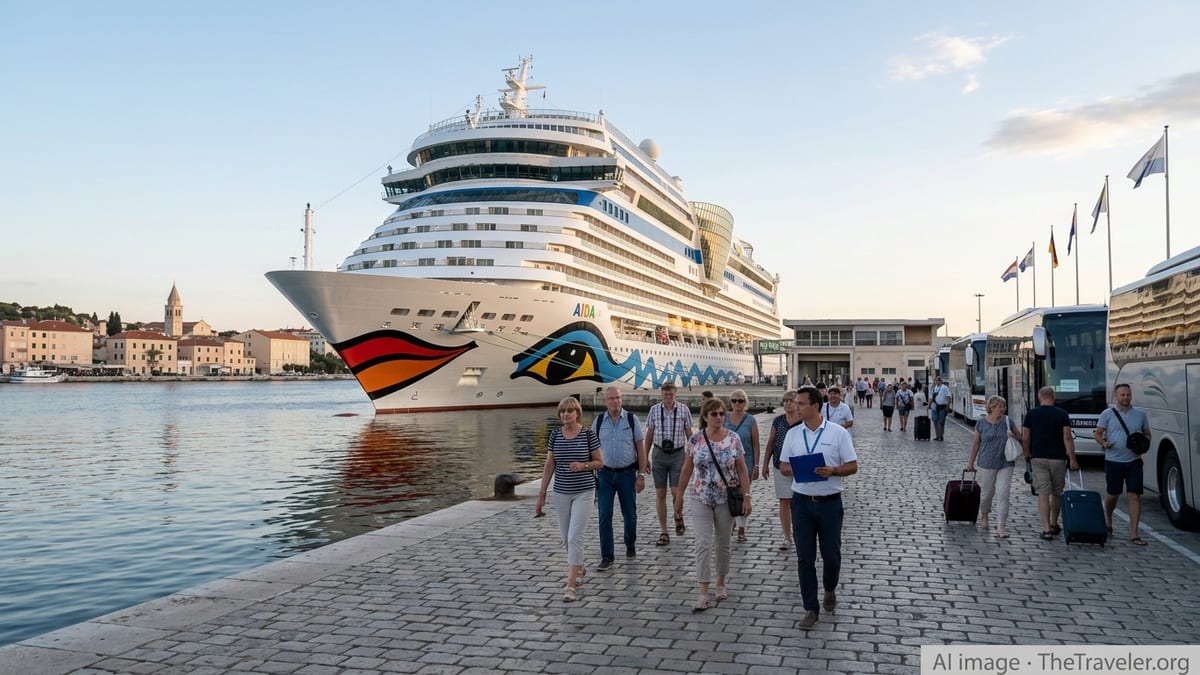
Pan-European Routes Linking Major Hubs and Hidden Harbors
AIDA Cruises, part of Carnival Corporation, focuses heavily on Europe, with ships homeported in cities such as Hamburg, Kiel, Rostock-Warnemünde, Barcelona and Palma de Mallorca. The network allows travelers to embark close to major air gateways while still reaching smaller coastal towns that are harder to connect on land-only itineraries.
Current and upcoming schedules highlight a broad mix of regions. Cruise-mapping data for 2025 and 2026 indicates that AIDA ships are operating in the Mediterranean, the Adriatic and Aegean seas, the Baltic and North Sea, as well as around the Canary and Atlantic islands. Some itineraries string together marquee cities like Barcelona, Rome and Marseille with quieter stops in Norway’s fjords or along the rugged coasts of Scotland and Ireland.
For visitors flying in from North America or Asia, this routing means multiple countries in one journey with fewer internal flights. With seven to fourteen night voyages common on the European program, travelers can opt for a focused regional loop or combine back-to-back sailings to cover both northern and southern Europe in a single extended trip.
The line’s fleet composition, which includes larger ships such as AIDAnova and AIDAcosma alongside mid-size vessels like AIDAsol and AIDAmar, supports this mix. Larger ships tend to serve high-demand hubs and island arcs, while smaller units can slot into ports with draft or size restrictions, opening up additional scenic calls along fjords, estuaries and historic river mouths.
Cultural Shore Excursions Across Europe’s Historic Coastline
AIDA’s program across Europe is built around frequent port calls, often with full-day stops that leave time for both organized excursions and independent exploration. Publicly available excursion descriptions highlight city tours in destinations such as Rome, Barcelona, Athens and Copenhagen, alongside niche options that spotlight local food, wine or contemporary culture in secondary ports.
In Northern Europe, itineraries reach Baltic and North Sea cities including Stockholm, Helsinki and ports in Germany and the United Kingdom. These routes give travelers access to medieval old towns, modern design districts and maritime museums within a compact geography. Some voyages also include scenic sailing past coastal landmarks, allowing sightseeing straight from the deck when weather cooperates.
Further south, Mediterranean sailings connect classic resort islands and coastal heritage sites. Shore programs in this region commonly feature visits to UNESCO-listed old quarters, archaeological ruins and vineyards, combining coastal scenery with historical context. For passengers who prefer to explore independently, many ports are linked to city centers by short shuttle rides, local trains or tram networks.
Reports from recent seasons suggest that language is an important planning factor for international guests, as AIDA traditionally serves a largely German-speaking clientele. However, port infrastructure in most European cities is geared to handle global tourism, and independent travelers can typically rely on English-language signage, local guides and public transport information once ashore.
Streamlined Logistics for Long-Haul Travelers
One of the key draws for global travelers considering AIDA in Europe is the concentration of embarkation ports near major air hubs. Hamburg, Barcelona and Palma de Mallorca, for example, are all cities with wide international flight networks. This makes it easier for visitors from the Americas, Asia-Pacific or the Middle East to connect directly into a cruise departure without multiple domestic transfers.
Schedules compiled by cruise-industry trackers indicate that many itineraries operate on a weekly pattern, which can simplify flight planning and pre- or post-cruise stays on land. Travelers can arrive a day or two early to adjust to time zones and explore an embarkation city, then continue their trip by sea across several countries before flying home from the same or a different hub, depending on the itinerary.
Within Europe, AIDA’s focus on round-trip sailings from German ports such as Hamburg and Kiel also benefits rail-connected travelers. Major train routes from cities like Berlin, Munich and Frankfurt feed into these coastal gateways, providing an alternative to regional flights for those already on the continent or combining cruising with overland touring.
For passengers concerned about administrative hurdles, most of AIDA’s European routes remain within the Schengen Area, limiting the need for multiple visas for eligible nationalities. Travelers from outside Europe still need to review entry requirements carefully, but using a cruise as the framework for a multi-country itinerary can reduce the number of separate hotel check-ins, internal flights and cross-border ground transfers required.
Lower-Impact Sailing With LNG and Shore Power
Environmental performance is increasingly part of the decision-making process for cruise passengers, and AIDA has emerged as one of the more visible European brands in this area. The company introduced AIDAnova in 2018 as the first cruise ship in the world designed to run on liquefied natural gas both at sea and in port, and later added AIDAcosma with similar technology. Industry and company reports describe these ships as part of a broader attempt to reduce local emissions in busy coastal corridors.
Recent sustainability updates indicate that the line is expanding beyond conventional LNG toward certified bio-LNG, with several thousand tons supplied for AIDAnova in the first half of 2025. Coverage from cruise trade media notes that the brand is also integrating batteries and other energy-efficiency technologies to cut fuel consumption on longer European voyages.
Shore power is another area of rapid change. AIDA was an early adopter when Hamburg’s Altona terminal opened Europe’s first cruise-dedicated shore power facility, and subsequent reports from port authorities and industry observers show that the network has grown to at least 15 ports across seven European countries. In 2024 the fleet logged several hundred shore-power connections, sharply up from prior years, and Copenhagen’s new facility welcomed AIDAnova as its first cruise ship user in 2025.
For travelers, these investments do not change the onboard experience in an obvious way, but they can reduce noise and visible emissions during port days and respond to local regulations in environmentally sensitive areas. As more European cities tighten rules around air quality and carbon output, ships equipped for alternative fuels and shore power are likely to retain access to prime berths close to historic centers.
Positioning AIDA Among Europe-Focused Cruise Options
Within the wider cruise market, AIDA competes with a mix of global and regional players that also base ships in Europe, including brands from Italy, Switzerland and the United States. Travel forums and consumer discussions frequently point to AIDA and another German brand as leading options for guests who are comfortable with a German-language onboard environment and want itineraries firmly anchored in European waters.
For international travelers, this emphasis on Europe can be an advantage. AIDA’s deployment plans for 2025 and 2026, as summarized by cruise-industry databases, show a large share of the fleet remaining in European regions year-round or seasonally, with winter rotations in the Canary Islands and off-season repositioning that still keeps ships relatively close to core markets.
Compared with more globally dispersed fleets, this focus can translate into repeatable patterns of Baltic summers, Mediterranean shoulder seasons and Atlantic island winters. Travelers planning ahead can use these patterns to lock in specific experiences, from midnight sun sailings in Northern Europe to springtime visits to Mediterranean ports before peak crowds arrive.
As itineraries continue to evolve, the combination of scenic routes, culture-centered shore calls, convenient air and rail access and a growing portfolio of energy technologies is positioning AIDA Cruises as a notable option for global travelers looking to explore Europe by sea without giving up the comforts of a modern ship-focused holiday.