


More news on this day
A group of intercity bus passengers travelling from Hyderabad to Palakollu was left stranded near Ibrahimpatnam on Monday after a private coach was reportedly abandoned on the roadside when it ran out of diesel, highlighting growing concerns about fuel supply disruptions and basic passenger protections on long-distance routes.
Get the latest news straight to your inbox!
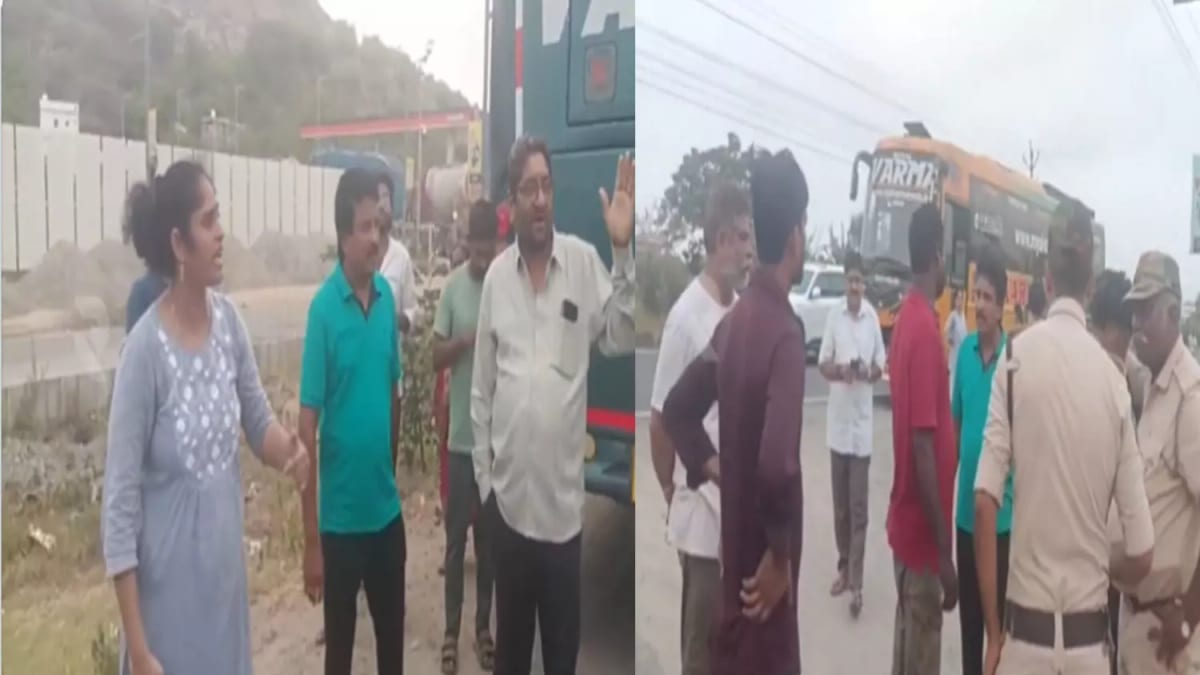
Passengers Stuck on Highway After Driver Walks Away
According to regional Telugu-language coverage, the incident occurred on April 27 near Ibrahimpatnam, on the busy Hyderabad – Vijayawada national highway. A private sleeper coach operated by a Varma-branded travel company was en route from Hyderabad to the coastal town of Palakollu when the bus reportedly came to a halt after running out of diesel.
Reports indicate that, after the vehicle stopped, the driver informed passengers that there was no fuel and subsequently left the spot, leaving travellers, including families and elderly passengers, waiting on the roadside with their luggage. With no clear information on when help would arrive, many reportedly remained at the location for an extended period as traffic continued to move past them on the highway.
Local coverage suggests that the bus operator’s helpline and office numbers were contacted multiple times by those on board, but callers complained that they received no timely assistance. With night-time intercity buses often marketed as a convenient door-to-door option, the sudden breakdown in service left passengers scrambling to find alternative transport to reach their destinations.
Several accounts describe the scene as chaotic, with stranded travellers weighing whether to wait for the operator to respond or to risk arranging their own onward journey from a relatively isolated stretch of road outside the main city.
Complaints Escalate as Passengers Turn to Police
Publicly available information indicates that, when calls to the private company went unanswered or failed to produce a solution, some stranded passengers lodged a formal complaint with local police near Vijayawada. They reportedly alleged negligence by the travel company in failing to maintain adequate fuel reserves and in abandoning the group without arranging a replacement vehicle.
Regional reports state that police registered the complaint and began gathering details about the operator, the route and the circumstances under which the driver left the bus. Such complaints typically seek to establish whether any consumer protection or transport contract provisions have been violated, and whether passengers are entitled to refunds or other compensation.
The incident adds to a growing list of grievances commonly raised against some private operators on popular Andhra Pradesh and Telangana corridors, including last-minute cancellations, overbooking, and poor communication in the event of breakdowns. For passengers on overnight and early-morning services, these disruptions can pose safety concerns, particularly when vehicles are halted far from major towns or transport hubs.
For now, there is no indication of injuries linked to the Ibrahimpatnam incident, but those stranded reported missing connecting plans and facing unexpected expenses as they tried to arrange alternative travel at short notice.
Fuel Supply Worries Intensify Across Andhra Pradesh and Telangana
The Ibrahimpatnam episode comes amid broader anxiety over diesel availability in parts of Andhra Pradesh and Telangana. Recent regional reporting has highlighted longer queues at some fuel stations and sporadic shortages, particularly along busy intercity corridors that see high volumes of trucks, buses and shared taxis.
Transport operators in nearby districts have complained of having to send vehicles from pump to pump to secure enough fuel for a single trip, sometimes delaying departures or forcing last-minute reshuffling of fleets. While major oil marketing companies have stated in recent weeks that overall supply is stable, localised distribution issues and panic buying in some urban centres have periodically tightened availability at the retail level.
Analysts note that long-distance private buses often operate on tight schedules and narrow margins, which can lead to risky decisions such as delaying refuelling in the expectation that cheaper or more readily available diesel can be found further down the route. When those assumptions fail, passengers bear the immediate consequences, as illustrated by the standstill near Ibrahimpatnam.
Consumer advocates argue that, regardless of fuel market conditions, operators have a duty to plan routes and refuelling stops conservatively enough to minimise the risk of buses running dry while in service, especially on highways where alternative transport and shelter may be limited.
spotlight on Private Bus Safety and Accountability
The latest incident has renewed scrutiny of how private intercity buses are regulated and monitored on key routes linking Hyderabad with coastal Andhra towns. Published commentary in recent months has raised questions about maintenance standards, driver working hours and the clarity of emergency procedures communicated to passengers.
In many cases, travellers booking seats through popular online aggregators may not know which company is actually operating a particular service or what recourse is available if the journey is disrupted. In the Ibrahimpatnam case, reports suggest that passengers felt they had little leverage once the bus stopped, beyond repeated calls to customer service and eventually turning to police.
Observers note that episodes like this also contribute to wider unease about night-bus travel. Previous high-profile accidents and breakdowns on South Indian highways have already prompted calls for stricter enforcement of safety norms, better tracking of vehicles, and clear compensation policies when journeys are interrupted. Running out of diesel on an open highway, critics argue, represents a basic planning failure that should be preventable even in a tight fuel market.
For regular commuters between Hyderabad, Vijayawada and coastal districts, the story has become a cautionary tale about checking operator reputations, recent reviews and cancellation policies before booking, particularly on overnight routes that pass through relatively isolated stretches.
Calls Grow for Clearer Passenger Rights on Long-Distance Routes
The Ibrahimpatnam diesel-shortage incident has also fed into a broader conversation about passenger rights in India’s booming but fragmented intercity bus sector. While rail travellers benefit from a well-established national framework for refunds, delays and cancellations, bus passengers often depend on a patchwork of state-level rules, company policies and platform terms and conditions.
Transport commentators have pointed out that many private bus tickets list only a basic helpline number and a departure time, with limited information on what assistance will be provided if the vehicle breaks down, is delayed for several hours, or fails to complete the journey. In practice, stranded travellers frequently turn to social media, local media outlets or police to seek redress.
Advocacy groups argue that incidents such as the one near Ibrahimpatnam underline the need for clearer minimum standards, including guaranteed access to a replacement bus within a specified time, pro-rated refunds if a journey is cut short, and obligations on operators not to leave passengers unattended in unsafe or remote locations.
As details of the Ibrahimpatnam case continue to circulate in Andhra Pradesh and Telangana, travellers and consumer groups are watching to see whether local regulators and industry bodies treat it as an isolated lapse or as part of a wider pattern that demands a more systematic response.