


More news on this day
Air Canada and regional partner Jazz have grounded three flights at Winnipeg Richardson International Airport, with disruptions rippling across their Canadian and U.S. route networks as the busy summer travel period intensifies.
Get the latest news straight to your inbox!
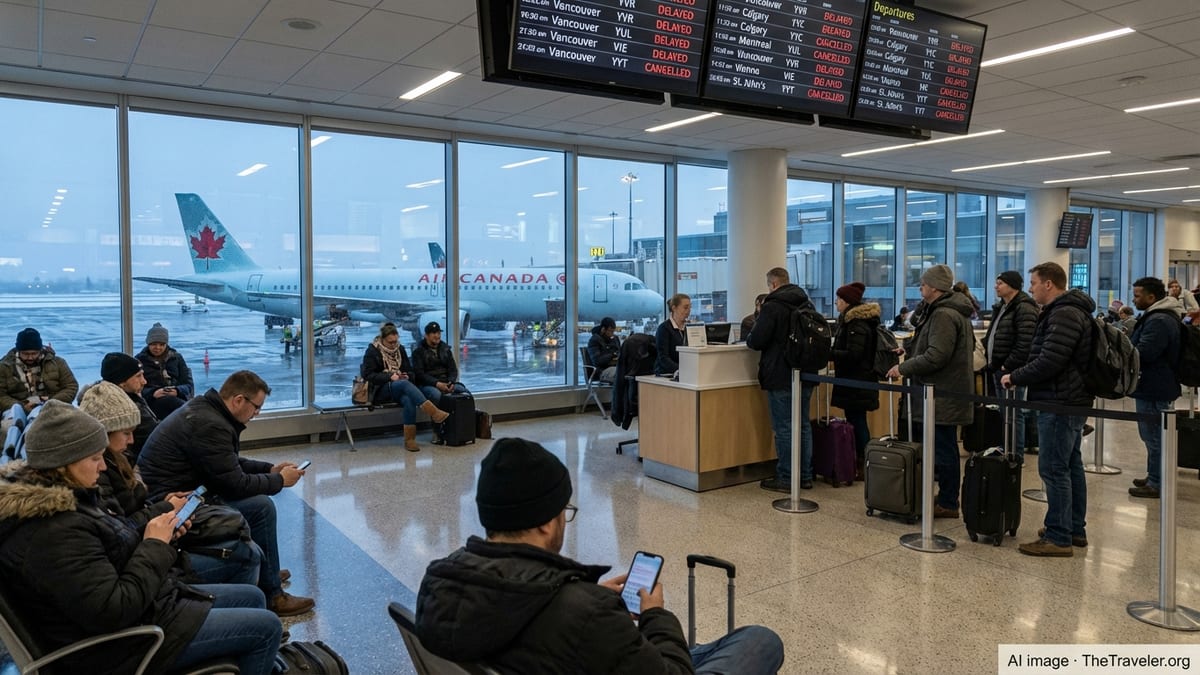
Grounded Aircraft Add Pressure at Winnipeg Hub
Operational data and passenger reports indicate that three Air Canada and Jazz-operated aircraft were held on the ground at Winnipeg Richardson International Airport, contributing to a cascade of delays on regional and transborder routes. The affected aircraft were scheduled to operate short- and medium-haul segments that feed into Air Canada’s wider network, a structure that makes local disruptions particularly prone to spreading across multiple cities.
The grounded flights follow a period of heightened weather and congestion challenges around Winnipeg in mid-June, when thunderstorms and apron congestion led to multiple diversions and extended tarmac waits for several carriers. Those conditions left aircraft and crews out of position, making the system more vulnerable when fresh disruptions emerged at the airport.
Winnipeg Richardson International functions as a key spoke in Air Canada’s network, linking the Prairie provinces with major hubs such as Toronto, Vancouver and Montreal, as well as select U.S. destinations via Jazz-operated services. When aircraft that normally rotate through several daily segments remain on the ground, subsequent departures can be delayed or cancelled, even on routes far from Manitoba.
Publicly available flight-tracking information shows a pattern of knock-on delays through the day, with later departures departing well behind schedule and arrival times sliding across the board. For travelers attempting to make onward connections, even modest initial delays at Winnipeg translated into missed links and last-minute rebookings elsewhere in the network.
Ripple Effects Across Canadian and U.S. Routes
The grounding of three aircraft at Winnipeg quickly translated into schedule issues for flights linking Canada and the United States. Jazz, which operates as Air Canada Express on regional and cross-border routes, relies on tight aircraft utilization, with individual planes often shuttling between multiple smaller cities and larger hubs within a single day. Any extended ground time in Winnipeg therefore reduces available capacity across a broad routing pattern.
Transborder services are especially sensitive to this kind of disruption. Many regional jets that operate from Winnipeg also connect to U.S. gateways via other Canadian hubs, meaning that delays on one domestic leg can impact boarding times, gate availability and crew hours on subsequent international segments. Flight-status boards and tracking platforms showed growing delays on both domestic and U.S.-bound sectors as the Winnipeg issues continued.
Travel industry analysts note that Canadian carriers are operating in a tightly constrained environment, with aircraft and crew resources optimized for strong summer demand. In such circumstances, the loss of even a few rotations can have an outsize impact on the ability to absorb additional shocks, whether from weather, congestion, or air traffic flow restrictions in Canadian or U.S. airspace.
For passengers, the practical effect was a familiar pattern of rolling delays, gate changes and compressing connection times. Some travelers reported being rebooked through alternative hubs or shifted to later departures, while others encountered longer ground holds as airlines attempted to rebuild schedules in real time.
Weather, Infrastructure and Staffing Under Scrutiny
The latest disruption at Winnipeg comes amid wider scrutiny of the reliability of air travel in North America. Aviation reports over the past year point to a combination of factors contributing to increased delays, including more frequent severe weather events, infrastructure constraints at certain airports and persistent staffing challenges in both airline and air traffic control operations.
Winnipeg Richardson International has recently coped with episodes of severe thunderstorms and apron congestion strong enough to generate widespread cancellations and diversions. When those events occur, arriving aircraft may be held on taxiways, and ground-handling teams can struggle to process the volume of flights within normal turnaround times. Any subsequent operational issue, such as an aircraft requiring technical attention or a crew reaching duty-hour limits, becomes more likely to trigger a cascade of delays.
Across Canada and the United States, aviation authorities and industry observers have highlighted how regional carriers such as Jazz often face the sharpest impact from these pressures. Their fleets tend to operate more sectors per day per aircraft than larger mainline jets, and they serve a higher proportion of small and medium-sized communities where alternate flight options are limited. As a result, disruptions centered on a regional operation can have a particularly visible effect on passengers.
Publicly available performance data have also shown a long-term trend toward increased tarmac delays and late arrivals, particularly during peak travel seasons. Travel advocacy groups argue that airlines and airports need more resilience in their schedules and infrastructure to manage the compounding effects of extreme weather and system bottlenecks.
Impacts on Travelers and Network Recovery Efforts
For passengers caught up in the latest wave of delays tied to Winnipeg, the experience largely depended on their specific routing and connection profile. Travelers on point-to-point journeys with no onward links often faced lengthy waits in the terminal or on the tarmac, but generally reached their destinations on the same day. Those with tight connections to onward domestic or U.S. flights were more likely to encounter missed links, overnight stays and unplanned itinerary changes.
Publicly available information from airport operations and airline schedules suggests that recovery efforts focused on consolidating passenger loads, prioritizing flights with large numbers of connecting travelers and repositioning aircraft where possible. In some cases, larger aircraft have previously been deployed on certain routes serving Winnipeg in order to help clear backlogs after major disruptions, although such adjustments depend on overall fleet availability on a given day.
Air passenger rights organizations in Canada advise travelers affected by delays and cancellations to keep all documentation related to disrupted journeys, including boarding passes and receipts for meals or accommodation. Compensation and reimbursement eligibility can vary depending on the cause of the disruption, whether the flight is domestic or transborder, and how much notice passengers receive about changes to their itinerary.
As Air Canada and Jazz work to re-stabilize their schedules following the grounded aircraft in Winnipeg, industry observers expect knock-on effects to persist for several cycles of departures and arrivals. The episode underscores how localized operational challenges can swiftly evolve into system-wide issues on both sides of the border, especially during the peak summer season when little spare capacity exists in the network.