


More news on this day
An extreme heatwave sweeping Europe is straining energy systems, grounding parts of river transport and disrupting travel, as Italy works more closely with Hungary and other neighbors to keep power flowing and goods moving along vital waterways such as the Danube and Rhine.
Get the latest news straight to your inbox!
Record Temperatures Drive a New Phase of Europe’s Climate Stress
Publicly available data from European climate and weather services show that June and July 2026 have ranked among the hottest on record for much of the continent, with heat shifting from Iberia and France toward Italy, Central Europe and the Balkans. Copernicus and World Meteorological Organization updates indicate that western and southern Europe have warmed by around 2 degrees Celsius over the past half century, amplifying the intensity and persistence of today’s heat events.
In Italy, national bulletins placed all major cities under the highest heat alert in early August as temperatures climbed well above seasonal norms. Media coverage reports that similar red alerts or equivalent warnings are in force across parts of Austria, Slovenia, Croatia, Hungary and the wider Balkans, underscoring the cross-border scope of the crisis.
The heat has not remained a purely meteorological story. It is transforming into an infrastructure test, exposing how tightly European transport, tourism and energy security are bound to weather-sensitive rivers and power networks designed for a cooler, more predictable climate.
As emergency plans roll out from Rome to Budapest and Brussels, governments are turning to regional partners to balance electricity supply, coordinate transport detours and protect key industrial sites from water and heat stress.
Italy and Hungary Coordinate to Safeguard Energy Security
The current heatwave is arriving at a time when both Italy and Hungary remain highly focused on energy security following recent gas market volatility in Europe. Analysis from institutions such as the International Energy Agency, the European Commission and the IMF describes both countries as heavily dependent on imported fossil fuels, while also increasingly reliant on weather-sensitive renewables.
According to published coverage, Hungary’s single nuclear plant at Paks, which normally supplies about half of the country’s electricity, has faced operational pressure as Danube water levels have dropped to record lows during the heat and drought. Cooling systems that depend on river water have less margin for safe operation when temperatures rise and flows fall, compounding strain on the power grid just as air-conditioning demand spikes.
Italy, meanwhile, has been drawing on greater solar generation in the south and hydropower in the Alps, but reduced summer river flows and high temperatures are limiting output in some basins. Energy-market monitoring from European agencies shows that Italy and Hungary have both leaned more on cross-border electricity exchanges to smooth local shortfalls, including via interconnectors linking Italy with Central and Southeast Europe and Hungary with surrounding EU states.
Regional policy papers highlight that such flows depend on coordinated planning among transmission system operators and governments across the EU and its neighbors. The present crisis is being treated as a real-time stress test of those arrangements, with Italy, Hungary, Croatia, Slovenia and other partners working to maintain stability on a grid that is simultaneously hotter, drier and more power-hungry than in previous summers.
Danube and Rhine at Historic Lows, River Transport Under Pressure
Europe’s largest rivers are emerging as focal points of the heatwave’s economic impact. Reports from river authorities and shipping companies indicate that water levels on the Danube and Rhine have plunged to levels rarely seen in recent decades, forcing vessel operators to lighten cargo loads, alter routes or suspend voyages entirely.
In Hungary and neighboring countries, gauges on the Danube have fallen well below previous all-time lows at several measuring points. Media reports from Budapest describe water depths of only a few centimeters at critical locations, a stark shortfall from historical norms. Along the lower Danube in Romania and Serbia, transport bulletins and local coverage describe stretches of the river where navigation windows have narrowed sharply, with some ports facing intermittent closures to larger vessels.
The Rhine, a key freight artery for Germany, the Netherlands and Switzerland, is facing similar stress. Port operators along the corridor have reported reduced draught limits and higher transport costs, and shipping lines have introduced low-water surcharges in response. Logistics groups warn that when barges can only sail partially loaded, more trips are needed to move the same volume of coal, fuels, chemicals and manufactured goods, compounding congestion and emissions.
River cruise tourism, a major draw on both the Danube and Rhine, is also being disrupted. Travel industry reports and passenger accounts describe last-minute itinerary changes, sections replaced by bus transfers and, in some cases, voyages curtailed when vessels could not safely pass shallow bottlenecks. For many travelers who booked to see riverside capitals from the water, the heatwave has turned a leisurely cruise into an exercise in contingency planning.
Travel Disruption Spreads from Rail and Air to Roads and Cities
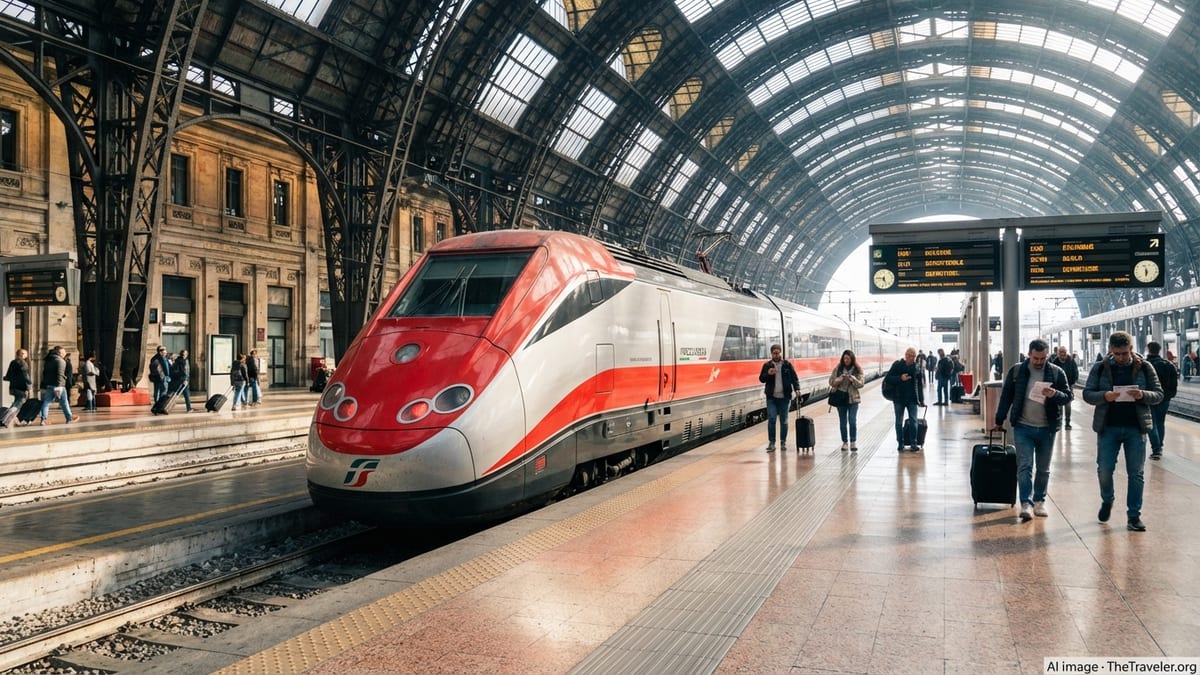
The extreme heat is rippling across Europe’s broader travel network. National railway operators in Italy, Austria, Hungary and several Balkan states have introduced speed restrictions on some lines, citing the risk of track deformation in high temperatures. Published timetables and operator statements show targeted slowdowns or timetable changes on heavily used intercity and cross-border routes, increasing journey times during the peak holiday season.
Air travel is also feeling the strain. Aviation coverage notes that high temperatures reduce air density, which can affect aircraft performance and, in extreme conditions, require payload limits or schedule adjustments. At the same time, heat-related incidents such as grass or brush fires near runways have temporarily disrupted operations at some European airports, adding to delays already caused by summer traffic.
On the roads, Italian motorway operator forecasts anticipate millions of additional vehicles crossing the network during the August holiday exodus, with the heatwave increasing breakdown risks and prompting advisories for travelers to plan rest stops and carry water. Similar warnings are being reported in Hungary and neighboring states, where highways linking capital cities and coastal resorts are expected to see heavy congestion.
Within cities, the combination of extreme heat and tourism has led to renewed debate over visitor management. Municipal advisories in Italian and Central European urban centers are encouraging travelers to shift outdoor activities to early morning and late evening, use public fountains and cooling centers where available, and pay attention to heat-health alerts that may affect popular attractions or outdoor events.
What Travelers and Policymakers Are Watching Next
Attention is now turning to how long the current heatwave and associated river drought will last. Hydrological outlooks from European drought observatories indicate that without sustained rainfall, low flows on the Danube, Rhine and other rivers could persist well into late summer, prolonging constraints on shipping and cooling water for power plants.
Energy analysts are monitoring how Italy, Hungary and neighboring countries use cross-border electricity trade and flexible gas supplies to bridge gaps between demand and weather-dependent generation. There is particular focus on how nuclear and coal plants that rely on river water manage their cooling requirements under tighter environmental limits, and whether temporary curtailments may be needed to protect ecosystems as temperatures climb.
For travelers, operators and tourism boards, the immediate priority is practical. Cruise companies are issuing rolling updates on route changes, rail and aviation providers are adjusting schedules as conditions evolve, and road authorities are urging drivers to avoid peak heat periods where possible. Travel advisers are recommending that visitors factor in extra time, consider flexible tickets and monitor official transport and weather channels closely in the days before departure.
At the policy level, the events of summer 2026 are reinforcing calls for long-term adaptation of Europe’s transport and energy infrastructure. Experts cited in European media argue that deeper cross-border coordination, modernized river management and investment in resilient grids and cooling systems will be central to keeping Italy, Hungary and their neighbors moving as extreme heat becomes a more regular feature of the European summer.