


More news on this day
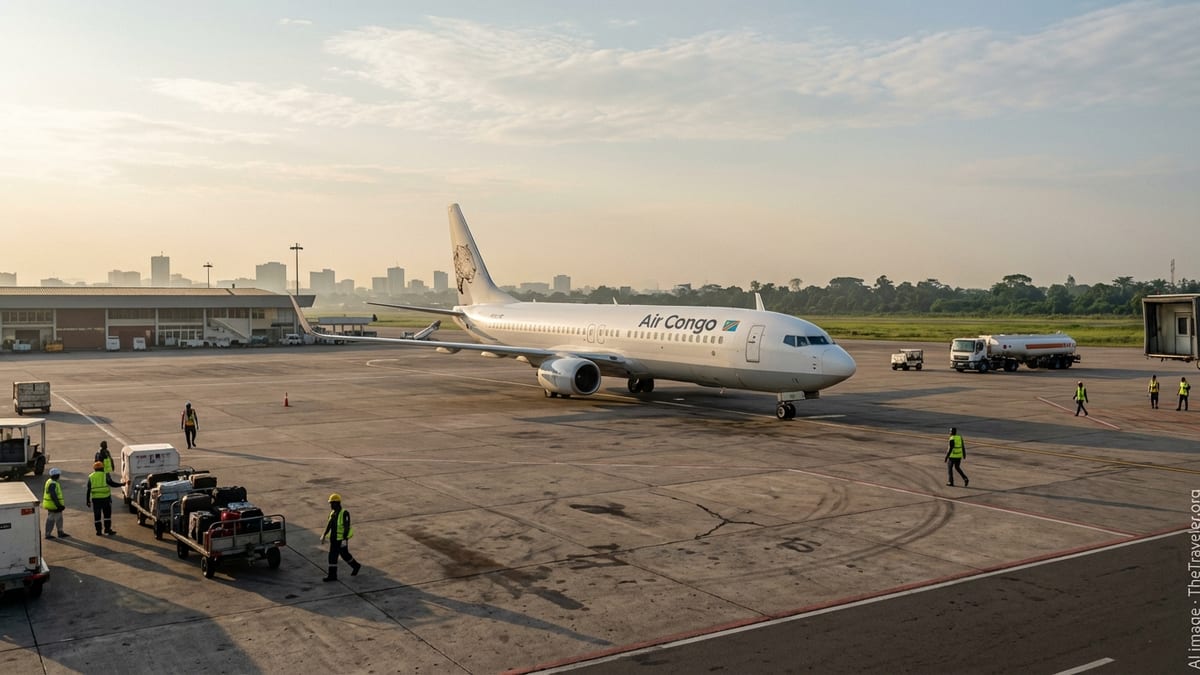
Air Congo is preparing to launch its first intercontinental service between Kinshasa and Brussels in early July 2026, positioning the route as a lifeline for Congolese diaspora travelers seeking more resilient options amid persistent disruption, congestion and fare volatility across Europe’s aviation network.
Get the latest news straight to your inbox!
A Strategic First Step Into Europe
The Kinshasa–Brussels service will mark Air Congo’s debut on the European market and its first long-haul route beyond Africa. Publicly available information indicates that flights are planned to operate five times per week between N’Djili International Airport and Brussels Airport, using a widebody aircraft provided through the airline’s partnership with Ethiopian Airlines.
The schedule being discussed in industry coverage mirrors long-standing patterns on the corridor, with late-evening departures from Kinshasa and morning arrivals in Brussels, followed by late-morning returns to the Congolese capital. That timing is intended to connect with onward flights across Europe while remaining practical for travelers departing and arriving in Kinshasa.
For Air Congo, founded in late 2024 with majority Congolese state ownership and a significant strategic stake held by Ethiopian Airlines, the route represents a symbolic graduation from domestic and regional operations to full-service intercontinental carrier. Published network plans have long flagged Brussels, alongside Paris and Dubai, as priority long-haul destinations.
Brussels Airlines has held a de facto monopoly on non-stop passenger service between Belgium and the Democratic Republic of the Congo for more than a decade. The arrival of a home-country competitor on the same city-pair introduces capacity and could gradually reshape pricing and service standards on one of Central Africa’s most important long-haul links.
Targeting a Congolese Diaspora Under Strain
The Kinshasa–Brussels corridor serves a sizable Congolese diaspora community in Belgium and neighboring countries, as well as business and governmental traffic. For many travelers, the route is not discretionary: it underpins family ties, remittances and professional networks between Central Africa and Europe.
Recent seasons of disruption across European hubs, including queues, air traffic control staffing issues and weather-related knock-on delays, have increased the perceived risk of complex one-stop itineraries. Congolese travelers, who often balance tight vacation windows and important family events, have been particularly exposed when forced to rely on indirect routings through overcrowded hubs.
By offering a non-stop connection under Congolese branding, Air Congo is positioning the Kinshasa–Brussels route as a more predictable bridge between the diaspora and home. The airline’s partnership structure with Ethiopian Airlines supplies long-haul aircraft and operational expertise that may help insulate customers from some of the disruption common on heavily banked European hubs.
Industry observers note that the new route also speaks to a broader trend of African flag carriers seeking to win back traffic that had migrated to foreign airlines offering multi-stop journeys via the Gulf or secondary European gateways. For Congolese passengers, a competitive non-stop option could reduce the need to rely on those longer itineraries.
Capacity, Competition and Fares on a Historic Corridor
Brussels has historically functioned as a key European gateway to Central Africa, with air links to Kinshasa dating back to the colonial era and maintained, in various forms, through successive Belgian and Congolese carriers. In recent years, Brussels Airlines became the dominant operator on the Kinshasa route, concentrating point-to-point and connecting traffic into a single daily service.
The planned entry of Air Congo introduces additional seats into a market that, according to traffic data cited in recent aviation analysis, carried more than 80,000 round-trip passengers in 2025. Roughly two-fifths of those travelers are estimated to be point-to-point between Belgium and the Democratic Republic of the Congo, with the remainder connecting onward within Europe or to North America.
Increased competition on such a route typically exerts pressure on fares over time, particularly in economy cabins heavily used by diaspora travelers. Analysts following the Central African market suggest that even modest capacity growth can lead to more promotional pricing, diversified cabin products and targeted offers aligned with peak return seasons around summer and year-end holidays.
For Brussels Airlines, the arrival of a competitor may prompt schedule adjustments, product upgrades or renewed marketing aimed at retaining loyalty among Congolese and European customers. For Air Congo, success on the route will depend on maintaining reliable operations and competitive pricing despite relatively high operating costs on long-haul services.
Operational Challenges and Safety Perceptions
Launching a long-haul connection into Europe brings specific regulatory and operational challenges. Airlines based in the Democratic Republic of the Congo have historically faced restrictions in European Union airspace, with safety oversight and fleet standards under close scrutiny. Air Congo’s decision to operate Kinshasa–Brussels with aircraft and technical support from Ethiopian Airlines is widely interpreted as an attempt to align with globally recognized standards and satisfy European requirements.
Publicly available fleet information shows that Air Congo’s long-haul operations will rely on modern widebody aircraft capable of non-stop service on the 6,000-kilometer sector, rather than aging equipment that has previously limited regional carriers’ reach. This approach allows the airline to emphasize reliability and safety in its messaging to a diaspora audience that is sensitive to past incidents in Central African aviation.
At the same time, the new route will test N’Djili International Airport’s ability to support higher volumes of connecting and outbound long-haul traffic, from ground handling and maintenance facilities to baggage systems and border controls. Brussels Airport, for its part, will be incorporating a new African carrier into its slot portfolio and terminal operations during an already busy summer season.
Aviation specialists underline that operational robustness during the first months of service will be critical to building trust. Any extended delays or cancellations would be closely watched by both travelers and regulators, especially in an environment where European networks continue to experience periodic disruption linked to staffing and infrastructure constraints.
What the New Route Means for Travelers
For Congolese travelers in Belgium, France, the Netherlands and neighboring countries, Air Congo’s entry on the Kinshasa–Brussels route provides an additional non-stop option at a time when many are wary of missed connections and prolonged disruptions in Europe. The airline is expected to emphasize through-checked baggage, straightforward schedules and the appeal of flying with a national carrier.
Business travelers and development organizations working between Central Africa and Europe may also benefit from greater schedule flexibility, particularly with five weekly rotations that complement, rather than mirror exactly, existing services. Travel planners are likely to weigh Air Congo’s offering against established loyalty programs and interline partnerships available through Brussels Airlines and other European groups.
In the medium term, successful performance on Kinshasa–Brussels could unlock additional long-haul links from the Congolese capital, potentially including Paris or Gulf hubs already identified in Air Congo’s strategic roadmap. For the diaspora, that would translate into a more diversified set of travel choices and reduced dependence on a single European gateway.
For now, attention is focused on the inaugural flights in July and on whether the new service can deliver the reliability and value that Congolese communities in Europe have been demanding as they navigate a period of heightened uncertainty in the region’s aviation system.