


More news on this day
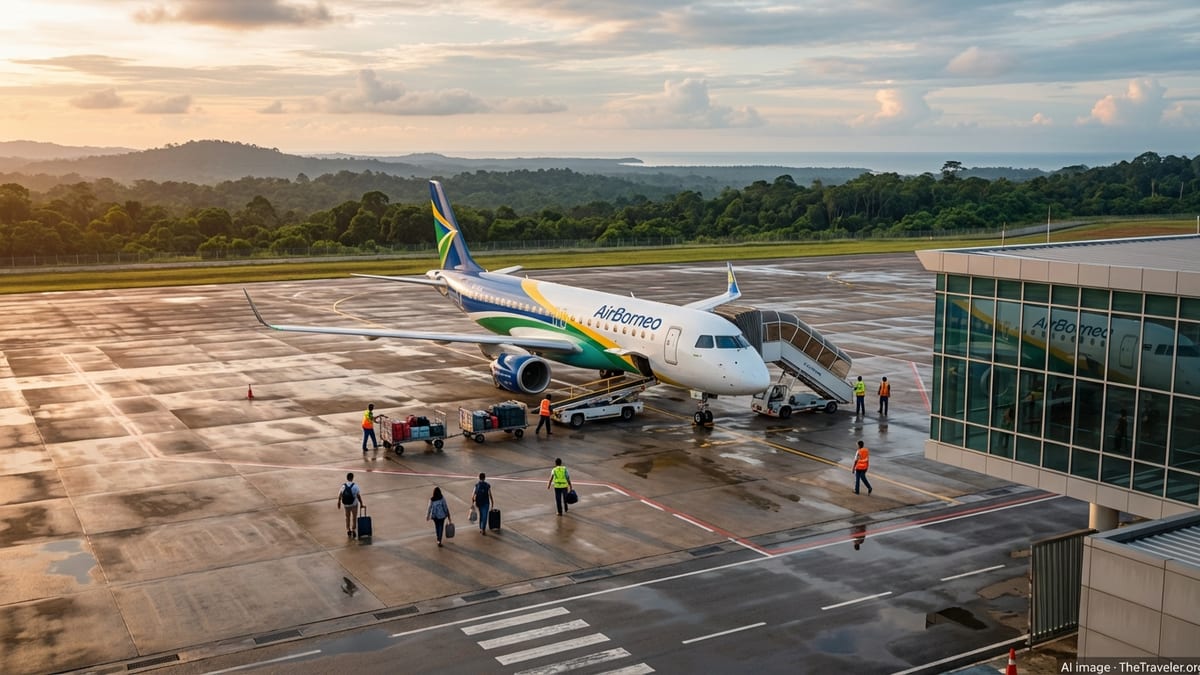
Regional carrier AirBorneo has apologised to travellers hit by a wave of flight delays and cancellations across Sabah and Sarawak, outlining service recovery measures as it works to stabilise operations on key rural and intercity routes.
Get the latest news straight to your inbox!
Maintenance bottlenecks trigger days of disruption
Publicly available information shows that AirBorneo’s problems escalated in early June, when several turboprop aircraft were taken out of service at the same time for scheduled maintenance and technical rectification work. The process was further slowed by late delivery of key replacement components, creating a cascading shortage of available aircraft across its East Malaysia network.
Reports indicate that the Sarawak-owned airline, which took over rural and regional routes from MASwings at the start of 2026, struggled to keep to its timetable as aircraft ground time lengthened. Flights linking secondary cities and remote communities in Sabah and Sarawak were particularly affected, with some passengers facing last-minute cancellations and prolonged delays over several days.
Coverage from Malaysian news outlets notes that AirBorneo acknowledged the disruption, inconvenience and uncertainty faced by travellers and their families, especially in regions where air travel remains a crucial lifeline. The airline has repeatedly stressed that safety remains its top priority, even as it works to restore punctuality and capacity.
The disruption has drawn scrutiny because AirBorneo’s government-backed mandate includes maintaining reliable connectivity for rural communities, not simply operating commercially attractive trunk routes. The recent events have therefore raised wider questions about resilience in East Malaysia’s aviation network.
Apology, refunds and support for affected passengers
In statements carried by local media, AirBorneo expressed regret to guests whose travel plans were derailed, saying it recognised the hardship caused to communities that depend on its services for work, education, medical appointments and family visits. The airline has described the situation as disappointing and has pledged to “earn back” public confidence through concrete actions.
Reports indicate that affected passengers are being contacted directly with options for rebooking, refunds and alternative travel arrangements. Depending on the severity of the disruption, AirBorneo has also provided meals, accommodation and ground transport, in line with Malaysia’s aviation consumer protection framework.
Consumer advisories circulated via news outlets and regulatory notices highlight that passengers impacted by significant delays or cancellations may be entitled to additional care and assistance, including rerouting or full refunds. Travellers have been urged to retain booking records and receipts for any out-of-pocket expenses when seeking redress.
Travel industry observers note that AirBorneo’s response aligns with wider regional expectations for full-service carriers, particularly on government-linked public service obligation routes. How consistently these commitments are delivered in the coming weeks is likely to influence public sentiment toward the young airline.
Urgent steps to stabilise operations
As disruption reports mounted, AirBorneo outlined a series of immediate operational measures aimed at restoring reliability. According to published coverage, maintenance teams have been working extended hours to return grounded aircraft to service, while the airline reviews its spare-parts supply chain to avoid repeat bottlenecks.
The carrier is also reported to be tightening fleet planning so that scheduled checks and technical rectifications do not take multiple aircraft out of rotation at the same time. Industry analysts point out that such planning is especially critical for a relatively small fleet, where the loss of just a few aircraft can quickly trigger widespread timetable disruption.
In parallel, AirBorneo has begun implementing additional monitoring of on-time performance and aircraft utilisation. Public information suggests that the airline is seeking to build greater “buffer” into its schedules, allowing more room to recover from delays without resorting to cancellations.
Regional tourism stakeholders are watching the situation closely. Sabah and Sarawak rely heavily on dependable air links not only for local residents but also for domestic and international visitors heading to nature attractions, diving hotspots and cultural destinations. Even short-lived disruptions can have knock-on effects for tour operators, hotels and local transport providers.
Fleet renewal and long-term service resilience
Beyond the immediate crisis response, AirBorneo is positioning its fleet renewal as a key part of long-term service recovery. The airline has confirmed plans to introduce new ATR 72-600 aircraft, modern turboprops that are widely used on short regional sectors and remote airstrips throughout Southeast Asia.
Industry commentary notes that additional aircraft capacity should help AirBorneo spread maintenance requirements more evenly, reducing the risk that several planes are grounded at the same time. The newer aircraft are also expected to deliver better fuel efficiency and improved passenger comfort compared with older turboprops.
As the successor to MASwings on rural air services, AirBorneo operates under a public service obligation model that combines commercial operations with social connectivity goals. Balancing cost control, safety and reliability on these thin routes has long been a challenge in East Malaysia, and the June disruptions highlight how tight that balance can be.
Analysts suggest that the fleet renewal programme, combined with more conservative scheduling and stronger maintenance partnerships, will be critical in building resilience into the network. However, they also caution that such changes take time to translate into consistently smoother day-to-day operations.
Regulatory scrutiny and traveller expectations
The Civil Aviation Authority of Malaysia has acknowledged recent AirBorneo disruptions and, according to official notices, is monitoring operational performance while reminding carriers of their obligations under the Malaysian Aviation Consumer Protection Code. This includes requirements to provide timely and accurate information about delays, cancellations and schedule changes, along with clear options for affected passengers.
Travel commentators observe that for many residents of Sabah and Sarawak, particularly those in smaller towns and rural areas, air travel is an essential service rather than a discretionary luxury. Expectations for reliability are therefore high, especially from a state-linked airline that was launched partly to improve East Malaysia’s connectivity.
In the short term, AirBorneo’s ability to execute its recovery plan and communicate clearly with travellers will shape how quickly confidence returns. For visitors planning trips to Borneo’s rainforests, highlands and islands, travel advisers recommend monitoring flight status closely, building in extra connection time and considering flexible bookings while the airline works through its operational reset.
For now, the carrier’s public apology and commitment to service recovery mark an important step toward rebuilding trust. The coming weeks will test whether new maintenance strategies, strengthened fleets and closer oversight can deliver the smoother, more reliable operations that Sabah and Sarawak’s residents and visitors are counting on.