


More news on this day
Air India is sharply scaling back parts of its long haul network, suspending links to Chicago and Shanghai and trimming services to Paris, Milan, Toronto and other major hubs as airspace restrictions and record jet fuel costs collide, disrupting travel plans across North America, Europe and Asia.
Get the latest news straight to your inbox!
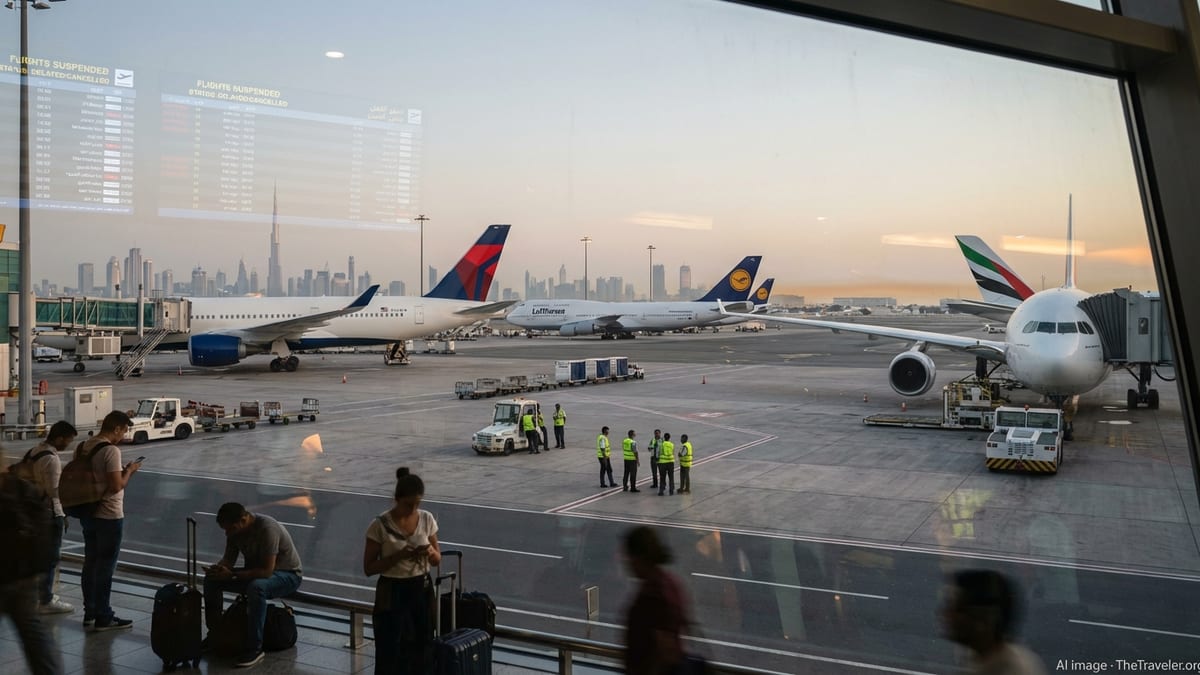
Fresh Wave of Cancellations Hits Key Global Gateways
Publicly available schedules and recent coverage indicate that Air India will cancel around 400 international flights per month between June and August 2026, concentrating reductions on routes linking India with North America, Europe, Australia and Southeast Asia. The latest adjustments come on top of earlier capacity cuts and temporary suspensions, turning what began as a short term response into a sustained reshaping of the carrier’s long haul network.
Among the highest profile changes are the suspension of service between Delhi and Chicago and between Delhi and Shanghai. Chicago is one of Air India’s marquee gateways in the United States, while Shanghai has historically been a key bridge for business and student traffic between India and China. Their removal from the schedule signals how severely operating conditions have deteriorated on lengthy, fuel intensive sectors that must detour around restricted airspace.
In Europe and North America, passengers are also facing reduced options rather than outright loss of connectivity. Reports on the airline’s schedule changes describe deep frequency cuts on the Delhi Paris route, with services effectively halved compared with earlier timetables. Flights from India to Milan and Toronto have also seen weekly services trimmed, moving from near daily or dense schedules to thinner patterns that leave fewer seats available in peak summer months.
These developments place India alongside Canada, France, Italy, Switzerland, Denmark, China and other countries whose travelers now face tighter capacity on nonstop links with India. For many itineraries, journeys that once relied on a single Air India nonstop may now require rebooking on foreign carriers or taking less direct routings via third country hubs.
Airspace Restrictions Lengthen Routes and Undermine Viability
Air India’s network changes are unfolding against a backdrop of overlapping airspace constraints that complicate flight planning across Eurasia and the Middle East. Since the closure or partial restriction of several corridors, long haul services between India and destinations such as North America and East Asia have been forced onto more southerly or circuitous paths. These diversions add hours of flying time on some sectors, sharply increasing fuel burn and crew costs.
Industry analysis over the past year has highlighted how Indian carriers, including Air India, must thread a narrow corridor between Pakistani airspace restrictions and operational limitations over the Tibetan Plateau when flying to Europe and North America. Similar constraints affect services skirting conflict zones in West Asia. The result is a patchwork of elongated routings that erode the margins on routes that were already sensitive to fuel price swings.
For ultra long haul flights such as Delhi Chicago or Delhi Shanghai, the combination of longer routes and heavier fuel loads can quickly render operations commercially unviable. Even a modest extension in great circle distance may push an aircraft close to payload or range limits, forcing airlines to cap passenger or cargo loads just as costs are climbing. In that environment, trimming frequencies or suspending entire routes becomes one of the few levers available to preserve network stability.
While some competitors in Europe and North America have alternative overflight options or can redeploy capacity within large home markets, Air India’s position as India’s primary intercontinental flag carrier gives it less flexibility. The carrier continues to operate many long haul services, but is increasingly concentrating capacity on sectors and corridors where routing is more predictable and demand is deepest.
Record Jet Fuel Prices Amplify Financial Pressures
The latest schedule cuts are also tied directly to a surge in global jet fuel prices that has hit airlines worldwide. Industry trackers report that average aviation fuel costs have climbed well above levels seen earlier in the decade, with some recent weeks reflecting prices significantly over 160 dollars per barrel. Some analyses of Air India’s decision making frame the suspension of Delhi Chicago and Delhi Shanghai specifically in the context of fuel benchmarks that have at times approached or exceeded 200 dollars per barrel.
For airlines, fuel remains the single largest operating expense on long haul flights, often accounting for a third or more of total trip costs. When fuel prices spike, the economics of routes that were only marginally profitable can deteriorate quickly. Flights that are already flying longer detours due to airspace restrictions are particularly exposed because every additional hour in the air multiplies fuel consumption.
In Air India’s case, the twin forces of lengthened routings and higher fuel prices have converged at the same moment the carrier is midway through an ambitious fleet refurbishment and expansion program. With a portion of its widebody fleet in retrofit and limited spare capacity, the airline has fewer aircraft to spread across its global network. Rationalizing routes that have become financial outliers is one way to free up aircraft for markets that can support higher fares or more efficient stage lengths.
Aviation analysts note that while fuel hedging and fare surcharges can offset some of the shock, they cannot fully insulate carriers when structural changes in route geometry and airspace access are involved. That reality is now being reflected across Air India’s published schedules for the coming summer season.
Impact on Travelers in the United States, Canada, Europe and China
For travelers in the United States, the most immediate effect is the loss of the nonstop Delhi Chicago service and the reduced capacity on other India bound routes. Passengers who previously relied on direct Air India flights from major American cities are likely to find fewer date and time options in airline booking systems, especially during peak travel windows between June and August.
Canadian passengers are also affected by reductions on the busy Delhi Toronto route. Publicly available information indicates that while the route is expected to return to a daily schedule in August 2026, near term cuts will constrain capacity and may push more travelers onto connecting services via European or Gulf hubs. This, in turn, could lengthen overall journey times and increase exposure to missed connections when disruptions occur.
In Europe, frequency reductions to Paris and Milan and cuts on other continental routes to and from India are likely to ripple across carriers and alliances. Travelers from France, Italy, Switzerland and Denmark who once favored Air India nonstops or convenient one stop itineraries may now see fuller flights, higher fares, or the need to switch to partner airlines to complete their journeys. Corporate travelers and members of global frequent flyer programs may feel these changes most acutely as they try to maintain preferred routings and status benefits.
For China, the suspension of Delhi Shanghai removes a direct link that has been important for business, academic and diaspora travel. With fewer nonstop options between the two countries, passengers may need to transit via Hong Kong, Southeast Asia or Middle Eastern hubs, adding complexity and time to itineraries that were once relatively straightforward.
What Passengers Should Watch in the Months Ahead
With Air India signaling that schedule adjustments may continue if operating conditions remain difficult, travelers planning trips between India and North America, Europe or East Asia in late 2026 should monitor airline communications and booking tools closely. Schedule changes on long haul flights can occur weeks or even months after tickets have been purchased, as airlines respond to evolving fuel prices, airspace notices and aircraft availability.
Passengers affected by suspensions to Chicago, Shanghai or reduced frequencies to cities such as Paris, Milan and Toronto are generally being offered rebooking on alternate Air India services or refunds, in line with the airline’s published policies. However, options may be limited on peak days when remaining flights are already heavily booked. Travelers with time sensitive trips, such as business meetings or family events, may wish to build in additional buffer time or consider alternate routings via partner airlines.
Network planners and industry observers will be watching for signs that fuel prices ease or that airspace restrictions are relaxed, which could allow Air India to restore some of the suspended services or rebuild frequencies on thinned routes. The carrier has previously demonstrated a willingness to add back capacity quickly when conditions allow, including by operating additional flights on select European and North American routes during brief windows of improved demand and operational stability.
For now, though, the reality for many travelers in the United States, Canada, France, Italy, Switzerland, Denmark, China and India is a period of constrained capacity, higher average loads and fewer nonstop options. Until the twin pressures of airspace and fuel costs ease, Air India’s network is likely to remain in a state of flux, and passengers will need to plan accordingly.