


More news on this day
Air India has terminated more than 1,000 employees over the past three years for ethical breaches, as chief executive Campbell Wilson intensifies internal compliance efforts while grappling with mounting financial losses and sweeping cost controls.
Get the latest news straight to your inbox!
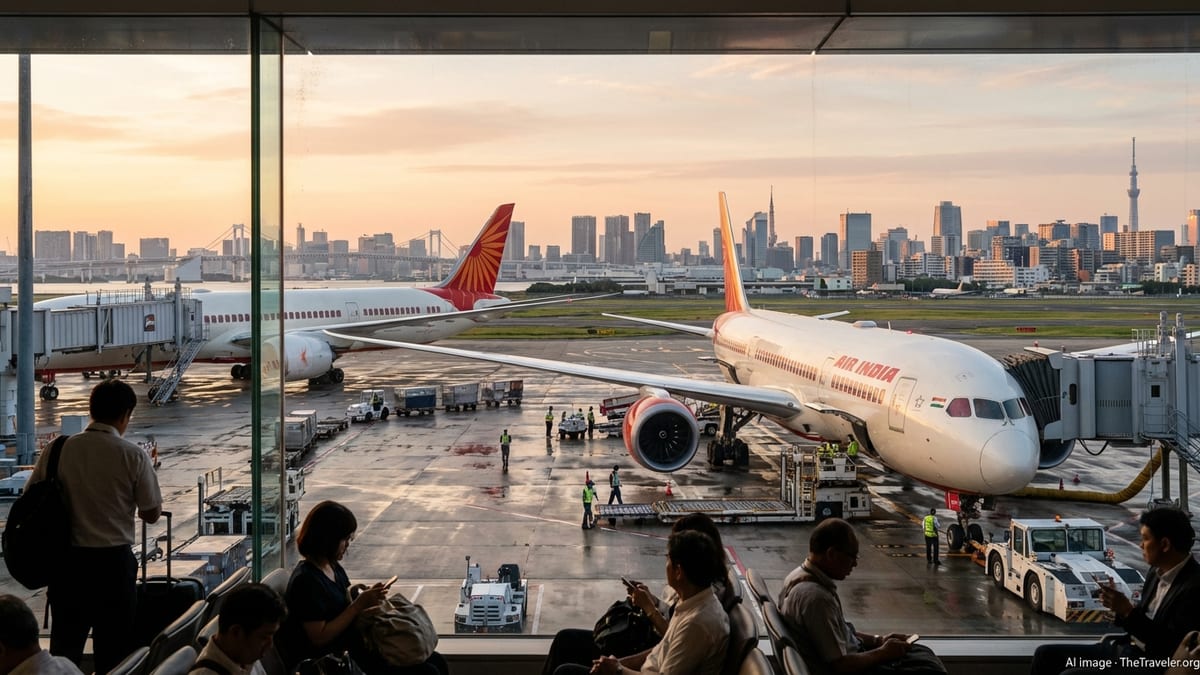
Terminations Signal Zero-Tolerance on Misconduct
Publicly available information shows that Air India has removed more than 1,000 employees since 2023 for violations ranging from misuse of staff travel benefits to irregular baggage handling and alleged smuggling of onboard items. The figure, disclosed by chief executive and managing director Campbell Wilson during a recent staff town hall, indicates that hundreds of workers have been dismissed annually for non-compliance with company rules.
Reports indicate that the cases span multiple roles and functions, underscoring a tightening of discipline within the Tata Group-owned carrier. Misconduct has reportedly included allowing excess baggage without proper charges and exploiting internal systems designed as employee perks. The pattern of dismissals has been framed internally as an attempt to reinforce standards across an expanding network and workforce.
The scale of the terminations is notable for an airline that currently employs around 24,000 people. While the exact breakdown of roles and locations affected has not been made public, the growing tally suggests that Air India’s leadership is prepared to remove staff when actions are judged to compromise safety, revenue integrity or the airline’s reputation.
According to published coverage, Wilson has emphasized to staff that ethical conduct is expected even when there is no immediate oversight, positioning personal accountability as central to Air India’s transformation under Tata ownership.
Leisure Travel Misuse Exposes Weak Spots in Internal Controls
A key trigger for the current compliance drive has been the misuse of Air India’s Employee Leisure Travel (ELT) system, a long-standing staff benefit. Investigations earlier this year reportedly uncovered large-scale discrepancies in how the policy was being used, involving more than 4,000 employees across the airline.
Reports from Indian business media indicate that an internal review identified staff members who had allegedly manipulated or stretched the rules of the ELT scheme, prompting corrective actions. These have included financial penalties and, in more serious instances, dismissal. The airline’s move highlights how staff travel benefits, if inadequately monitored, can become a channel for revenue leakage and uneven treatment among employees.
The ELT probe has also exposed vulnerabilities in data tracking and approval workflows. According to publicly available information, the irregularities were discovered only after detailed internal audits, suggesting that earlier oversight mechanisms may not have been robust enough for a carrier undergoing rapid expansion and systems integration.
Industry observers note that by making the ELT enforcement drive highly visible, Air India is attempting to send a wider message on compliance culture. Staff have been reminded that internal privileges are subject to strict monitoring, and that any abuse of such benefits will be treated as a serious ethical breach rather than a minor infraction.
Cost-Cutting Intensifies Amid Heavy Losses
The disciplinary measures come against a backdrop of significant financial strain. Recent coverage in Indian business outlets indicates that the Air India Group, including Air India and Air India Express, is projected to have incurred losses exceeding 22,000 crore rupees in the financial year ending March 2026. Prolonged airspace closures over Pakistan and higher fuel costs linked to tensions in West Asia have compounded operational challenges.
In parallel with the compliance push, management has rolled out a series of cost-saving steps. Publicly available reports show that annual increments for staff have been deferred by at least one quarter, while teams have been asked to rein in discretionary spending and postpone non-critical projects. Internal communications have described the coming year as potentially very difficult if market conditions, particularly on Middle East routes, do not improve.
The dual focus on ethical enforcement and cost restraint reflects the pressure on Air India’s turnaround plan, which is built around a landmark fleet renewal, network expansion and integration of group airlines. Cutting waste, plugging revenue leakages and tightening internal controls are seen as necessary to sustain investment in aircraft, technology and service upgrades.
Aviation analysts quoted in local media have suggested that stronger cost discipline may also be aimed at reassuring investors and financing partners, including those connected to Air India’s international alliance and codeshare arrangements, that the carrier is prepared to take unpopular decisions to restore financial health.
Rebuilding Culture Under Tata Ownership
Air India’s actions are unfolding in the wider context of its post-privatisation overhaul under the Tata Group. Since the conglomerate assumed control in 2022, leadership has repeatedly signalled that a stronger culture of compliance, accountability and performance is central to the airline’s revival strategy.
According to published coverage, the ethics crackdown is being framed internally as part of a broader cultural reset after decades as a state-run carrier. The dismissal of staff for ethical lapses, coupled with penalties for misuse of benefits, marks a visible departure from past practices in which discipline processes were often slower and less public.
Campbell Wilson, who was brought in with a mandate to drive operational and cultural change, has positioned ethical conduct and process discipline as non-negotiable pillars of the new Air India. Internal messaging referenced by Indian media describes a shift from informal workarounds to strict adherence to rules, supported by data-led oversight and more centralised decision-making.
The transformation is not limited to front-line staff. Reports suggest that managers are being evaluated more closely on compliance outcomes and the integrity of their teams, as the airline seeks to embed shared responsibility for ethical standards rather than relying solely on central audits or enforcement units.
Implications for Staff Morale and India’s Aviation Market
The scale of terminations and the public emphasis on discipline have raised questions about morale among employees who remain. While some staff may welcome a firmer line on misconduct, others could perceive the climate as increasingly punitive, especially when combined with postponed pay increases and calls for tighter spending.
Industry commentators note that Air India must balance deterrence with engagement if it is to retain skilled personnel in a competitive labour market. India’s aviation sector is expanding rapidly, with rival carriers adding capacity and recruiting aggressively, creating opportunities for experienced crew, engineers and ground staff who may feel unsettled by the current wave of internal scrutiny.
At the same time, the airline’s actions may strengthen its standing with regulators and passengers if they are seen as bolstering safety, reliability and financial transparency. Visible enforcement against misuse of privileges and revenue leakages can help address long-standing concerns about inconsistent standards and opaque practices at legacy carriers.
For the broader market, Air India’s clampdown highlights a growing trend of Indian airlines investing in stronger compliance frameworks, from staff travel and baggage handling to procurement and vendor management. As competitive and financial pressures intensify, the message emerging from the country’s flag carrier is that ethical lapses are no longer being treated as collateral to growth but as risks that can directly threaten survival.