


More news on this day
Air India has launched its new Easy Connect hub-and-spoke service, opening international itineraries from Indian tier 2 and tier 3 cities through simplified connections, streamlined formalities and tighter links to the flag carrier’s global network.
Get the latest news straight to your inbox!
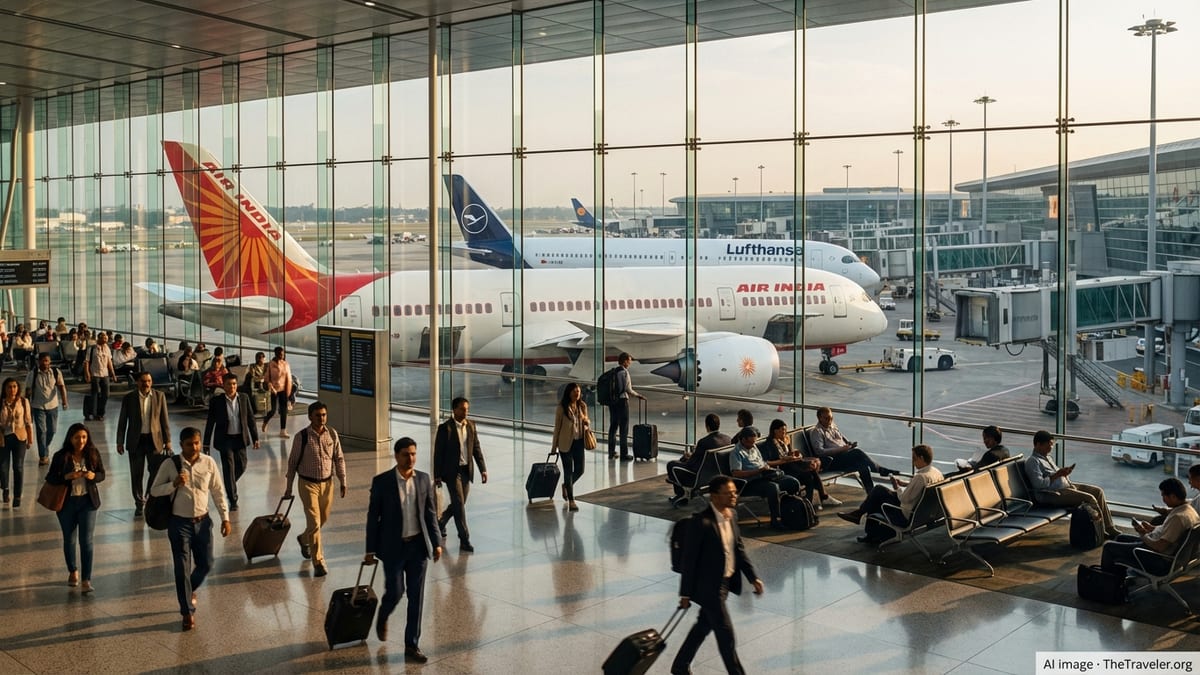
New Model Starts From Varanasi With Global Reach
According to published information from the airline, Easy Connect operations will debut from Varanasi on 25 June 2026, using Delhi as the primary international hub. The service is designed so that passengers traveling from the holy city to long haul destinations can check in once, hand over their baggage and then connect through Delhi to major overseas gateways on a single, coordinated itinerary.
Reports indicate that the initial routing will connect Varanasi to Delhi and onward to destinations such as London Heathrow, Frankfurt, Singapore and Dubai, leveraging Air India’s existing long haul network. The timings are being structured around “banks” of arrivals and departures at Delhi to keep connection times competitive with foreign hub carriers that have traditionally dominated transfer traffic from India.
Industry coverage notes that Air India is positioning Easy Connect as the first full implementation of the Indian government’s formal hub-and-spoke guidelines, published earlier this year to encourage domestic carriers to build global transfer hubs within the country. The carrier has stated that it intends to act as the lead airline in operationalising the model at scale.
Bookings for the new Easy Connect flights have opened across the airline’s regular sales channels, allowing travelers and travel agents in secondary markets to begin planning international journeys that previously required piecing together separate tickets or traveling via distant hubs.
Simplified Processes Aim To Remove Transit Friction
A key feature of Easy Connect highlighted in official material is the ability for travelers to complete international formalities at their origin airport. Passengers departing from Varanasi will be able to clear immigration there, check in baggage through to their final destination and then transfer at Delhi without the need to recheck bags or queue again for border control.
Publicly available information shows that the carrier is working with airport and government stakeholders so that Easy Connect flights from spoke cities are treated as de facto international departures, even though the first sector operates as a domestic leg to the hub. This allows the onward transit through Delhi to function more like a same-terminal connection at an overseas hub, an area where Indian airports have historically faced criticism from frequent flyers.
The initiative also appears designed to counter the appeal of large Gulf and Southeast Asian hubs that have attracted significant connecting traffic from Indian regional cities. By reducing touchpoints in the journey and keeping processing within India, Air India is aiming to make the overall experience more predictable, particularly for travelers who may be less familiar with complex international transfers.
Analysts following the airline suggest that the move aligns with Air India’s broader strategy of rebuilding its reputation as a full service global carrier, following fleet renewal and network expansion under its current ownership. A seamless ground experience between domestic and international legs is seen as an essential part of that effort.
Phased Rollout Planned Across Tier 2 and 3 Cities
While Varanasi is the first spoke city, Air India has indicated that Easy Connect will be expanded in phases to additional tier 2 and tier 3 locations in the coming months. The airline has referenced a dedicated flight number series to identify these services, signaling that the model is intended to be replicated widely rather than treated as a one-off experiment.
Coverage in Indian business media suggests that candidate cities are likely to include high-growth regional centers that already send significant numbers of outbound travelers but lack direct international connectivity. By funneling demand from such cities through Delhi and other potential hubs, the carrier can consolidate traffic onto widebody aircraft and justify more frequent or longer-haul services.
Industry observers point out that India’s aviation growth has increasingly shifted beyond the largest metros, with hundreds of smaller cities now hosting substantial middle class populations. Many of these markets currently depend on foreign airlines operating from Gulf, Southeast Asian or European hubs to reach long haul destinations, resulting in economic value leaking out of the country.
If Easy Connect succeeds in building reliable and competitive transfer options from these cities via Indian hubs, it could strengthen the case for further domestic infrastructure investments, including upgraded terminals, improved ground handling and additional night parking stands at regional airports.
Tourism and Regional Economies Stand To Benefit
The launch of Easy Connect is expected to have implications beyond airline scheduling, particularly for India’s tourism and hospitality sectors. Research from global tourism and aviation consultancies has repeatedly highlighted how improved air connectivity can lift visitor numbers, length of stay and overall spending in destinations that gain better access to long haul markets.
For cities such as Varanasi, where religious and cultural tourism already attract large numbers of domestic visitors, easier access for international travelers could support investments in hotels, tour services and local attractions. With travelers able to reach such destinations on integrated itineraries, rather than via fragmented domestic add-ons, regional tourism boards may find it easier to market multi-city itineraries that start and end at the same international gateway.
The broader Indian tourism outlook is already positive, with projections from industry bodies pointing to steady growth in both inbound and outbound travel over the next decade. By embedding tier 2 and tier 3 cities more firmly into global air networks, Easy Connect may help spread the benefits of that growth beyond major metros, supporting local employment and small businesses in secondary destinations.
Economic studies focused on air connectivity have also suggested that improved links to international markets can encourage trade, investment and knowledge exchange. As additional spoke cities join the Easy Connect network, local chambers of commerce and export-focused enterprises could find it easier to host overseas partners and participate in global value chains.
Competitive Landscape And Strategic Signals
Air India’s move comes at a time of intense competition in Indian aviation, with low cost carriers expanding aggressively at home and foreign airlines targeting premium long haul flows. The introduction of Easy Connect positions the flag carrier more directly against Gulf and Southeast Asian hubs for the business of travelers originating outside India’s biggest cities.
Analysts note that the hub-and-spoke model is already common among major global airlines, but its formal codification within India and early implementation by Air India signal a policy shift toward building domestic transfer hubs. If successful, this could gradually rebalance how Indian travelers route their international journeys, with a higher share of connections occurring within the country.
For international tourists, the development may also simplify itinerary planning. Instead of relying on separate tickets or complex routings through multiple stopovers, passengers will increasingly be able to reach Indian regional destinations via a single carrier, connecting only once at a major hub. That fits with broader traveler preferences for shorter, more predictable journeys and could support India’s ambitions to attract higher-spending visitors.
As the first Easy Connect flights prepare for takeoff from Varanasi, attention in the aviation and tourism sectors is turning to how quickly the network can scale and which cities will join next. The pace and scope of that rollout are likely to shape how strongly the initiative influences India’s position in global air travel and the distribution of tourism benefits across the country.