


More news on this day
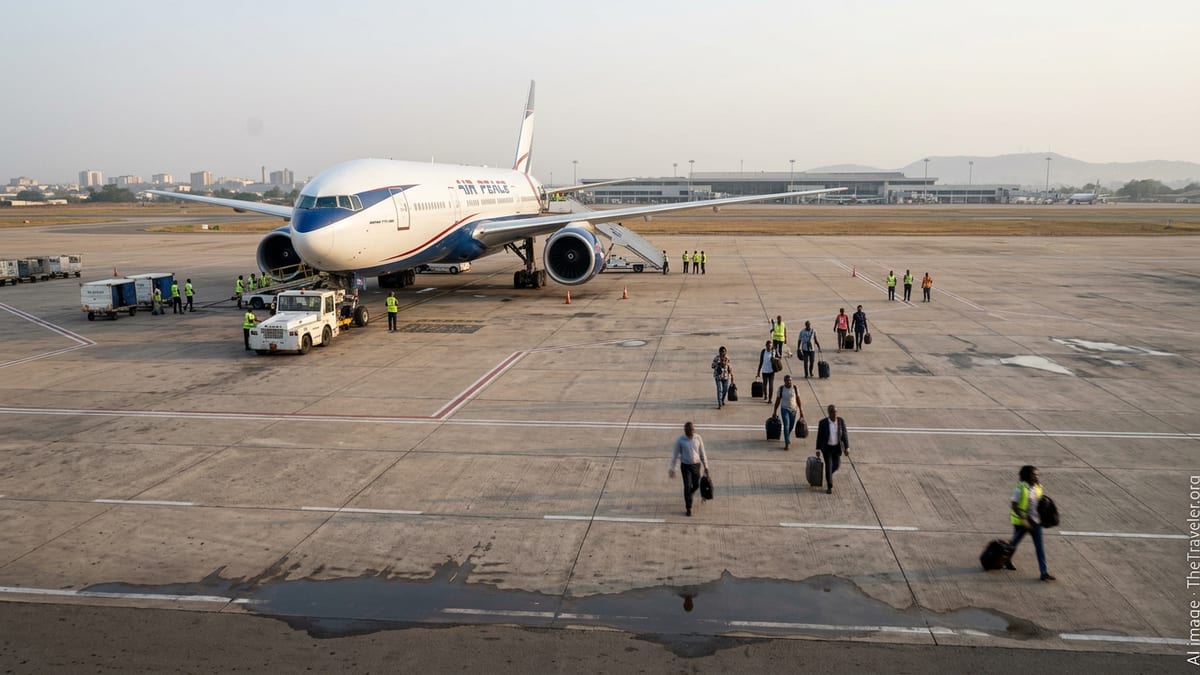
Nigeria’s Air Peace is contesting a widely circulated domestic flight-disruption scorecard published by the Nigeria Civil Aviation Authority (NCAA), arguing that the regulator’s August 2026 delay figures contain key data inaccuracies that could mislead travelers about performance and the underlying causes of delays.
Get the latest news straight to your inbox!
What the dispute is about
Published coverage indicates the NCAA circulated a “Summary of Domestic Airline Flight Disruption Operations” for August 2026, presenting counts of flights operated, delayed, and cancelled across multiple domestic carriers. The table quickly drew attention because it is easily read as a de facto ranking of airlines by delay frequency, even when the document is framed as an operational snapshot rather than a detailed causal analysis.
Multiple reports describe Air Peace’s central objection as twofold: the airline says the reported number of its August operations is materially lower than its internal totals, and it argues that the way the data is presented can imply airline fault without clearly separating disruptions caused by airport constraints, weather, or air-traffic and infrastructure limitations.
Air Peace’s pushback has landed in an environment where Nigerian passengers have been vocal about punctuality, cancellations, and compensation, while regulators have used consumer protection messaging and complaint channels to encourage travelers to document disruptions and seek redress.
Air Peace’s accuracy claims and the numbers being debated
According to published coverage of the airline’s response, Air Peace says it operated 2,564 flights in August 2026. Several reports also state that the NCAA table reflected 1,864 Air Peace operations for the same month, a gap that the carrier says changes how its delay rate is perceived when calculated from the regulator’s dataset.
The scorecard figures have also been picked up and republished by local outlets in a simplified form for general audiences. One widely shared interpretation, based on the NCAA’s table, is that Air Peace recorded 1,330 delays out of 1,864 listed domestic flights in August, which would translate to a delay rate above 70% using those inputs. Air Peace’s rebuttal centers on the idea that any rate derived from an incomplete operation count can exaggerate its apparent disruption level.
Separately, Air Peace has questioned timing and consistency, with published coverage describing the airline as concerned about why some months may not have comparable public datasets while a subsequent month’s figures appeared quickly after month-end. The broader implication in the airline’s argument is that data release practices and definitions should be transparent enough to allow independent interpretation without distorting performance comparisons.
Why delay scorecards can be hard for travelers to interpret
For travelers, a single disruption table can be helpful but also ambiguous. Without clear definitions, readers may not know whether “delay” refers to a minimum threshold (such as 15 minutes or 3 hours), whether delays are measured against original schedules or revised departure times, and whether diversions, rotations, and aircraft substitution are counted consistently across carriers and airports.
Another challenge is cause attribution. Even when an airline ultimately “owns” a delay from the passenger’s perspective, operational constraints can be shared across the aviation system. Slot availability, runway capacity, weather, air-traffic flow restrictions, late inbound aircraft, fueling logistics, and congestion at peak banks can all contribute. A scorecard that aggregates outcomes but does not present standardized causal categories can create a strong impression of fault while offering limited diagnostic detail.
Global aviation regulators commonly publish consumer-facing performance dashboards and monthly reports, but the most useful versions tend to spell out collection methods, thresholds, and exclusions. That context is what helps travelers distinguish between a carrier that routinely over-schedules its resources and one facing repeated bottlenecks at particular airports or times of day.
What passenger rights resources exist in Nigeria when flights are delayed
The NCAA’s Consumer Protection Department maintains a public-facing portal that describes passenger rights and complaint pathways, including guidance on what travelers may be entitled to when a flight is delayed for several hours. The NCAA also directs passengers to lodge complaints at airport consumer protection desks or through its online channels when issues are unresolved with an airline.
For travelers trying to act on disruption information, documentation remains practical: keep booking confirmations, boarding passes where available, written delay notifications, and receipts for expenses incurred due to a delay. Those items can matter when a complaint turns on timeline details or on what support was offered at the airport.
Travelers also benefit from checking an airline’s notice of schedule changes before traveling to the airport, particularly on routes with multiple daily frequencies, where aircraft rotation changes can cause knock-on delays. That step does not prevent disruption, but it can reduce time spent waiting at the terminal when departure times shift.
What to watch next for Nigeria’s domestic flyers
The immediate question for consumers is whether the NCAA will clarify its definitions, publish a methodology note, or update any figures in response to the airline’s accuracy claims. Even small changes, such as standardizing delay thresholds and clearly distinguishing airline-driven delays from systemic constraints, could make future scorecards more actionable for the public.
A second issue is consistency. If monthly reports are to influence purchasing decisions and reputational outcomes, travelers and airlines alike have incentives to push for regular publication schedules and comparable datasets across months. Irregular reporting can amplify perceptions of selectivity, even when no such intent exists.
In the meantime, travelers weighing domestic itineraries in Nigeria may want to interpret disruption scorecards as one input rather than a complete verdict. Route choice, time-of-day selection, buffer time for connections, and awareness of complaint channels can matter just as much as any single month’s aggregated performance snapshot.