


More news on this day
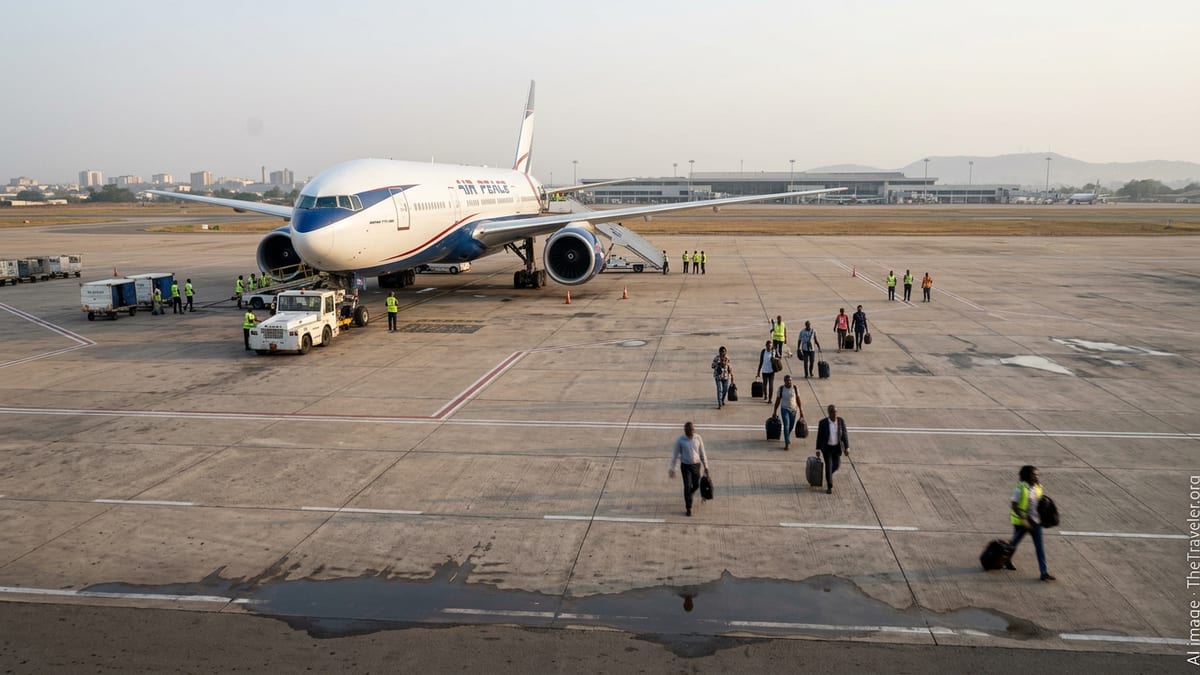
Nigeria’s largest carrier, Air Peace, is pushing back against a widely circulated flight-disruption scorecard published by the Nigeria Civil Aviation Authority (NCAA), arguing that the regulator’s August 2026 delay figures contain data inaccuracies that could misrepresent the airline’s on-time performance and the causes behind delays.
Get the latest news straight to your inbox!
What the NCAA’s August scorecard showed
Published coverage indicates the NCAA released a month-by-month summary of domestic airline operations for August 2026 via its official social media channels, presenting aggregate counts of delayed and cancelled flights across Nigeria’s local carriers. The report has been widely reposted by Nigerian media and discussed by travelers because it ranks airlines by disruption totals rather than by individual route constraints or time-of-day patterns.
According to that published coverage, the NCAA’s August 2026 snapshot stated that domestic airlines delayed 4,765 flights and cancelled 36 flights in the month, with Air Peace and United Nigeria Airlines recording the highest disruption totals. The same coverage also referenced a separate consumer protection enforcement action in which the NCAA sanctioned RwandAir with a monetary penalty related to a baggage consumer-protection issue, underscoring the regulator’s visible focus on passenger-rights compliance.
For passengers, a key point is that such scorecards typically influence consumer perception quickly, particularly in markets where travelers often have limited carrier options on key city pairs, and where delays can cascade due to tight aircraft rotations and congestion at peak periods.
Air Peace’s core claim: the data does not match its internal records
Air Peace’s challenge centers on the accuracy and interpretation of the disruption numbers attributed to it for August 2026. Multiple reports describe the airline as disputing the NCAA’s figures and saying they do not reflect its actual operational totals for the month, particularly around how many flights were operated and how delays were attributed.
One widely reported element of the airline’s position is that its internal review attributes a portion of its delayed flights to factors within its control, while implying that the scorecard presentation risks blurring airline-responsible disruptions with delays linked to airport limitations, weather, air traffic management, or infrastructure constraints. The airline’s response has been framed as a data-quality dispute rather than a denial that passengers experienced delays.
For travelers trying to interpret the debate, the distinction matters: a scorecard that lists raw delays without clear, consistent causal categories can make it hard to compare carriers fairly, especially if one airline operates significantly more frequencies, flies more congested routes, or carries out more last-minute aircraft substitutions.
Why these scorecards matter to travelers in practical terms
In many markets, airline delay reports shape booking behavior and corporate travel policies, and can also influence how passengers frame complaints and compensation requests. When a regulator publishes disruption statistics, travelers often treat the numbers as an authoritative reference point when deciding whether to rebook, request refunds, or escalate disputes.
However, publicly available information across global aviation data reporting shows that delay measurement is not always uniform: the definition of “delay,” thresholds used, and whether delays are linked to scheduled departure, actual departure, or arrival can change the picture. That is why data disputes, like the one now playing out between Air Peace and the NCAA, can carry real consumer impact even without changing what happened at the gate.
For Air Peace customers specifically, the airline’s own published terms and conditions describe options that may apply when a flight is delayed or cancelled, including choices around remedies offered by the carrier under its contract of carriage and relevant Nigerian regulations. Travelers dealing with disruption are often advised to keep timestamps, boarding passes, and written notifications, because documentation is typically required to process refunds or pursue complaints.
Passenger rights and where complaints can be escalated
Separately from the dispute over statistics, Nigeria’s aviation framework includes consumer-protection pathways for passengers whose journeys are disrupted. Publicly available information from the NCAA describes the role of its Consumer Protection Department (CPD), including airport-based consumer-protection desks and an online consumer-protection portal used for complaint intake and handling.
The same publicly available NCAA materials also outline passenger rights around cancellations, delays, and baggage issues, and provide guidance on escalating a complaint if it cannot be resolved directly with an airline. For travelers, the practical takeaway is that escalation routes exist, but outcomes often depend on whether the passenger has complete booking and disruption documentation and whether the complaint is filed within applicable timelines.
In parallel, other published records show the Federal Competition and Consumer Protection Commission (FCCPC) has also been active in aviation consumer issues in recent years, including disputes involving refunds and broader consumer-complaint inquiries. Court updates and FCCPC releases have kept the aviation sector in the spotlight beyond safety regulation, extending into consumer redress and market conduct discussions.
What to watch next: transparency, methodology, and operational pressure points
As the NCAA-Air Peace exchange continues, travelers and industry observers will likely focus on whether the regulator provides more methodological detail on how it counts operations, defines delays, and assigns causes, and whether any reconciliation process follows. More granular reporting such as route-level performance, delay thresholds, and separation of controllable versus uncontrollable causes would typically make scorecards more useful to passengers deciding between carriers.
Another likely pressure point is the broader operational environment that can amplify delays, including congestion at key domestic airports, weather impacts, and infrastructure constraints that affect multiple airlines at once. Even when airline-specific data is corrected, passengers often experience the system-wide effects through missed connections, overnight re-accommodation, and difficulty securing alternative seats on high-demand routes.
For now, the dispute serves as a reminder that travelers should treat performance scorecards as a starting point, not the sole decision tool, and should prioritize practical protections: booking earlier flights when possible, avoiding tight same-day onward commitments, and using official complaint channels when remedies or refunds are delayed.