


More news on this day
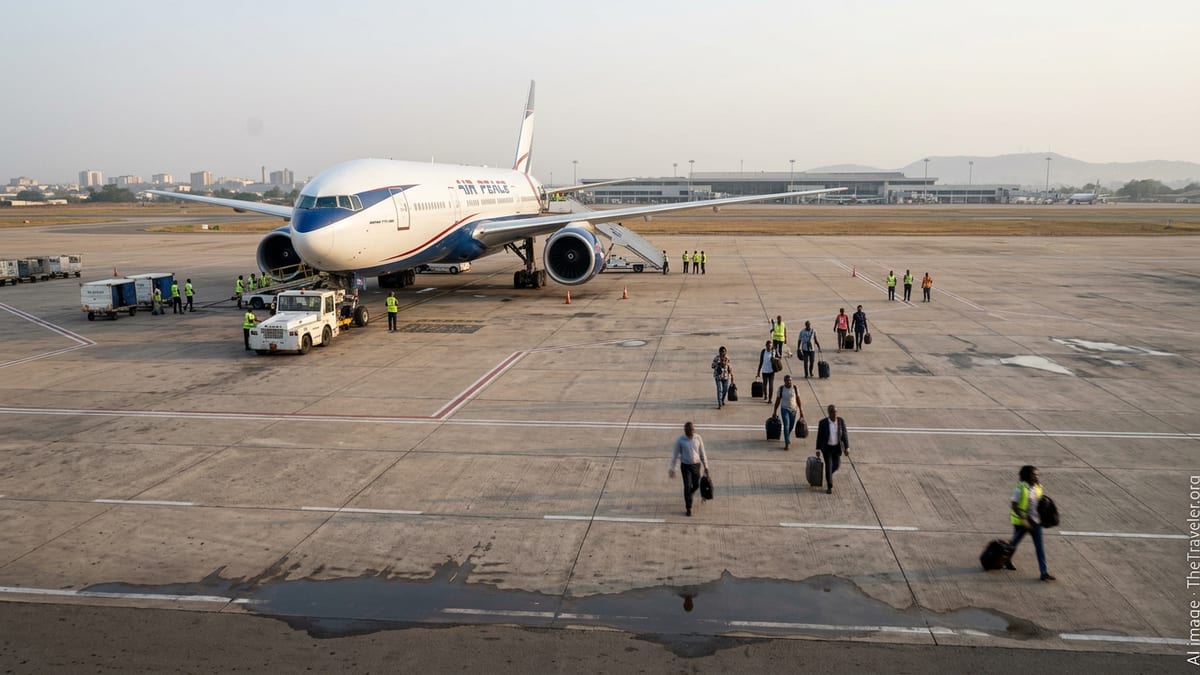
Nigeria’s biggest domestic carrier by flight volume, Air Peace, is pushing back against the Nigeria Civil Aviation Authority’s (NCAA) August performance data after the regulator’s monthly disruption summary showed the airline recording the highest number of delays during the period.
Get the latest news straight to your inbox!
What the NCAA published for August
Published coverage indicates the NCAA released a “Summary of Domestic Airline Flight Disruption Operations” for August 2026, describing systemwide performance across Nigeria’s domestic market. The widely circulated figures put total domestic operations for the month at 7,961 flights, with 4,765 delays and 36 cancellations recorded across carriers.
In that compilation, Air Peace was listed with 1,864 domestic flights operated in August and 1,330 delayed departures, a delay share that multiple outlets characterized as roughly seven out of every 10 flights. Other airlines with large networks were also cited in the same month’s summary, but Air Peace and United Nigeria Airlines were repeatedly referenced as leading the disruption table by total delays.
The NCAA’s disclosure has been amplified partly because it came via official channels and was easy to compare carrier by carrier. For travelers, it also offered a rare month-specific snapshot of how often flights were leaving behind schedule in Nigeria’s domestic system, where missed connections and same-day turnarounds can be difficult to rebook.
Air Peace says the dataset and causal labels are flawed
Air Peace’s rebuttal focuses on the underlying flight count used to calculate its delay rate and on how the causes of those delays were categorized. Published reports describe the airline disputing both the volume of flights attributed to it and the implication that most disruptions were within the carrier’s control.
Air Peace’s position, as reported, is that a large share of disruptions should be linked to external constraints rather than internal operational issues. Coverage of the airline’s statement indicates it argued that only a minority of recorded disruptions were internally caused and that the rest stemmed from factors such as airport and airspace limitations, weather, and other systemwide constraints affecting Nigerian aviation.
The airline has also been reported to urge the NCAA to review and audit how it gathers and reports performance data, including separating delay drivers more clearly. That distinction matters commercially because raw delay counts influence public perception, corporate travel choices, and how passengers interpret reliability when selecting carriers on high-frequency routes.
Why the argument matters for passengers
For travelers, the dispute is not only about which spreadsheet is correct but also about what a “delay” represents in practice. A delay can reflect a late aircraft arriving from a previous leg, air traffic flow restrictions, weather disruptions, or ground handling bottlenecks, and the passenger impact can vary widely depending on the length of the delay and the time of day.
Nigeria has a defined passenger rights framework that can apply when a carrier reasonably expects a flight to be delayed beyond its scheduled departure time. Publicly available consumer protection guidance from the NCAA describes obligations that may include timely information, refreshments and communication support during extended waits, reimbursement or re-routing options after longer disruptions, and hotel accommodation in certain circumstances.
That means accurate, trusted reporting on delays is consequential. When passengers see large delay percentages, they may adjust plans by building in longer buffers, avoiding tight same-day connections, or choosing flights earlier in the day. Airlines, meanwhile, have an incentive to clarify whether delays are driven by controllable factors like aircraft availability and crew scheduling or by constraints outside their direct control.
What travelers can do when a domestic flight slips
Even as airlines and regulators debate methodology, disruption-heavy months tend to produce the same practical problem for passengers: long waits and limited alternatives, particularly on routes where later flights sell out quickly. Travelers can reduce exposure by planning for extra time on airport transfers and by avoiding schedules that require immediate same-day onward travel, especially during peak periods.
Passengers can also document the basics in real time: scheduled departure time, actual departure time, and any information provided at the airport. When a delay becomes extended, publicly available NCAA passenger rights guidance indicates travelers may request the forms of assistance described in the rules, depending on the length and circumstances of the delay.
Where complaints cannot be resolved directly with an airline, the NCAA maintains consumer protection channels, including airport consumer protection desks and an online complaint process described on the regulator’s website. For travelers, using official channels can help create a record of disruption patterns on specific routes and may influence how performance issues are tracked over time.
What to watch next in Nigeria’s on-time performance debate
The immediate question is whether the NCAA will respond with a clarification of its August methodology, including how it defines “operations,” what thresholds qualify a flight as delayed in the monthly summary, and how causes are attributed when multiple factors contribute to a late departure.
Another point to watch is whether more granular reporting becomes standard, such as separating delays into categories that distinguish airline-driven causes from airport, weather, or air traffic constraints. That shift could make the data more useful for consumers and also more actionable for operators trying to improve schedule integrity without overpromising capacity.
For now, the August numbers underscore a broader reality for travelers in Nigeria: month-level disruption rates can be high, and the reliability gap between schedules and actual departure times remains a central consumer issue. Whether Air Peace’s challenge leads to a revised dataset or a more detailed framework, passengers are likely to keep pushing for clearer information and more predictable operations across the domestic network.