


More news on this day
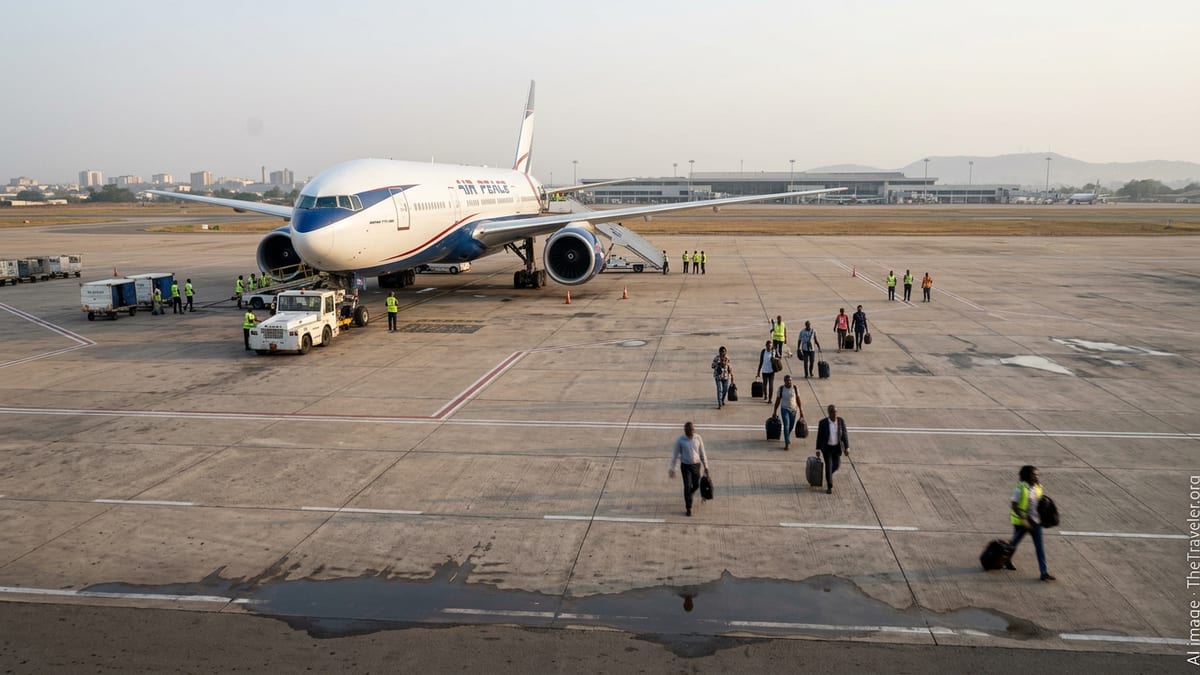
Air Peace has pushed back against Nigeria Civil Aviation Authority data on August 2026 domestic flight delays, calling the regulator’s published disruption figures inaccurate and potentially misleading for travelers comparing airline reliability.
Get the latest news straight to your inbox!
What the NCAA’s August disruption scorecard shows
Published coverage indicates the NCAA released an August 2026 “Summary of Domestic Airline Flight Disruption Operations” that tallied 7,961 domestic flights across the airlines captured in the report. Of those, 4,765 flights were listed as delayed and 36 as cancelled, a snapshot that suggests delays affected roughly six in 10 domestic departures during the month.
In the same carrier-by-carrier breakdown, Air Peace was shown with one of the largest disruption totals. Multiple reports described the NCAA table as listing 1,864 Air Peace domestic flights for August, with 1,330 recorded as delayed, figures that translate to a delay rate above 70% using the regulator’s totals.
The NCAA’s dataset and the resulting headlines have drawn attention because they compress a complex operating environment into shareable totals and percentages. For travelers, the scorecard can function as a quick comparison tool, but it can also shape perceptions sharply when a single brand appears at the top of a delay list.
Air Peace’s core objections: flight counts and delay attribution
Air Peace’s response has focused first on the underlying denominator, arguing that the NCAA’s reported number of flights for the airline was understated. Published coverage of the airline’s statement says Air Peace put its August total at 2,564 flights, rather than the 1,864 reflected in the NCAA summary.
The carrier has also disputed how the delays were characterized, with reports indicating Air Peace argued that many disruptions stemmed from factors outside the airline’s direct control, such as airport-side constraints, air traffic flow issues, and infrastructure limitations, rather than airline-originated operational shortcomings.
Another key element in reported summaries of the airline’s position is causal accounting. Coverage of the statement described Air Peace as asserting that only a minority share of disruptions should be considered internally caused, with one widely reported figure putting internal causes at about 15% of the disruptions it experienced during the period under dispute.
Why August became a flashpoint for Nigeria’s domestic network
The dispute is unfolding against broader concerns about schedule reliability in Nigeria’s domestic aviation market, particularly on high-frequency corridors that connect Lagos, Abuja, Port Harcourt, Kano, Owerri, Enugu, Uyo, and other major cities. When disruption rates are elevated across carriers, even small shifts in how delays are defined, recorded, or attributed can materially change a ranking.
Reports have also pointed to operational disruptions that can affect multiple airlines at once, including periodic labor-related shutdowns or service interruptions within the aviation ecosystem. When an airport or aviation service segment is disrupted, knock-on effects can spread rapidly through aircraft rotations, crew duty limits, and passenger reaccommodation flows, amplifying delays well beyond the initial trigger.
At the same time, airlines and regulators have incentives to frame performance differently. Regulators often focus on standardized passenger-facing outcomes such as departure punctuality, while airlines frequently emphasize root causes and constraints they say sit outside their control. The result can be two narratives built from overlapping, but not identical, datasets.
What travelers should take from the data dispute
For passengers, the immediate takeaway is that a single published delay rate can be a blunt instrument. A delay percentage calculated from an airline’s total operated flights will change if flight counts are underreported or if completed sectors are logged differently between a carrier’s internal records and a regulator’s compilation.
The other practical consideration is definitional: a “delay” in public reporting typically depends on a threshold, and reporting can vary by whether it is based on scheduled versus actual times, departure versus arrival, and how diversions, returns, or rolling delays are categorized. Without transparency on these mechanics, comparative charts can be easy to share but harder to interpret.
Travelers affected by disruptions may also want to focus on immediate protections rather than the headline rankings. Publicly available Nigerian Civil Aviation Regulations on consumer protection set expectations for airline communication and care during delays, including providing reasons within a defined window after the scheduled departure time and offering assistance as delays extend, with added obligations in overnight scenarios.
What to watch next from the regulator and the airlines
The next development to monitor is whether the NCAA publishes additional methodological detail, corrections, or audited revisions to its August 2026 disruption summary. If the regulator clarifies how it counts operated flights, cancellations, and delay thresholds, the market may get a more stable baseline for comparing month-to-month performance.
It is also worth watching whether other domestic carriers align with Air Peace’s objections or raise similar concerns about denominators and causal attribution. Recent coverage suggests at least some airlines have questioned whether a single public delay scorecard adequately distinguishes between airline-driven issues and system-wide constraints.
For travelers, the practical impact is likely to show up in how airlines communicate during disruptions and how airports and service providers manage peak-period pressure. If the dispute triggers tighter reporting standards and clearer passenger-facing information, the benefit could be less confusion at the gate and more predictable handling when schedules slip.