


More news on this day
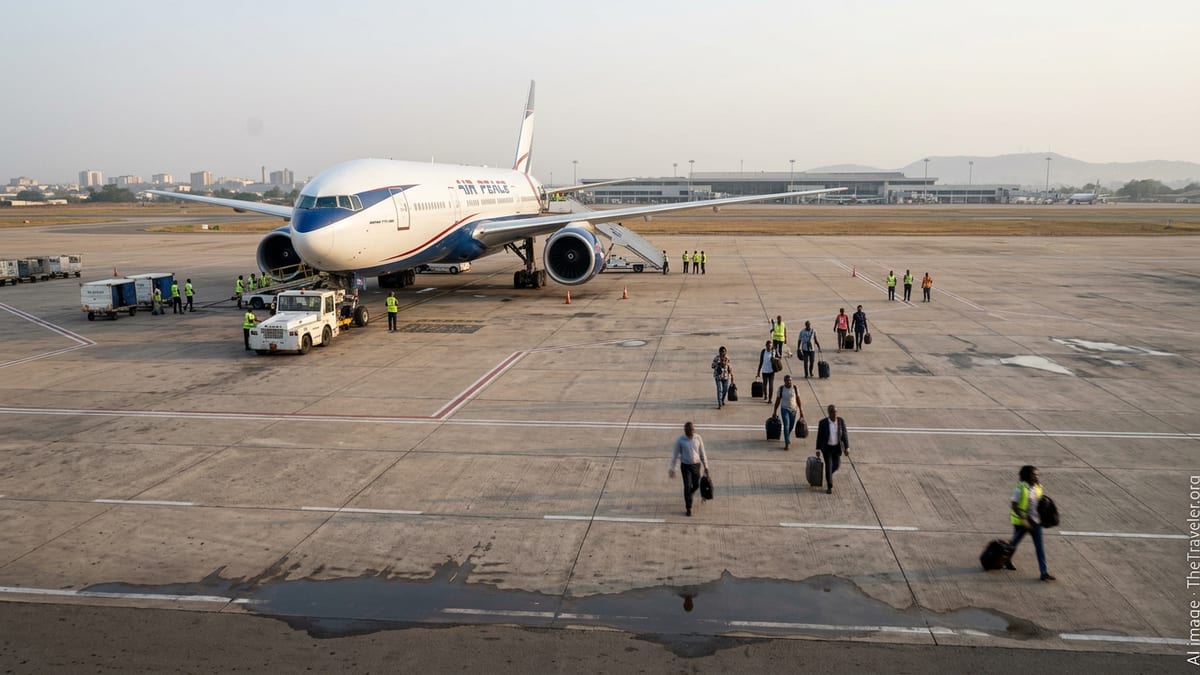
Nigeria’s largest domestic carrier by flight volume, Air Peace, is disputing the Nigeria Civil Aviation Authority’s (NCAA) published scorecard on August 2026 flight disruptions, saying the regulator’s dataset misrepresents its operational totals and, by extension, how travelers interpret the airline’s delay performance.
Get the latest news straight to your inbox!
What the NCAA’s August scorecard reported
Publicly available coverage of the NCAA’s August 2026 “Summary of Domestic Airline Flight Disruption Operations” indicates the regulator counted 7,961 domestic flight operations across the airlines tracked for the month, with 4,765 flights delayed and 36 cancelled. The figures circulated widely after the NCAA shared the summary via its official communications.
In the same reporting, Air Peace was listed with 1,864 operated domestic flights in August and 1,330 delays, translating to a delay rate of roughly 71%. United Nigeria Airlines also appeared among carriers with high disruption levels in the month.
The regulator’s monthly disruption summaries have become a quick reference point for passengers comparing airlines, especially on dense routes linking Lagos, Abuja, Port Harcourt, Enugu, Kano, and other major domestic markets where schedule reliability can materially affect onward plans.
Air Peace’s core objection: flight counts and definitions
Air Peace’s pushback focuses on the underlying numbers used to calculate delay rates. Published coverage of the airline’s statement indicates Air Peace claims it operated 2,564 flights in August, not the 1,864 operations attributed to it in the NCAA table, and that the gap could change how the airline’s on time performance is perceived.
The carrier’s argument is that delay scorecards can mislead if “operations,” “delays,” and “cancellations” are not consistently defined, and if datasets are not fully reconciled before publication. Even small classification differences, such as how diversions are recorded or how rescheduled flights are counted, can materially move the denominator used in percentage calculations.
Air Peace’s public position also emphasizes that a single, headline delay percentage may not reflect the operational drivers behind disruptions, particularly in a system where knock-on delays can cascade across multiple rotations in a day.
External factors cited: congestion, weather, and operational constraints
Coverage of Air Peace’s response indicates the airline is urging more context about causes, pointing to constraints it characterizes as outside its direct control. These include severe airport congestion and traffic management limits, infrastructure constraints, sunset or operating-hour restrictions at some airports, and adverse weather conditions.
Those factors can be acute in Nigeria’s domestic network where peak-hour demand, runway or terminal bottlenecks, and air traffic flow constraints can amplify delays even when an aircraft and crew are available. When a morning departure slips, later sectors flown by the same aircraft can depart late as well, affecting multiple city pairs in a single day.
For travelers, that distinction matters because it shapes expectations about how quickly disruptions can be absorbed. Weather or airspace constraints can reduce options for recovery, while congestion can limit the availability of departure slots even after boarding is complete.
August’s labor disruption and its knock-on effects
Air Peace’s dispute over August delay reporting comes after a highly visible operational disruption on August 11, 2026, when aviation union actions affected the airline’s operations in Lagos and Abuja, according to multiple published reports. Coverage indicated passengers were stranded and schedules were adjusted during the disruption.
Reporting around the incident described picketing and access restrictions around departure areas, which can prevent flight crews and passengers from reaching terminals. Even when such disruptions are limited to a single day, they can ripple across an airline’s network, forcing aircraft swaps, crew reassignments, and re-timings that continue to affect punctuality after normal access resumes.
Air Peace has framed such events as beyond the carrier’s control, a stance that adds urgency to its broader request that published delay tables distinguish between airline-caused delays and delays driven by factors such as labor actions, airport constraints, or weather.
What this means for passengers reading delay scorecards
The dispute highlights a practical issue for travelers: punctuality scorecards are only as useful as their methodology. If passengers are using monthly disruption tables to decide which flights to book, the definitions behind “delayed,” the treatment of rescheduled services, and whether the dataset captures an airline’s full operation count become central to fair comparisons.
It also underscores why travelers often experience disruptions as more than a statistic. A delayed departure can trigger missed meetings, added hotel nights, and extra ground transport costs, while uncertainty around the cause of a delay can shape how passengers pursue rebooking, refunds, or complaint channels.
Air Peace has called for the regulator to review how it collects and presents disruption data. Separately, the NCAA has continued to publish monthly summaries, a sign that performance reporting is becoming a more prominent part of Nigeria’s domestic aviation consumer landscape even as airlines and regulators debate how best to standardize it.