


More news on this day
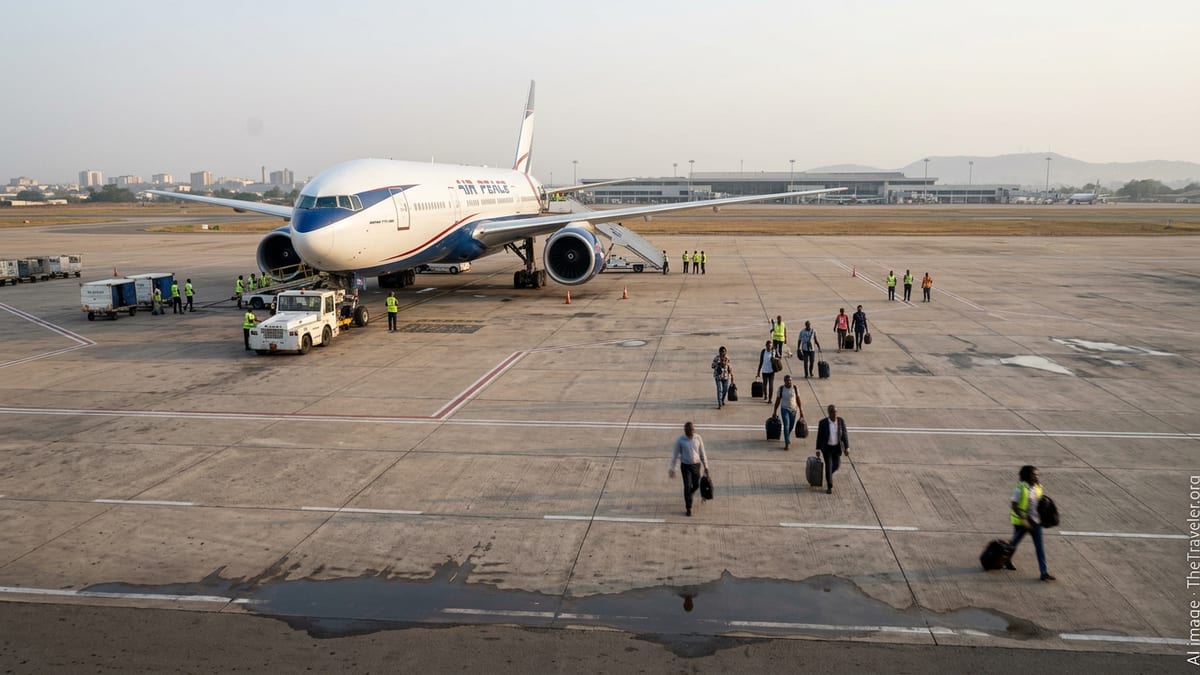
Nigeria’s Air Peace has pushed back against a widely circulated flight-disruption scorecard attributed to the Nigeria Civil Aviation Authority (NCAA), arguing that the regulator’s August 2026 delay figures misstate the airline’s actual flight volume and fail to separate carrier-controlled disruptions from external constraints that can ripple across domestic schedules.
Get the latest news straight to your inbox!
What the NCAA scorecard showed, and why Air Peace says it is flawed
Recent published coverage describes an NCAA “Summary of Domestic Airline Flight Disruption Operations” for August 2026 that tallied delays and cancellations across Nigeria’s domestic carriers and quickly became a focal point for debates over service quality and reliability. The data, as circulated in local media, presented flight counts alongside disruption tallies, a format that can shape public perception even when travelers do not see additional context such as delay durations, airport-level bottlenecks, or cause categories.
Air Peace’s response, as reported by multiple outlets, centers on a basic dispute over the denominator: the airline says it operated 2,564 flights in August 2026, while the NCAA table credited it with 1,864 operations, an omission of more than 700 flights. Air Peace maintains that a shortfall of that size can materially change the way a delay rate is calculated and interpreted, especially when performance is reduced to a single percentage or headline figure.
In its rebuttal as described in published coverage, the airline also questioned why an August table was released quickly, while comparable monthly data for July was not similarly visible in the public conversation. That timing dispute has fueled a broader argument from the carrier that the dataset, as presented, does not provide travelers with a like-for-like comparison month to month.
External causes cited: congestion, weather, infrastructure, and operational disruptions
Air Peace’s second major contention is attribution. Published reports summarize the airline’s position that the majority of its August delays were driven by factors outside the carrier’s direct control, including airport congestion and air traffic constraints, adverse weather, infrastructure or facility deficiencies, bird strikes, and industrial action.
Some coverage also references aircraft damage linked to ground-handling activity as an example of a disruption category Air Peace considers external to airline scheduling and dispatch decisions. While these kinds of events can still affect the passenger experience in the same way as an airline-driven delay, the carrier argues they should be clearly separated in any consumer-facing scorecard.
The airline’s framing reflects a long-running industry tension: passengers want a simple reliability snapshot, while airlines often argue that a true performance picture must be adjusted for airport capacity limits, equipment availability at terminals, runway or apron constraints, and weather systems that can trigger cascading delays across multiple routes.
Air Peace’s alternative accounting: flight totals and a split of delay responsibility
Air Peace’s response, according to published coverage, includes an internal review that attributes about 391 delayed flights, roughly 15% of its August operations, to internal factors, with the remainder linked to external constraints. The airline’s argument is that a cause-based breakdown offers a more accurate assessment of where operational fixes are most needed, whether at the airline level or within the wider aviation ecosystem.
That alternative accounting is also intended to address the reputational impact of delay tables that circulate without additional technical context. In Nigeria’s competitive domestic market, travelers frequently make decisions based on perceived reliability, and a widely shared scorecard can influence buying behavior quickly even when the underlying methodology is not fully understood by the public.
At the same time, the carrier’s rebuttal underscores the limits of any self-audited dataset when it is not accompanied by an independently published methodology. Without a public, standardized cause taxonomy and a consistent reporting window across all operators, consumers may struggle to compare one airline’s internal breakdown to another’s.
What the dispute means for travelers booking Nigeria domestic flights
For travelers, the immediate practical takeaway is that a single delay percentage may not tell the whole story about why schedules slip, particularly during periods of heavy traffic or disruptive weather. The Air Peace and NCAA dispute highlights the difference between delay counts, delay rates, and passenger impact, since a short delay affecting many flights may inconvenience more travelers than a small number of lengthy disruptions.
Travelers flying within Nigeria may want to treat airline scorecards as one input among several, including time-of-day departure choices, airport-specific congestion patterns, and connection buffers. When routes depend on peak-hour slots at busy terminals, knock-on effects can show up throughout the day, even for flights operated by different carriers.
Separately, publicly available information on the NCAA’s consumer protection framework indicates that passenger rights and assistance obligations exist around delays and cancellations, including care and communication expectations at certain delay thresholds. As the debate over the August scorecard continues, the most useful consumer-facing reporting may be data that pairs counts with clear definitions, consistent coverage across months, and a transparent cause split that helps travelers understand what can be prevented and what may be unavoidable.