


More news on this day
Travelers moving through some of Asia’s busiest airports are facing a new wave of disruption as low-cost and full-service carriers alike contend with cascading delays and cancellations across Kuala Lumpur, Delhi, Jakarta, and Beijing, with publicly available tallies indicating that more than 2,000 flights have been affected in recent days.
Get the latest news straight to your inbox!
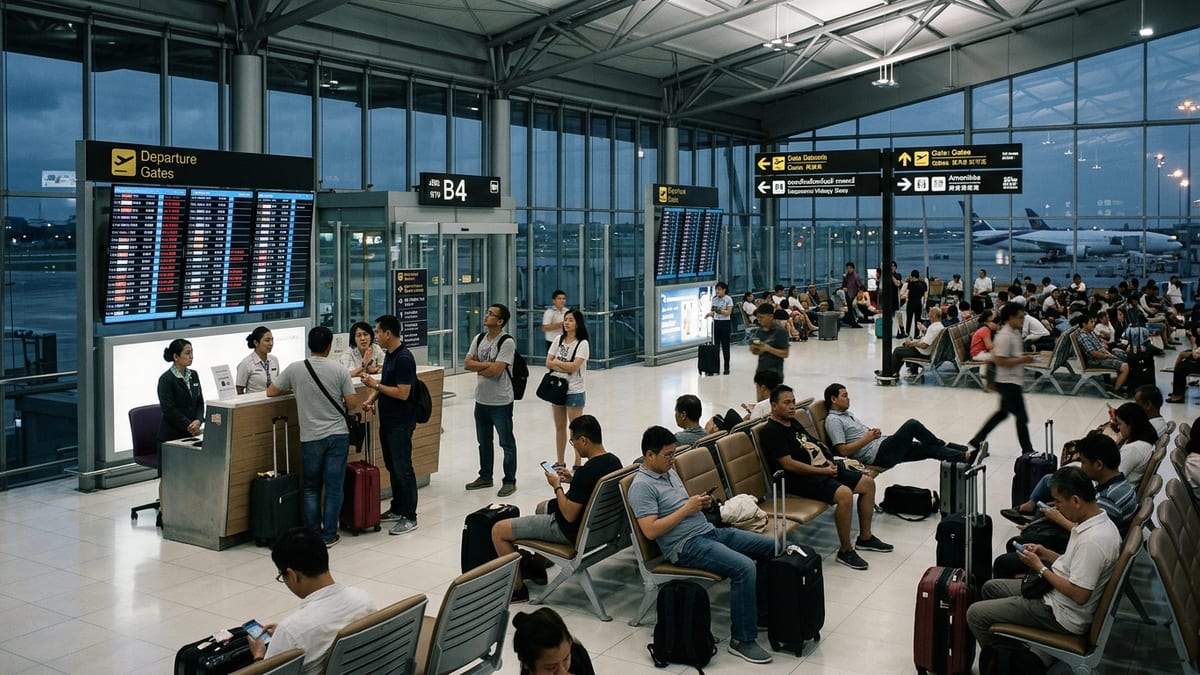
451 Flights Grounded Across Four Major Hubs
Compiled data from airport departure boards, airline schedule updates, and independent tracking platforms indicates that at least 451 flights operated by AirAsia, China Eastern, IndiGo, and Citilink have been grounded across Kuala Lumpur International Airport, Delhi’s Indira Gandhi International Airport, Jakarta Soekarno Hatta International Airport, and Beijing Capital International Airport.
The disruptions are part of a wider pattern of operational strain in Asian aviation this year, with regional carriers trimming short haul frequencies and consolidating lightly booked services. In several cases, what begins as a single late inbound aircraft has triggered a chain reaction of missed rotations and subsequent cancellations.
While each airline has cited a different mix of operational and scheduling challenges in recent months, the combined effect for travelers at these four hubs has been similar: long queues at check in, congested security lanes, and densely packed departure halls as passengers wait for updated information about their flights.
Public timetables and real time delay dashboards show that the disruptions are not confined to peak morning or evening banks. Instead, irregular operations have stretched across the day, complicating connections and making it harder for travelers to predict which departures are most at risk.
More Than 2,000 Flights Affected Regionwide
Beyond the 451 flights directly grounded by the four headline carriers, the ripple effects have touched many more services operated by partner airlines and competitors at the same airports. Aggregated figures from flight tracking services point to more than 2,000 flights across Asia being delayed or cancelled over the same period, as bottlenecks at these hubs propagate outward.
When multiple departures are delayed at a single airport, subsequent rotations on the same aircraft often run late as well, especially in tightly scheduled low cost networks where there is little slack time built into the day. Analysts have noted that this structural feature of the budget model leaves carriers particularly exposed when bad weather, airspace restrictions, or technical issues disrupt a single flight early in the schedule.
At Kuala Lumpur and Jakarta, where AirAsia and Citilink operate dense webs of short haul services, even a modest number of grounded aircraft can translate into dozens of downline delays by nightfall. At Delhi and Beijing, domestic and regional services feeding into long haul routes have been affected, raising the risk of missed onward connections for travelers to Europe, North America, and the Middle East.
For now, public schedules suggest that airlines are attempting to stabilize their operations by selectively cancelling weaker flights in advance, rather than allowing ad hoc day of disruptions to spread unchecked. However, travelers transiting through these hubs in the coming days are still being warned by consumer platforms and travel advisories to build in extra time.
What Is Driving the Unprecedented Delays
Published coverage and operational data point to a combination of factors behind the current wave of disruptions at Kuala Lumpur, Delhi, Jakarta, and Beijing. Seasonal weather patterns, recurring thunderstorms, and localized air traffic flow restrictions have interacted with already busy schedules to reduce on time performance, particularly in the late afternoon and evening windows.
At the same time, a series of route and fleet adjustments across Asia has narrowed the margin for recovery when things go wrong. In several markets, carriers that rapidly rebuilt capacity after the pandemic have been fine tuning their networks in response to shifting demand, higher fuel costs, and evolving geopolitical constraints on overflight routes. These changes can introduce short term instability as airlines rebalance aircraft allocations and crew rosters.
Industry commentary has also highlighted the cumulative impact of maintenance windows, new regulatory requirements on crew duty hours, and lingering staffing challenges in certain technical and ground handling roles. Even when individual issues are modest in isolation, they can align in ways that leave airlines with little room to absorb unexpected shocks.
For passengers on the ground, the root causes may matter less than the practical consequences. What they see is a pattern of late gate changes, rolling departure estimates, and occasional standstill periods when departure boards show clusters of delayed flights to multiple destinations at once.
How to Check if Your Flight Is Affected
With so many moving parts, travelers are being encouraged by consumer advocates and travel platforms to verify their flight status repeatedly in the 24 hours before departure and again on the way to the airport. Same day schedule changes have become more common across the affected hubs as airlines consolidate services or retime departures to match available aircraft and crew.
Passengers whose journeys involve connections at Kuala Lumpur, Delhi, Jakarta, or Beijing are especially exposed. A delay of one or two hours on a short sector into these hubs can easily lead to a missed long haul departure if minimum connection times are already tight. Booking both legs under a single reservation can reduce the risk of being stranded, since it generally obliges the operating carrier to arrange an alternative route when things go wrong.
Travelers with non flexible tickets are also being advised to familiarize themselves with the fare rules and disruption policies that apply to their booking. In some cases, airlines will offer voluntary rebooking, travel credits, or changes without penalty when disruption levels reach a certain threshold, even if these options are not highlighted proactively during the initial delay announcement.
Those already at the airport should keep boarding passes, delay notifications, and any receipts related to meals or accommodation, particularly on itineraries touching jurisdictions where consumer compensation schemes may apply. While the exact rules differ by country and route, documentation can prove important if travelers later seek reimbursement or formal redress.
Planning Ahead for Travel Through Key Asian Hubs
Looking ahead, available schedules and analyst commentary suggest that operational pressures at major Asian hubs are likely to persist in the short term, even if the worst of the recent disruption gradually eases. Airlines are still refining networks and capacity levels for the Northern Hemisphere summer season, and any fresh weather or airspace events could again tip tightly run operations into wider delay.
For passengers with flexibility, one practical step is to build longer connection windows when routing through Kuala Lumpur, Delhi, Jakarta, or Beijing, especially when combining low cost and full service carriers. Early morning departures can sometimes offer a slightly better on time record, as aircraft and crews are starting their day rather than inheriting delays from previous rotations.
Travel planners also suggest monitoring booking patterns on the most affected routes. If multiple departures on the same city pair have been repeatedly late or cancelled in recent days, choosing an alternative time or routing through a different hub may reduce the risk of disruption, even if it adds a short extra sector to the journey.
For now, the message from publicly available data is clear. With AirAsia, China Eastern, IndiGo, and Citilink among the carriers adjusting their operations at some of Asia’s busiest airports, anyone traveling through Kuala Lumpur, Delhi, Jakarta, or Beijing in the coming days should treat their itinerary as dynamic, not fixed, and plan accordingly.