


More news on this day
Latvia’s flag carrier airBaltic has restarted direct Riga–Aberdeen flights for the summer 2026 season, reconnecting northeast Scotland with Riga and strengthening links into a fast‑growing European network that increasingly touches key markets in the United Kingdom, Germany, Norway and beyond.
Get the latest news straight to your inbox!
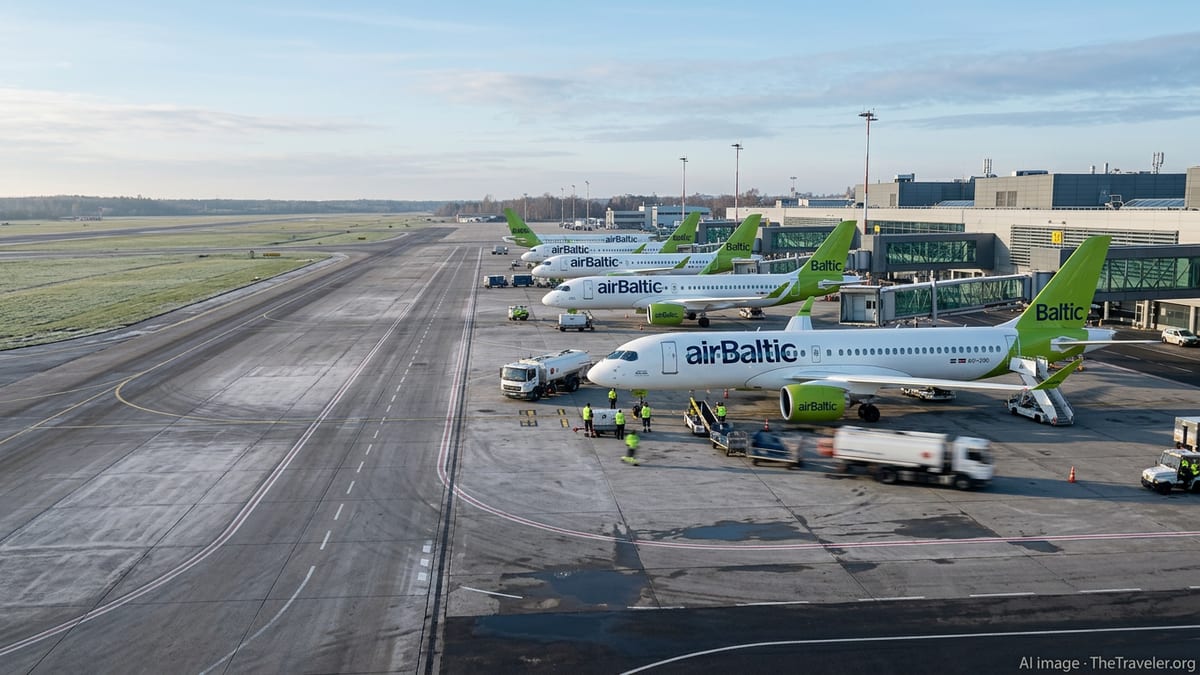
Summer Restart Brings Riga and Northeast Scotland Back on the Map
The non-stop Riga–Aberdeen service returned on 2 June 2026, with Aberdeen International Airport reporting the first departure of the season and confirming that flights will run twice weekly through September. The reinstated connection restores a direct link between Latvia and Scotland’s energy-focused northeast, a route that has been absent in recent years following earlier suspensions and schedule reshuffles.
According to publicly available information from the airport and the airline, the route is being operated on Tuesdays and Saturdays, giving leisure and business travellers clear, predictable options across the peak travel months. Schedule data from aviation trackers indicates a typical flight time of around two and a half hours between Riga International Airport and Aberdeen International Airport, placing the Baltic capital firmly within short-haul range for Scottish travellers.
The restart also signals renewed confidence in demand between the two cities after pandemic-era and cost-related disruptions affected several secondary European routes. Industry coverage notes that airBaltic has been gradually rebuilding and reshaping its network, concentrating on destinations that can feed its growing hub operations in Riga as well as its bases in Vilnius, Tallinn, and other European airports.
For Aberdeen, the return of a direct link to Riga brings back an additional European hub option alongside existing services to London and continental airports. Local travel and aviation reports suggest that regional businesses, particularly in energy, engineering and technology, have been seeking diversified connectivity into central and eastern Europe as corporate travel patterns normalize.
Part of a Wider United Kingdom and Northern Europe Strategy
The Riga–Aberdeen route fits into a broader United Kingdom strategy in which airBaltic has been gradually adding and adjusting services to and from British airports. Public timetables and sales pages show regular airBaltic flights between Riga and cities such as London, Manchester, Birmingham and other UK points, creating a patchwork of connections that funnel travellers into the airline’s Baltic hub.
Reports on recent expansions highlight that the carrier has also been targeting Northern and Western Europe, with links from its bases to Germany, Norway and other Nordic and Benelux markets. Media coverage of promotional sales and new-season schedules points to strong activity from German airports including Berlin, Hamburg, Frankfurt, Düsseldorf and Munich into Riga and other Baltic capitals, reinforcing Latvia’s position as a convenient transfer point for northern Europe.
In Scandinavia, publicly available route maps show airBaltic services tying Riga and its sister hubs to destinations in Norway, Sweden and Finland. This network layout allows the revived Aberdeen route to function as a feeder for travellers heading to cities across the Nordic and Baltic region, widening options for passengers who previously relied heavily on London or Amsterdam for such connections.
Industry analysts have noted that this pan-regional approach positions Latvia as an increasingly important gateway for traffic moving between the UK, Germany, Scandinavia and central or eastern Europe. The addition of Aberdeen back into the mix therefore strengthens not only point-to-point traffic but also the broader web of itineraries that can be built through Riga.
A220-300 Aircraft and Onboard Product Aim to Attract Premium Leisure
AirBaltic is using its Airbus A220-300 fleet on the Riga–Aberdeen route, aligning the service with its standard single-aisle product across Europe. Technical information released by the airline and referenced in airport communications describes the aircraft as seating up to 149 passengers and offering a quieter, more fuel-efficient experience compared with older narrow-body types.
The airline has also drawn attention in industry reporting for rolling out complimentary high-speed satellite internet, supplied via SpaceX Starlink, across much of its A220 fleet. According to recent updates, this service is being marketed as a differentiator on European routes, supporting remote work and onboard entertainment for both business travellers and increasingly discerning leisure passengers.
By pairing the A220’s operating economics with value-added features such as free Wi‑Fi, airBaltic appears to be targeting not only cost-conscious travellers but also premium leisure customers who are willing to pay for convenience, comfort and connectivity. Aviation analysts suggest that this profile is particularly relevant for secondary UK markets like Aberdeen, where business demand is significant but seasonal leisure traffic is also key to route viability.
Environmental performance is another factor being highlighted. Publicly accessible fleet data and airline communications describe the A220 as contributing to improved fuel burn and lower emissions per seat, an aspect that is increasingly scrutinized by corporate travel buyers and individual passengers in northern European markets that prioritize sustainability.
Strengthening Latvia’s Role as a Baltic and European Hub
The resumption of the Riga–Aberdeen flights comes as airBaltic continues to post network growth figures and add destinations across Europe. Recent annual and quarterly reports from the airline indicate that new routes from Riga to cities in the Balkans, central Europe and the Nordic region have helped lift overall passenger numbers and aircraft utilization, even as some underperforming or cost-pressured routes have been trimmed.
Riga International Airport remains the central platform for this strategy. Public statistics show that it is the busiest airport in the Baltic states, with airBaltic as its largest operator. The presence of multiple UK, German and Nordic routes feeds a connecting traffic model in which travellers from cities like Aberdeen can access destinations as varied as Tallinn, Vilnius, Prague, Munich, Oslo or Helsinki via a single transfer.
Travel-market observers note that this kind of hub-and-spoke structure is becoming more important for mid-sized European airlines that lack the scale of the continent’s biggest legacy carriers. By focusing on underserved city pairs and leveraging a modern, standardized fleet, airBaltic aims to make Latvia a natural stopping point for itineraries that previously routed through larger hubs further west.
For Latvia’s tourism and business sectors, the renewed link with northeast Scotland is another piece in a wider connectivity puzzle. Public tourism promotion materials have long emphasized Riga’s architectural heritage, cultural events and proximity to nature, while trade groups highlight growing ties in fields such as energy technology, logistics and digital services across the North Sea and Baltic Sea regions.
What the Route Means for Travellers Across Europe
For passengers in Scotland, the return of the Riga service opens up direct access to Latvia without transiting through London or continental hubs, potentially reducing travel times and simplifying itineraries. Scotland-based travellers can now reach the Baltic states, parts of Scandinavia and select central and eastern European destinations with a single connection in Riga, according to public booking options listed by the airline.
For travellers originating in Latvia and the wider Baltic region, Aberdeen adds another entry point into the UK travel market beyond London and England’s major cities. This can be particularly attractive to workers and students linked to Scotland’s universities, offshore energy industry and technology clusters, where ties with northern Europe have been expanding.
More broadly, the restart underscores how secondary European routes are re-emerging as airlines adapt to post-pandemic demand patterns. Industry coverage notes that carriers across the continent are testing seasonal and regional links that connect mid-sized cities rather than focusing solely on large hubs. The Riga–Aberdeen service is one example of this trend, tying together two smaller markets in a way that complements, rather than competes with, the largest trans-European corridors.
As the summer 2026 season progresses, performance on the route is likely to be closely watched by airports and tourism bodies on both sides. If demand holds up, analysts suggest that similar niche connections between Baltic hubs and UK regional airports could follow, further strengthening Latvia’s position within the broader European travel landscape.