


More news on this day
From Frankfurt to Delhi, airlines are warning that a new wave of fuel volatility, environmental taxes and climate regulations is colliding with peak demand, threatening the era of ultra-cheap flights and raising the stakes for summer tourism in Europe, Asia and other popular holiday regions.
Get the latest news straight to your inbox!
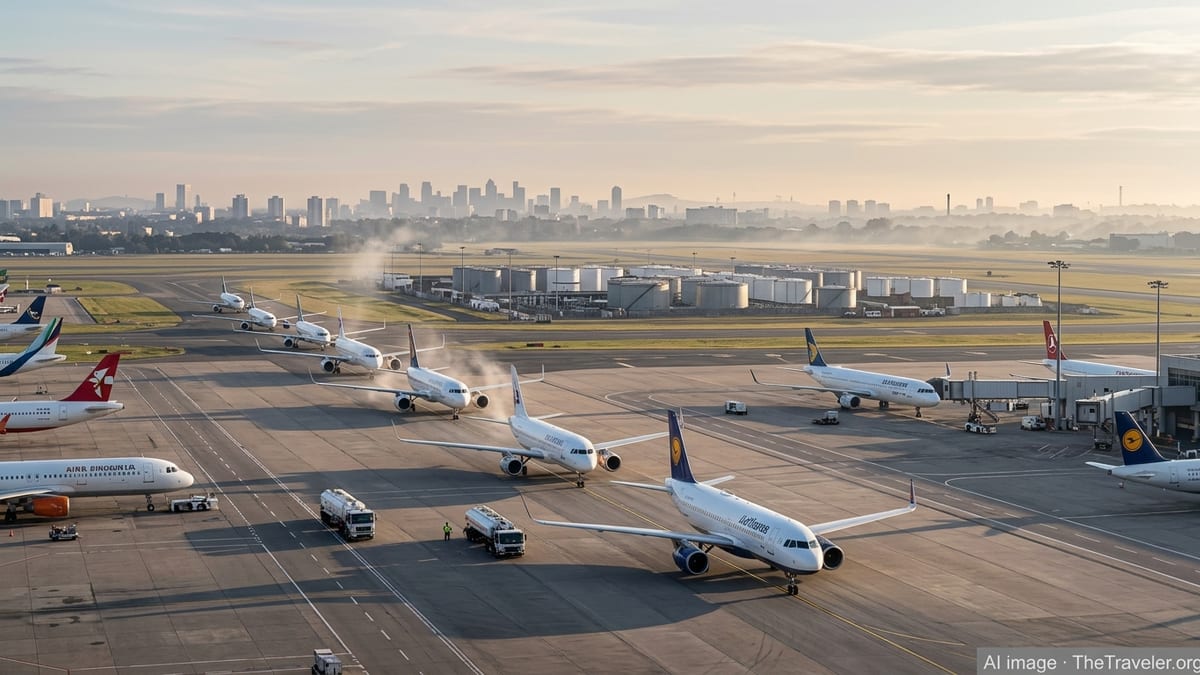
Lufthansa Moves First With New Surcharges as Costs Climb
Lufthansa has emerged as one of the clearest examples of how rising fuel and policy costs are converging. Public filings for the 2024 financial year show that aircraft fuel and lubricants remained one of the group’s single largest expenses, nearing 8 billion euros and highly sensitive to swings in jet fuel prices. Company risk disclosures indicate that a 10 percent move in kerosene prices around year end would shift annual fuel costs by hundreds of millions of euros, underlining the exposure that large network airlines still face even with hedging strategies.
In parallel, the group has started to embed environmental costs directly into ticket prices. A new environmental cost surcharge, announced in mid 2024, applies to tickets issued from late June 2024 for departures from January 2025 on flights leaving the European Union, the United Kingdom, Switzerland and Norway. Public information indicates that the fee is designed to cover part of the rapidly rising bill from climate policies, including the obligation to blend a minimum share of sustainable aviation fuel, tighter emissions trading rules and international offsetting schemes.
Internal sustainability data also highlight how early the transition still is. Lufthansa reports that sustainable aviation fuel accounted for only a fraction of its total fuel use in 2024, even as it promotes the technology as a key pathway to lower emissions. That small share already carries a disproportionate cost, because current supplies of sustainable fuel remain several times more expensive than conventional jet fuel. The combination of volatile fossil fuel prices and expensive low carbon alternatives is feeding directly into pressure on base fares and surcharges ahead of the 2026 peak season.
Airline policy briefs published in 2024 further stress concerns that national aviation taxes in Germany and other European states have risen at the same time as subsidies for new fuel plants have been reduced. Industry papers argue that this mix risks driving passengers to connecting airports in lower tax jurisdictions, creating what airlines describe as competitive distortions within the single market.
Fuel Shock, Green Mandates and Ticket Taxes Converge in Europe
The pressures facing Lufthansa are mirrored across the European market as carriers grapple with both market and policy shocks. Jet fuel prices have surged again since 2025, with several news reports linking the latest spike to geopolitical tensions and supply disruptions that have tightened refinery output. Jet fuel shortages and higher wholesale prices have already prompted some European airlines to trim frequencies on less profitable routes and rework summer schedules in an attempt to conserve capacity where margins are thinnest.
At the same time, Europe’s climate policy framework for aviation has entered a more demanding phase. The ReFuelEU Aviation regulation sets binding minimum shares for sustainable aviation fuel in all jet fuel uplifted at EU airports beginning at 2 percent in 2025 and rising sharply over the following decades. The European Commission’s climate policy material acknowledges that sustainable fuel represented barely more than half a percent of global jet fuel use as of 2024, which implies a costly effort to expand production at speed. Airlines face paying the price difference between sustainable and fossil fuel, although a limited pool of emissions trading allowances is being reserved to cushion part of that gap.
Alongside these mandates, several European countries have raised or introduced ticket taxes on departing passengers. Public information from the Netherlands shows that its air passenger tax will exceed 30 euros per traveler per flight in 2026, regardless of destination. A briefing for the European Parliament summarizing national measures notes that Germany and other member states also apply per-passenger levies, adding a flat cost on top of base fares, surcharges and airport charges. For low cost carriers that compete aggressively on price, these fixed fees weigh more heavily on the cheapest tickets than on premium cabins.
Budget airlines have been vocal about the consequences. Ryanair’s leadership has warned in recent media interviews that if jet fuel prices remain at current elevated levels through the high season, some weaker European carriers could fail. The carrier, along with easyJet and Wizz Air, has already flagged higher average fares for the 2026 summer as it attempts to pass on part of the fuel and policy burden. Travel industry analysts point out that such moves could soften demand for discretionary weekend breaks and secondary city trips, even if flagship holiday routes remain busy.
Air France-KLM and Low Cost Rivals Reprice the Summer
In the Franco-Dutch market, Air France and KLM are adapting their networks and pricing models amid similar headwinds. Publicly available sustainability and customer information from KLM emphasizes the growing role of sustainable aviation fuel in its operations and the additional cost this entails. The carrier notes that complying with strict European sustainability standards and blending mandates raises the overall fuel bill, which in turn feeds through to ticket pricing. Passengers on some tickets can see specific sustainable fuel contributions itemized, highlighting how environmental measures are becoming visible line items in the cost of flying.
For low cost competitors such as Ryanair and easyJet, which depend on high aircraft utilization and slim margins, the fuel and tax picture is equally challenging. Budget travel guides and airline disclosures show that Ryanair carried well over 180 million passengers in 2024, making it the largest carrier in Europe by traffic. That scale gives it some purchasing power and flexibility, yet its business model is especially sensitive to swings in unit costs. With governments increasing passenger taxes and airports raising charges to fund infrastructure and environmental upgrades, airlines that built their reputation on tickets cheaper than train fares are being forced into visible fare increases, priority boarding upsells and stricter baggage rules.
Analysts observe that dynamic pricing engines are amplifying these pressures for consumers trying to secure summer flights. Reports tracking award and cash fares on Air France-KLM routes during recent seasons have pointed to steep increases on transatlantic and intra-European services during peak periods compared with pre pandemic summers. While part of this reflects strong demand and constrained capacity, higher underlying fuel and regulatory costs are widely cited as a structural factor that is pushing the baseline for economy tickets upwards.
Industry watchers expect the coming summer to serve as a stress test for Europe’s aviation policy mix. If high fuel prices persist and mandated sustainable fuel shares rise as scheduled, airlines are likely to accelerate capacity shifts away from thinner seasonal routes, concentrating aircraft on core trunk and leisure markets where higher fares can be sustained. That could make spontaneous short breaks to secondary cities more expensive or less convenient, even as main holiday corridors remain relatively well served.
Asian Carriers, Including IndiGo, Feel the Fuel Pinch
The impact of surging fuel costs and new regulations is not confined to Europe. In Asia, large carriers such as IndiGo are also contending with a higher and more volatile fuel bill. Financial results released across the 2024 to 2025 period show that India’s largest airline swung back into loss in at least one recent quarter, with management and analysts citing elevated fuel prices, higher airport charges and exchange rate effects among the key drivers. In a market where jet fuel taxes are typically higher than in Europe and domestic demand is extremely price sensitive, these cost pressures quickly translate into reduced profitability.
While Asian regulators have so far moved more cautiously on binding sustainable fuel mandates than the European Union, there is growing discussion about aligning with global aviation climate goals. Any significant move in that direction would likely add another layer of cost for carriers that operate extensive domestic networks and rely on low fares to stimulate first time flyers. IndiGo’s evolving cost performance in recent quarters shows how quickly fuel as a share of expenses can move, even before full scale sustainable fuel obligations are in place.
For holidaymakers, the result in both Europe and Asia is similar. The cheapest promotional fares on popular routes between major cities are becoming harder to find, and advance purchase is increasingly important for securing lower prices. Travel search data and anecdotal evidence from booking platforms indicate that passengers are trading down on ancillary purchases or shortening trip length in order to absorb higher headline fares, particularly on family journeys.
Tourism boards across Asia and the Middle East, which rely on competitively priced air links with European source markets, are monitoring these shifts closely. If European carriers cut frequencies or raise prices on long haul routes to manage fuel and regulatory costs, some destinations may become more dependent on local or Gulf based airlines to sustain connectivity at affordable price points.
Summer Tourism Braces for a New Pricing Reality
Travel industry groups warn that the combined effect of higher fuel prices, new climate surcharges and steadily rising ticket taxes is reshaping expectations for summer travel budgets. Intra European city breaks that once relied on sub 50 euro fares are less common, and long haul leisure routes face stiffer competition for discretionary spending as households adjust to broader cost of living pressures.
Publicly available information from European institutions stresses that aviation must contribute more to climate goals after years of rapid traffic growth and limited progress on emissions. Policymakers argue that measures such as sustainable fuel mandates, emissions trading and passenger taxes are essential to align the sector with national and European net zero targets. Airlines, by contrast, caution that if the burden falls too heavily and too quickly on ticket prices, demand could shift to carriers outside Europe or to other regions with looser regimes, undermining both competitiveness and environmental effectiveness.
For now, the direction of travel appears clear. Whether flying with legacy groups such as Lufthansa and Air France KLM, low cost giants like Ryanair and easyJet, or fast growing players in Asia such as IndiGo, passengers are encountering a new normal where environmental and fuel related charges occupy a larger share of the ticket. As the peak 2026 season approaches, both airlines and travelers are testing how much of this extra cost the market can bear without dampening the appetite for summer escapes.