


More news on this day
Hungary’s Wizz Air is set to become the first European ultra-low-cost carrier to roll out fleetwide Starlink internet from 2027, signaling a decisive shift in how budget airlines think about digital services and passenger connectivity.
Get the latest news straight to your inbox!
A Landmark Deal in Europe’s Low-Cost Market
The agreement between Wizz Air and SpaceX’s Starlink, announced in early June 2026, will see high-speed satellite internet installed across the airline’s all-Airbus fleet starting in 2027. Publicly available information indicates that the rollout is planned network-wide, rather than limited to select routes or aircraft types, positioning Wizz Air as an early mover among Europe’s budget giants.
Industry coverage notes that the carrier will join a growing list of airlines worldwide adopting Starlink for inflight connectivity, but it stands out within Europe’s low-cost segment, where onboard Wi-Fi has been slower to gain traction. While several full-service European airlines have introduced high-bandwidth connections in recent years, ultra-low-cost operators have tended to avoid large cabin investments viewed as non-essential to their bare-bones model.
Reports suggest the Wizz Air installation will target streaming-capable speeds and low latency, in line with Starlink’s performance on other carriers. That raises the prospect of passengers on short European hops being able to use video platforms, social media and messaging in a way that until recently was largely confined to long-haul or premium-focused airlines.
The timing is notable. Starlink has rapidly expanded its aviation footprint, and the Wizz Air announcement arrives as the satellite venture pushes further into commercial markets and prepares for a potential stock market listing. For Wizz Air, the move promises a technological leap that could help differentiate it in an increasingly crowded and cost-conscious marketplace.
Ryanair, easyJet and a Divided Low-Cost Strategy
Wizz Air’s decision comes against a backdrop of caution among other major European budget carriers. Coverage of the sector highlights that rivals such as Ryanair and easyJet have previously questioned the economics of installing high-end satellite Wi-Fi, citing hardware, installation and bandwidth costs that can be harder to absorb in an ultra-low-fare model.
Analysts note that low-cost carriers traditionally prioritise quick turnarounds, dense seating and strict cost control over added amenities, and many have feared that connectivity investments might not generate enough ancillary revenue to justify the outlay. There are also concerns that free or low-priced Wi-Fi could cannibalise other onboard sales if passengers turn their attention to streaming and messaging instead of browsing menus and offers.
The Wizz Air move therefore underscores a strategic divergence. One path, embodied by Ryanair and easyJet so far, focuses on stripping out anything that does not directly support unit-cost leadership. The other, now represented by Wizz Air, leans into digital experience as a potential competitive advantage, even in a price-driven segment.
Sector observers point out that this split may not last. If Wizz Air succeeds in using connectivity to boost loyalty, sell more add-ons or command a modest fare premium on some routes, pressure could build on its peers to follow. Conversely, if the investment fails to shift customer choice or yields limited revenue, it may reinforce the more conservative stance of rivals.
What Starlink Means for the Passenger Experience
Starlink’s low-Earth-orbit satellite constellation is designed to deliver lower latency and higher throughput than many legacy inflight systems, which have often been criticised for slow speeds and frequent dropouts. Technical reports on airlines already using Starlink describe connections robust enough for video streaming, online gaming and real-time work applications, even on shorter sectors.
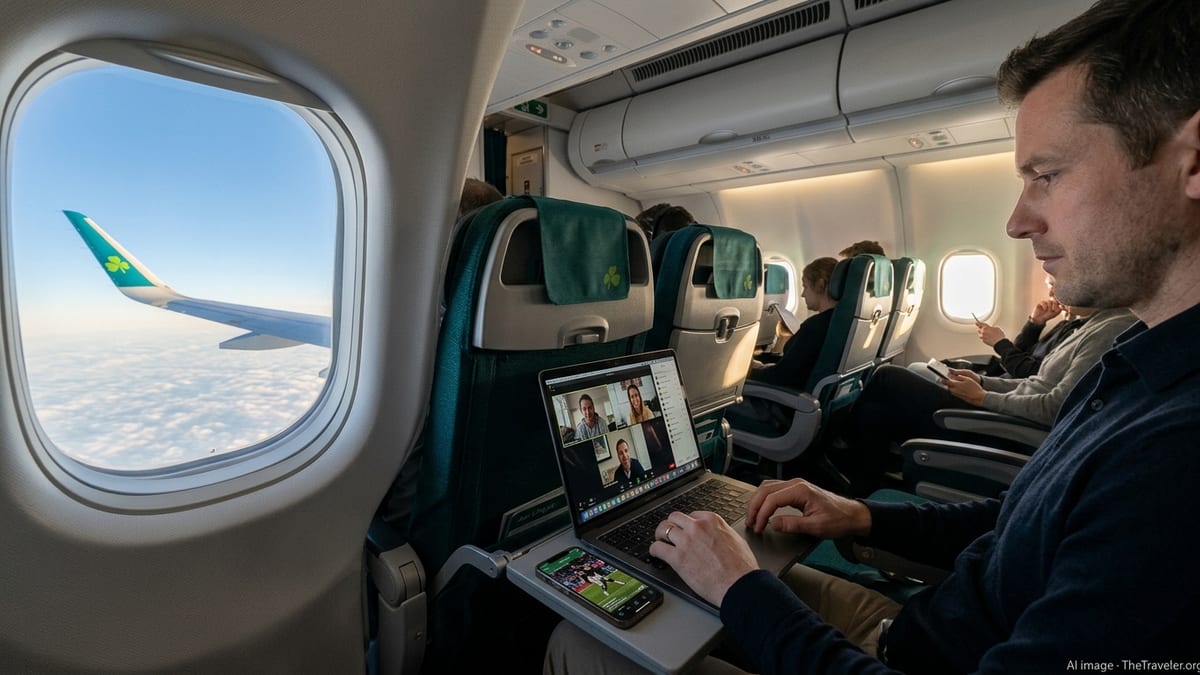
For travelers used to treating inflight Wi-Fi as a last resort, this kind of performance can fundamentally change behaviour. Passengers may plan to work seamlessly across flights, keep in constant touch with colleagues and family, or treat flights as a natural extension of their digital lives rather than an enforced offline interlude. On leisure routes, the ability to stream entertainment without downloading content in advance could become a selling point, especially for younger, digital-native customers.
Pricing will be a crucial unknown. Publicly available information on Starlink deployments elsewhere shows a mix of models, from fully complimentary access to tiered or data-capped plans. Wizz Air has not detailed how it intends to monetise the service, but industry analysts expect a blend of paid connectivity options and new avenues for advertising, partnerships and e-commerce embedded in the onboard portal.
There are also operational considerations. Aircraft integrations require equipment on the fuselage and inside the cabin, and low-cost carriers are particularly sensitive to added weight, drag and downtime. Reports on other Starlink installations indicate that newer antenna designs are more aerodynamic and lighter than some earlier satellite systems, a factor that may help mitigate fuel burn and reduce the time needed to modify each aircraft.
A Catalyst for Europe’s Digital Airline Race
Wizz Air’s Starlink move arrives as European aviation emerges from several years of pandemic recovery into a new phase of competition rooted heavily in digital services. Data from regional traffic monitors shows that low-cost groups such as Ryanair, easyJet and Wizz Air rank among Europe’s busiest operators by daily departures, making any shift in their digital offerings highly visible to millions of passengers each week.
Airline technology specialists describe a broader trend in which carriers seek to turn the cabin into a connected marketplace, linking seatback or personal devices with real-time inventory, targeted promotions and partner services. Reliable, high-speed connectivity is increasingly seen as the backbone of that strategy, enabling dynamic pricing of onboard items, tailored offers and cross-selling of hotels, transfers or car rentals during the flight itself.
Within this context, Wizz Air’s agreement with Starlink can be viewed less as a standalone Wi-Fi upgrade and more as part of a wider digital pivot. The airline has already invested in mobile-based booking and ancillary upselling tools, and inflight connectivity could extend that ecosystem into the air, allowing for end-to-end digital journeys from search to post-flight feedback.
Observers also suggest that the move could intersect with sustainability and operational efficiency goals. Real-time connectivity allows for more precise flight planning, live weather and route updates, and better coordination with ground teams, which can contribute to fuel savings and improved on-time performance. For a carrier focused on high utilisation of a single-type fleet, small gains multiplied across thousands of flights may prove significant.
Implications for Travelers and the Wider Market
For passengers, the most tangible impact will be a new baseline expectation: if one ultra-low-cost carrier can offer near-home-quality internet on short European flights, travelers may start to wonder why others cannot. That could gradually shift how people choose between airlines when prices are similar, putting more weight on digital service quality alongside schedules and fees.
For the broader market, Wizz Air’s decision underlines how fast inflight connectivity is moving from optional extra to core infrastructure. In North America and parts of Asia-Pacific, the presence of robust Wi-Fi is already widely assumed on many carriers. Europe’s low-cost segment has been a notable holdout, but the Hungarian airline’s Starlink rollout suggests this gap may close over the next few years.
Questions remain about how quickly the upgrade can be implemented, what it will cost in practice, and whether regulators or spectrum issues could pose hurdles on certain routes. However, the direction of travel is clear. Satellite broadband, once associated mainly with long-haul business cabins, is now penetrating the mass market, with Wizz Air positioning itself at the front of that curve among European budget airlines.
As installation begins in 2027, attention will turn to usage patterns and passenger feedback. If the service performs reliably at scale and Wizz Air can convert connectivity into higher satisfaction, loyalty and ancillary income, its Starlink gamble may come to be seen as a pivotal moment when European low-cost travel fully entered the always-online era.