


More news on this day
airBaltic recorded a 5% year-on-year rise in passenger numbers in August 2026, underscoring the Latvian carrier’s role in keeping the Baltic region closely connected as travel demand remains robust.
Get the latest news straight to your inbox!
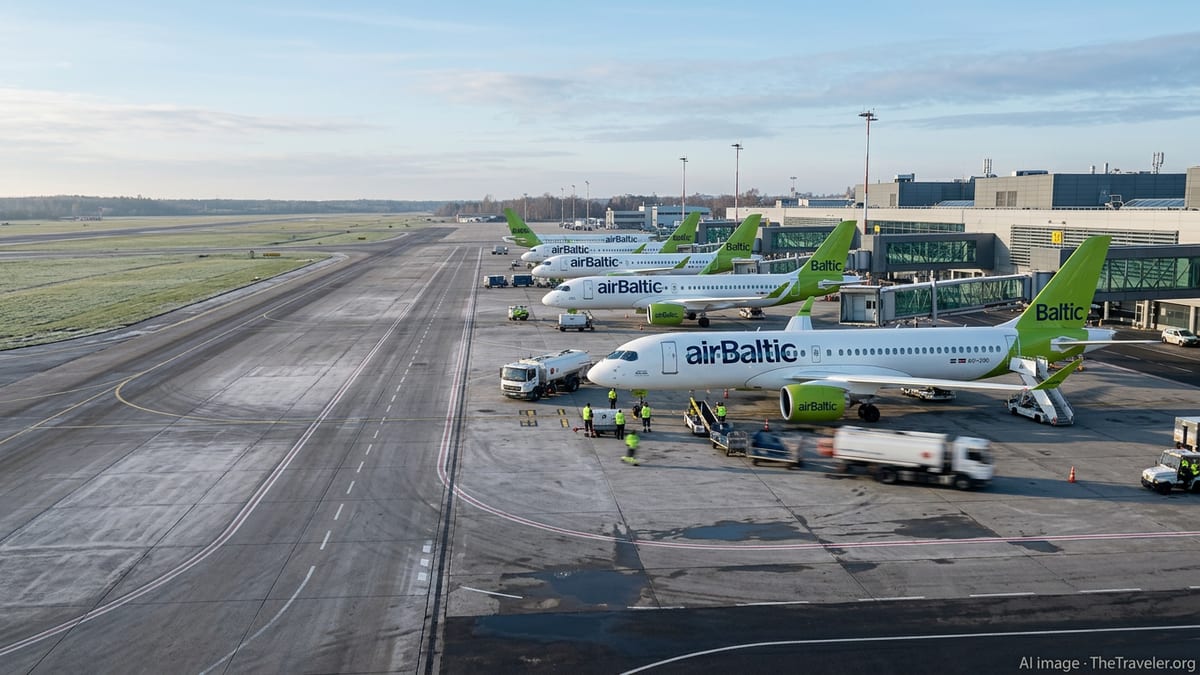
August figures point to steady regional growth
Publicly available data for August 2026 show that airBaltic carried 554,700 passengers across its network, a 5% increase compared with August 2025. The airline operated 4,801 flights during the month, up 7.9% year-on-year, reflecting continued investment in capacity on key routes serving Riga, Tallinn and Vilnius, as well as other European cities.
The carrier’s load factor reached 83.9% in August, around 2.3 percentage points lower than a year earlier. Reports attribute the softer load factor to additional capacity rather than weaker demand, with more seats offered across the network compared with the same month in 2025.
Over the first eight months of 2026, airBaltic transported 3.567 million passengers, a year-on-year increase of about 4%. The airline also operated 33,220 flights in this period, up 5.7% on the previous year, marking its highest-ever January to August passenger volume and confirming sustained appetite for air travel to and from the Baltic states.
Stronger Baltic connectivity through Riga, Tallinn and Vilnius
The latest traffic figures highlight how airBaltic continues to anchor air connectivity for Latvia, Estonia and Lithuania by using its three main bases as gateways. Riga remains the primary hub, while Tallinn and Vilnius have emerged as important secondary bases that broaden options for both regional and long-haul itineraries routed via European partners.
According to published information on airport performance, airBaltic has consolidated a strong presence at Tallinn Airport, accounting for close to a third of total passengers at Estonia’s main gateway during the busy summer period. This position reinforces Tallinn’s role as a northern access point for the wider network, complementing Riga’s more extensive schedule and Vilnius’s growing portfolio of routes.
In Latvia, publicly available coverage indicates that airBaltic is central to maintaining high frequencies on core European city pairs such as Amsterdam, London, Munich and Paris, which are vital for business traffic and onward connections. In Lithuania, the airline supports links from Vilnius to major leisure and business destinations, enhancing accessibility for a comparatively smaller local market.
Combined, these hubs give the Baltic region a broader set of direct and connecting options than local population levels alone might suggest, positioning airBaltic as a key connector between Northern Europe, Central Europe and southern sun destinations.
Capacity strategy affects load factor while supporting demand
The small decline in August 2026 load factor compared with the previous year follows a pattern already visible in July 2026 data. Earlier operational updates for July showed that airBaltic’s seat occupancy rate then was around 84.2%, also roughly 2.3 percentage points lower year-on-year, as the airline expanded capacity across its network.
Analysts note that such trends are common when carriers add seats ahead of, or in response to, rising demand. In airBaltic’s case, the 7.9% increase in flights in August, alongside the 5% rise in passengers, suggests that additional aircraft utilization and frequencies have outpaced traffic growth in the short term, easing pressure on seat availability during the peak holiday period.
From a regional connectivity perspective, higher capacity can benefit travelers even when load factors soften slightly. More frequencies and additional seats typically translate into better schedule choices, more competitive pricing and improved resilience when disruption occurs. For smaller markets like the Baltic states, maintaining a critical mass of capacity is often considered essential to sustaining viable year-round networks beyond the peak summer months.
Summer 2027 schedule signals long-term commitment
Alongside the August 2026 traffic disclosure, publicly available information from airBaltic’s network plans indicates that the airline has already outlined its Summer 2027 flight program. The carrier expects to offer 57 direct destinations from Riga, 13 from Tallinn and 8 from Vilnius, maintaining broad coverage of key business and leisure markets across Europe.
The upcoming schedule focuses on high-demand destinations such as Amsterdam, Barcelona, Copenhagen, London, Munich, Paris, Rome and Stockholm. Reports on the planned program suggest that while the total number of destinations will be slightly lower than in the previous summer, the number of available seats will remain broadly comparable, as capacity is consolidated on routes with stronger demand.
For travelers in the Baltic region, this approach indicates a strategic shift toward deepening frequencies and strengthening proven routes rather than expanding into a larger number of marginal markets. For tourism stakeholders and local businesses, stable or increased capacity on core routes is likely to be more important than a longer list of thinly served destinations.
Baltic aviation outlook in a competitive European market
airBaltic’s performance in August 2026 unfolds against a backdrop of solid global passenger demand. Industry data for 2025 showed that international traffic growth in Europe lagged slightly behind the global average, yet remained positive, and many carriers across the continent are still rebuilding networks and balance sheets after the pandemic period. Within this environment, a 5% year-on-year rise in monthly passengers positions airBaltic among the regional airlines that are managing to grow steadily while preserving a dense network.
The Baltic market is relatively small compared with larger Western European hubs, and other network and low-cost carriers also compete for travelers on key routes. Nevertheless, airBaltic’s focus on its home region, coupled with a modern single-type jet fleet and close cooperation with major alliance partners, has allowed it to sustain high load factors and incremental volume growth over the first eight months of 2026.
How the airline balances capacity, yields and connectivity over the coming seasons will be closely watched, particularly as the Summer 2027 program takes shape and as broader economic conditions in Europe influence discretionary travel. For now, the latest August figures suggest that the Baltic states continue to be well served by their home carrier, with growing passenger numbers underpinned by an expanding network that keeps the region firmly on the European air travel map.
BalticTravelNews — airBaltic August 2026 traffic figures
Travelnews.lv — airBaltic August 2026 operational indicators
Investoru Klubs — passenger and flight numbers increase
Tallinn Airport — August passenger record and airline shares