


More news on this day
Airbus is signaling renewed uncertainty over whether it can meet its ambitious A320-family production targets, as persistent engine problems at Pratt & Whitney continue to disrupt deliveries and force airlines to ground aircraft worldwide.
Get the latest news straight to your inbox!
Longstanding A320 Ambitions Under Pressure
For several years, Airbus has presented the A320neo family ramp-up as the backbone of its long-term growth strategy, anchored by a goal of reaching a steady production rate of about 75 single-aisle jets per month around 2027. Recent coverage indicates that this target remains formally on the table, but the path to achieving it is becoming less certain as engine availability problems at Pratt & Whitney drag on.
Reports describe the European manufacturer as increasingly cautious when discussing the timing of its A320 rate milestones. Publicly available information suggests that management is no longer expressing full confidence that the mid to late decade targets can be reached on the original schedule, given the strain on engine supply and overhaul capacity. Industry analysis points to a growing risk that some of the planned ramp-up may need to be pushed further out.
The shift in tone contrasts with earlier periods when Airbus reiterated output goals despite short term supply chain turbulence. Now, aerospace sector commentary highlights that engine shortages are not a transient issue but a structural constraint that could persist for years as Pratt & Whitney works through a heavy pipeline of inspections and shop visits for its geared turbofan engines.
Pratt & Whitney Geared Turbofan Issues Deepen
The root of the current challenge lies with Pratt & Whitney’s PW1100G geared turbofan engines, one of the two powerplant options for the A320neo family. The program has been affected by durability and materials concerns that have triggered extensive inspection regimes and unplanned shop visits. According to aviation industry reporting, these checks have taken a significant number of engines out of circulation just as demand for new aircraft remains elevated.
Pratt & Whitney, part of RTX, is contending with the dual burden of supporting in-service fleets and delivering new engines to Airbus assembly lines. Public documents and expert commentary suggest that the company has struggled to provide enough spare units to keep airlines flying while also feeding Airbus’s production plans. The result has been a bottleneck that slows new jet handovers and complicates maintenance scheduling across multiple regions.
Analysts note that the issue is not limited to a single airline or market. Operators in Europe, the Middle East and Asia have all reported grounded A320neo aircraft tied to engine inspections or parts availability. Independent coverage points out that in some fleets a notable share of aircraft has been parked at various points, underlining how a component level problem can quickly cascade into a network wide capacity challenge.
Delivery Targets and Production Rates Under Review
Airbus’s broader delivery guidance for the mid 2020s has already been adjusted once, following a separate quality issue involving A320 family fuselage panels. The additional pressure from engine shortages is now leading market observers to question whether near term production and delivery goals can be met without further changes. Recent data on monthly deliveries shows that narrowbody handovers have come under particular strain.
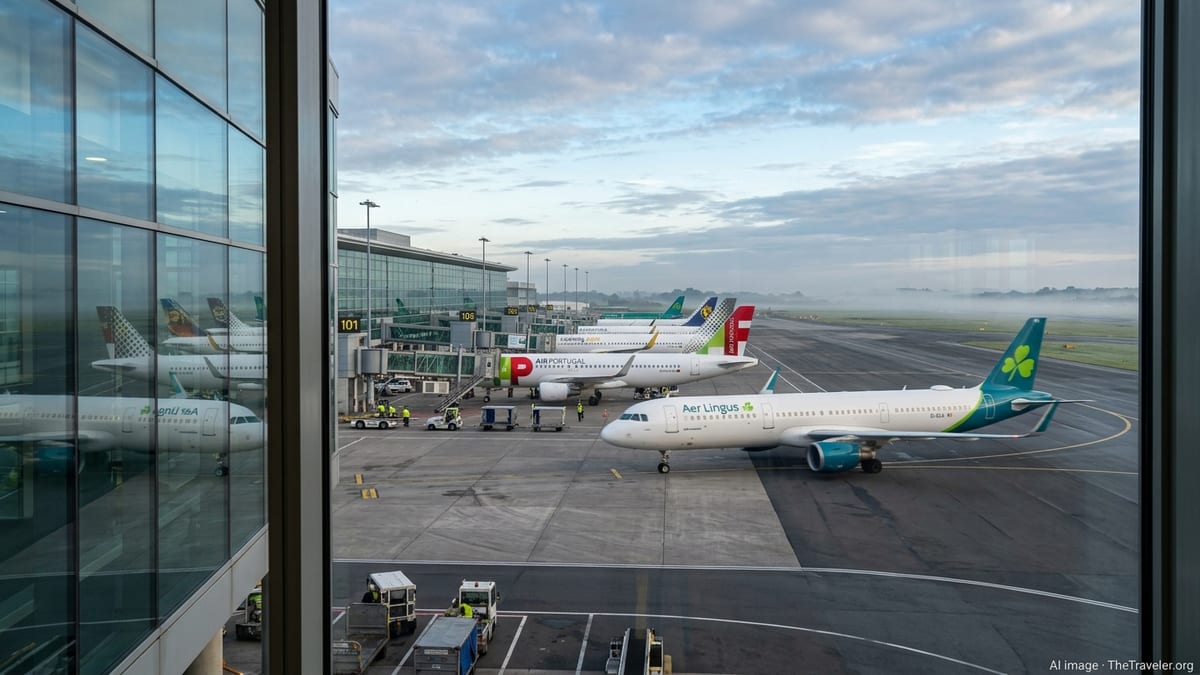
In some months, coverage of Airbus results has highlighted a gap between completed airframes and aircraft that can actually be delivered, as jets wait on the tarmac for engines. Sector commentary often refers to these parked aircraft as “gliders,” a visible sign of how critical engine flows have become for the manufacturer’s performance. While the company continues to work with suppliers to match final assembly with engine arrivals, the lag remains a source of uncertainty.
Financial analysts tracking Airbus describe its current guidance as conservative, reflecting the difficulty of forecasting exactly how many engines Pratt & Whitney can deliver and when. Some assessments suggest that the ramp-up to higher A320 production rates is becoming increasingly backloaded, with more of the growth pushed toward the latter part of the decade if early year output falls short.
Airline Fleets and Network Plans Disrupted
The engine problems reverberate far beyond Airbus’s assembly lines. Airlines that have invested heavily in the A320neo family for fuel efficient growth now face a mismatch between their planned and available capacity. Reports from various carriers indicate that grounded A320neo jets, combined with delivery delays, have forced schedule adjustments, wet leasing of older aircraft, and in some cases consideration of legal options against suppliers.
In specific markets, published coverage has underscored how a sizeable portion of certain fleets is unavailable because engines are removed for inspection or awaiting replacement modules. This reduces the operational flexibility airlines counted on when they ordered large numbers of A320neo aircraft. Some operators have responded by stretching the lives of older jets, delaying retirements, or revising expansion plans that depended on timely arrivals of new aircraft.
Industry observers highlight that these disruptions come at a time of solid demand for air travel, especially on short and medium haul routes that the A320 family typically serves. The capacity shortfall feeds into higher load factors and may support stronger yields for some airlines, but it also constrains growth opportunities and can erode reliability if backup capacity is limited.
Outlook: Gradual Recovery, Persistent Uncertainty
Looking ahead, aerospace analysts expect Pratt & Whitney to gradually increase its ability to deliver new engines and clear the backlog of shop visits, but there is broad recognition that the process will take time. As inspection and retrofit programs progress, more engines should return to service, potentially easing the worst of the grounding pressures on airlines and giving Airbus greater visibility on its production plans.
Even so, commentary across the aviation and financial sectors stresses that uncertainty around the A320 ramp-up will likely linger. The long term demand backdrop for the aircraft family remains strong, with airlines worldwide seeking more efficient single aisle jets. The question is how quickly that demand can be translated into actual deliveries when a key element of the supply chain remains under strain.
For Airbus, the immediate task is to balance transparency about the challenges with reassurance that its industrial strategy is intact. For Pratt & Whitney and its parent RTX, the priority is to stabilize engine performance, expand overhaul capacity, and restore confidence in a flagship product. Until those efforts bear full fruit, the ambitious A320 production targets that once appeared straightforward will continue to look more conditional than guaranteed.