


More news on this day
Europe’s ambitions for a shared next-generation fighter jet are entering a new and uncertain phase as Airbus weighs closer cooperation with Sweden’s Saab after the collapse of a flagship Franco-German combat aircraft initiative, raising the prospect of a reshaped industrial map for European air power.
Get the latest news straight to your inbox!
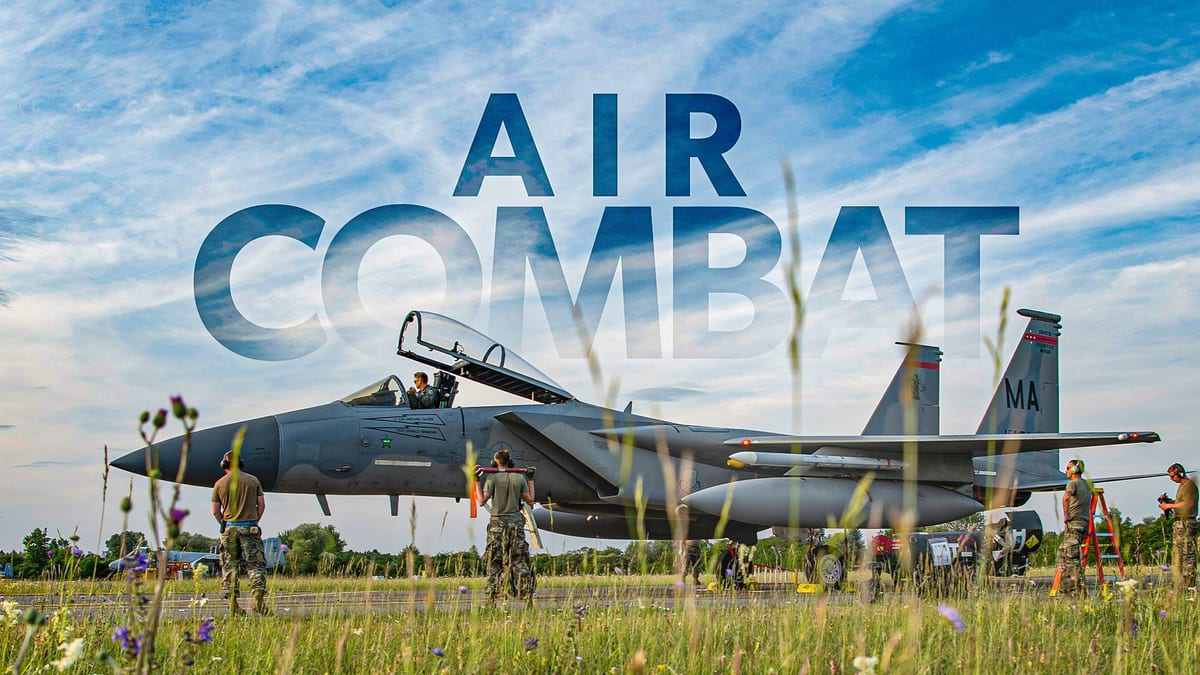
FCAS rift leaves Europe’s fighter roadmap in flux
The Franco-German-Spanish Future Combat Air System, conceived as Europe’s answer to emerging sixth-generation fighter projects, has been beset by disputes over workshare, intellectual property and industrial leadership. Recent reporting indicates that mediation efforts between France’s Dassault Aviation and Airbus, representing Germany and Spain, have failed to bridge deep disagreements on control of the central New Generation Fighter component.
According to publicly available coverage in recent weeks, German and French political leaders have concluded that industry partners are unable to reach a viable compromise on a joint fighter. This assessment effectively halts progress on a unified combat aircraft, even as broader FCAS concepts such as networking, sensors and uncrewed systems remain on the table in various forms.
The rupture comes after nearly a decade of negotiations and shifting alliances around FCAS. Earlier attempts to reset the project with revised workshare formulas and phased demonstrator plans did not resolve structural tensions between Dassault’s insistence on design authority and Airbus’s demand for a larger role commensurate with German and Spanish funding.
The unraveling of the flagship fighter element leaves Europe with a patchwork of overlapping efforts, including the UK-led Global Combat Air Programme and national upgrade paths for existing fleets such as the Eurofighter Typhoon and Rafale. Into this vacuum, alternative combinations of states and manufacturers are moving quickly to position themselves.
Airbus explores new paths, from “Team Gen 6” to Nordic options
In the wake of the FCAS setback, Airbus has begun to sketch out alternative frameworks for a future European fighter centered on Germany. Recent reports describe an Airbus-led industrial grouping, informally dubbed “Team Gen 6,” which has submitted a position paper on a sixth-generation combat aircraft to the German government. Participants include major German and European defense suppliers active on Eurofighter and other air programs.
Publicly available information on this paper suggests it aims to define how industry could contribute to any new combat air architecture that Berlin might champion, whether as a reconfigured FCAS, a successor project or a looser family of systems. Industry sources cited in press coverage stress that this is not yet a formal replacement program, but an attempt to shape the debate while political decisions are still in flux.
Parallel to this German-centered initiative, Airbus executives have signaled openness to more flexible solutions within or alongside FCAS concepts, including the possibility of supporting more than one fighter type. Earlier this year, comments from the company’s leadership indicated that a “two-fighter” approach could be acceptable if mandated by customer governments, provided that common enablers such as sensors, networks and uncrewed assets remain coherent.
These signals have drawn attention to potential partners beyond France, with Sweden’s Saab emerging as one of the most closely watched candidates. The search for new alignments reflects the strategic need to keep European fighter design and systems integration skills active despite political fractures.
Saab and Airbus deepen ties in unmanned combat technologies
The growing focus on Saab is rooted in cooperation that has already begun at the technological level. Late last year, Reuters reporting described discussions between Saab and Airbus on unmanned warplane technology. Executives from both companies outlined a study effort on so-called loyal wingmen or collaborative combat aircraft, intended to operate alongside manned fighters like the Eurofighter Typhoon and Saab’s Gripen E.
According to that coverage, the initial cooperation centers on uncrewed platforms that could extend the reach, sensor coverage and survivability of existing fleets. Such systems are emerging as a near-term bridge toward more comprehensive sixth-generation air combat networks, combining crewed and uncrewed assets linked by advanced data-sharing and artificial intelligence.
Saab and Airbus already share industrial links in electronic warfare and mission systems, including Saab equipment fitted to German Eurofighters. Public documents from Saab emphasize a strategy of expanding partnerships while preserving Sweden’s ability to develop complex defense systems at home, a balance shaped by limited national budgets and the need for export-oriented programs.
While any expansion from unmanned cooperation into a full joint fighter program would depend on political decisions in Berlin, Stockholm and other capitals, analysts note that a successful drone partnership could act as a catalyst. It would demonstrate the ability of the two companies to align engineering cultures, share sensitive technologies and manage cross-border workshare in a less politically charged setting than the now-frozen Franco-German framework.
Strategic implications for Europe’s fragmented fighter landscape
The prospect of Airbus leaning toward Saab as a core partner highlights the increasingly fragmented nature of Europe’s combat air landscape. With FCAS in disarray and the UK, Italy and Japan advancing their own Global Combat Air Programme, the risk of duplicative spending and divergent standards is once again front and center in defense policy circles.
For Germany, anchoring a new initiative around Airbus with contributions from companies such as Saab could secure a leading role in continental air combat technologies after years of sharing the stage with France. For Sweden, closer alignment with Airbus would offer scale, access to larger budgets and a pathway to keep design offices engaged beyond incremental Gripen upgrades.
However, such realignments could further distance France and Dassault from a shared European solution, potentially pushing Paris toward more nationally driven projects or alternative partnerships. Observers note that the breakdown in Franco-German cooperation reflects not only industrial rivalry but also differing views on nuclear roles, carrier operations and export control philosophies, all of which are harder to reconcile in a large, multinational design effort.
For smaller European air forces, the outcome will shape future choices between retaining upgraded fourth-generation fighters with advanced weapons and sensors, joining one of several competing sixth-generation projects, or relying more heavily on U.S.-made aircraft. The direction Airbus ultimately takes, and whether Saab moves beyond unmanned systems into a broader fighter alliance, will influence those options well into the 2040s.
Next steps: from concept papers to political decisions
For now, Airbus’s outreach to Saab and the emergence of Team Gen 6 remain at the concept and lobbying stage. Position papers, joint technology studies and carefully worded public statements form the visible tip of a broader effort to secure political sponsorship and long-term funding in Berlin and other capitals.
Reports on internal German deliberations suggest that policymakers face a complex trade-off between speed, industrial returns and alliance cohesion. Joining existing frameworks, such as the UK-led program, could offer faster access to a mature design but would give Germany less influence over requirements and workshare. Launching a new initiative around Airbus and selected partners, possibly including Saab, would maximize national leadership but also increase the risk of duplication and delay.
In Sweden, any deeper engagement would need to fit within long-standing political constraints on defense spending and the country’s traditional preference for relatively light, cost-efficient fighters optimized for national conditions. Analysts point out that participation in a larger European project could force Stockholm to revisit earlier decisions on how much it is prepared to invest in a high-end, sixth-generation platform.
As of mid-2026, the only certainty is that Europe’s path to a next-generation combat aircraft is no longer defined by a single Franco-German project. Airbus’s evolving relationship with Saab, backed by new German-centered initiatives, has become one of the key storylines to watch as governments decide whether to converge on shared solutions or accept a future of multiple, competing European fighters.