


More news on this day
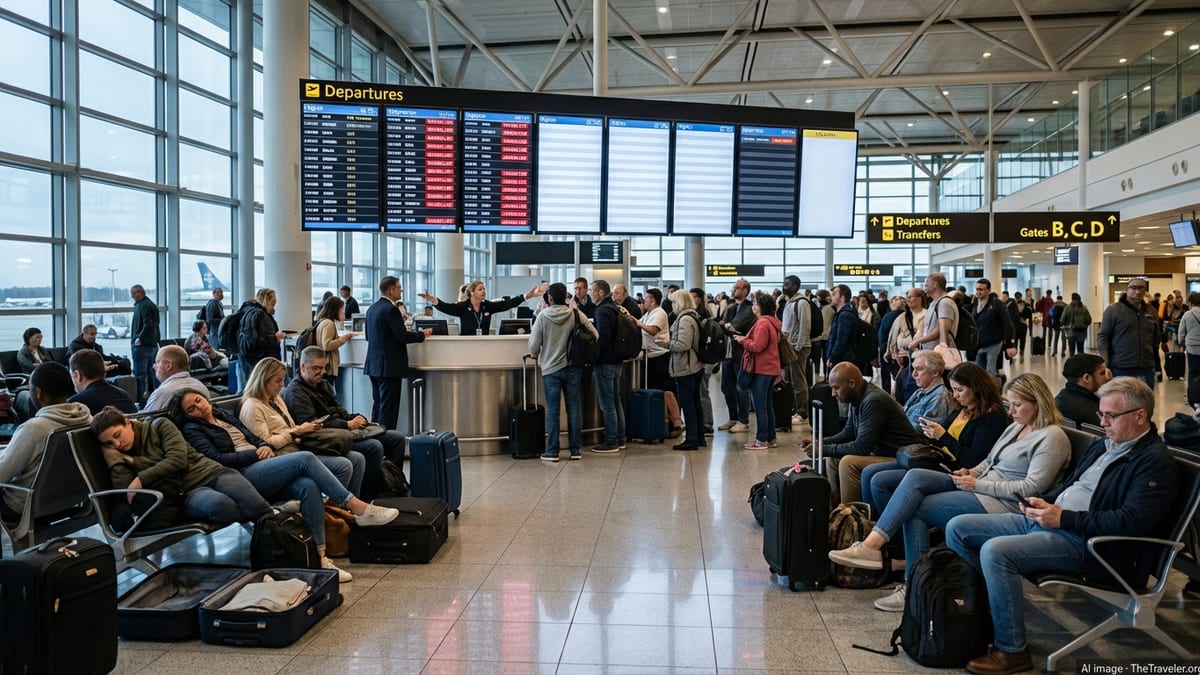
Flight disruption across Dubai and the wider Middle East is intensifying as international and regional airlines prolong route suspensions and diversions, even after a pause in recent United States strikes on Iran, leaving passengers facing extended uncertainty over summer travel plans.
Get the latest news straight to your inbox!
Airspace closures keep pressure on Gulf hubs
Several Middle East and North Africa states continue to enforce full or partial airspace closures in response to the ongoing Iran conflict, limiting access to key corridors that normally funnel traffic between Europe, Asia, Africa and Australasia. Publicly available aviation notices and industry advisories indicate that Iran and Iraq remain effectively closed to most civil overflights, while restrictions and capacity limits persist in neighboring states including Kuwait, Bahrain and Jordan.
Dubai International and Abu Dhabi International, which together handle a significant share of global long haul connections, have reopened after earlier shutdowns but are still operating on reduced schedules. A regional risk advisory issued in March outlined continued instability in timetables, with flights subject to short notice changes and diversions as airlines respond to evolving security assessments and airspace availability.
Industry analysis of the economic impact of the Iran war shows that closures at several Middle Eastern hubs, combined with long detours around restricted airspace, have disrupted around 15 percent of global air traffic. Airlines are burning more fuel on extended routings around the Gulf and Levant, compressing operating margins at a time of elevated oil prices and pushing some carriers to maintain suspensions rather than run uneconomical services.
For Dubai, the pressure is twofold. The city remains a central transfer point for travel between Europe and Asia, yet it sits close to the core of the current conflict. As a result, carriers are weighing the revenue benefits of serving the emirate against higher insurance costs, complex routing and passenger hesitation about transiting the region.
Global airlines lengthen route suspensions
Flag carriers from Europe, Asia and North America have steadily extended temporary suspensions on flights to Dubai and other Middle Eastern destinations into late summer and early autumn. Schedules data and airline advisories show that groups such as British Airways, Lufthansa and Air Canada have repeatedly pushed back restart dates on selected routes, citing the security situation and ongoing airspace constraints.
Specialist aviation coverage in March reported that Air Canada lengthened the suspension of its Toronto to Dubai service until at least early May, while several European airlines halted direct services to Gulf hubs and Israeli airports, preferring to keep aircraft on other long haul rotations. Some Asian carriers, including Singapore Airlines and a number of Southeast Asian operators, have also cancelled or reduced Middle East flights for weeks at a time, focusing instead on more stable markets.
These decisions are being mirrored by regional players. Kuwait Airways and Qatar Airways, along with selected low cost Gulf carriers, have cut back services to conflict-adjacent cities and in some cases temporarily halted flights to Dubai, Doha and other hubs during periods of heightened tension. Travel advisories from March and April noted that Saudi Arabia’s domestic and regional network was also affected, with disruptions reported at major airports in Jeddah, Riyadh, Medina and Dammam following route suspensions.
The cumulative effect is a patchwork of suspensions that differ by airline and origin city. Some carriers have maintained at least a skeletal operation into Dubai and other hubs, while others are absent from the region entirely, forcing travelers to piece together journeys using whichever airlines still serve their preferred destinations.
Detours, longer flight times and higher costs
For airlines that continue to operate, longer routings are now the norm. With overflights of Iran, Iraq, parts of Syria and sections of the eastern Mediterranean restricted or actively avoided, aircraft are being rerouted via the Arabian Sea, the Red Sea or more northerly tracks through Central Asia and Eastern Europe. Aviation analysts note that these detours can add several hours to long haul journeys and significantly increase fuel burn.
Economic assessments of the conflict point to rising operating costs as carriers consume additional fuel, pay higher navigation charges and manage tighter crew scheduling due to longer duty times. Some airlines are also repositioning aircraft to alternative hubs or rotating widebody jets onto shorter sectors to keep utilization up, further complicating global networks.
These added costs are starting to filter through to customers. Published fare data and booking trends suggest that prices on some Europe to Asia routes that avoid the Middle East have risen, as demand shifts onto alternative corridors through Central Asia or southern Africa. Meanwhile, limited capacity into Dubai and Doha has reduced the number of competitive one stop options that previously helped hold down long haul fares.
Operational resilience is also being tested. Carriers must keep contingency plans ready for rapid airspace changes, diversions to secondary airports and last minute cancellations if security assessments deteriorate. This environment leaves little room for recovery when disruptions occur, increasing the likelihood of missed connections and extended delays.
Passengers face rolling uncertainty and crowded alternatives
For travelers, the most visible impact is uncertainty. Social media posts and traveler forums from late July describe passengers receiving multiple schedule changes, with departure times moved forward or backward by several hours, routings shifted to secondary hubs and, in some cases, journeys cancelled outright with limited notice.
Publicly shared airline policies show that many carriers are offering fee free date changes, refunds for cancelled services and in some cases rebooking onto partner airlines. However, with capacity constrained across several alternative corridors, securing comparable replacement itineraries can be difficult, particularly for peak summer departures between Europe and Asia or for complex multi city trips that once relied on Gulf connections.
Travel advisories recommend that passengers with upcoming itineraries through Dubai, Doha, Abu Dhabi or other regional hubs monitor their bookings closely and remain flexible. Industry guidance emphasizes checking flight status repeatedly in the days and even hours before departure, allowing longer connection times, and being prepared for rerouting via less direct paths, including overnight stops.
Travel insurance providers are also updating policy guidance to clarify how disruption linked to the Iran conflict is treated. In many cases, coverage for cancellations and delays depends on when a policy was purchased and how the disruption is classified, leaving some travelers exposed if they booked after the conflict escalated and airlines had already begun adjusting schedules.
Regional carriers balance risk, reputation and recovery
For Gulf and wider Middle Eastern airlines, the current crisis arrives during what was expected to be a period of continued post pandemic growth. Carriers such as Emirates, Etihad, Qatar Airways and Saudi Arabia’s expanding aviation sector had been investing heavily in fleet renewal and route expansion, positioning their hubs as indispensable crossroads of global travel.
Public information from these airlines indicates that most have now shifted focus from growth to stability. Several have scaled back frequencies, consolidated flights onto larger aircraft and temporarily paused new route launches in order to preserve cash and manage operational risk. At the same time, they are under pressure to maintain a visible international presence and retain customer loyalty, even if that means running limited schedules on strategically important routes.
Reputation and safety perceptions are critical in this balancing act. Although aviation safety regulators continue to emphasize that commercial flights only operate on routes assessed as safe, the proximity of key Gulf hubs to the conflict zone has raised questions among some travelers. Regional branding campaigns are being adjusted to focus on flexibility, customer support and network resilience rather than pure expansion.
Looking ahead, aviation analysts suggest that a sustained period of elevated tension could accelerate a broader recalibration of global air networks. Carriers may deepen partnerships that allow them to route passengers via alternative hubs, while airports further from the conflict zone compete to capture flows that once passed almost automatically through Dubai and its regional rivals. For now, though, Dubai and the Middle East remain at the center of a fast changing map of global air travel, with extended route suspensions keeping disruption firmly in place.