


More news on this day
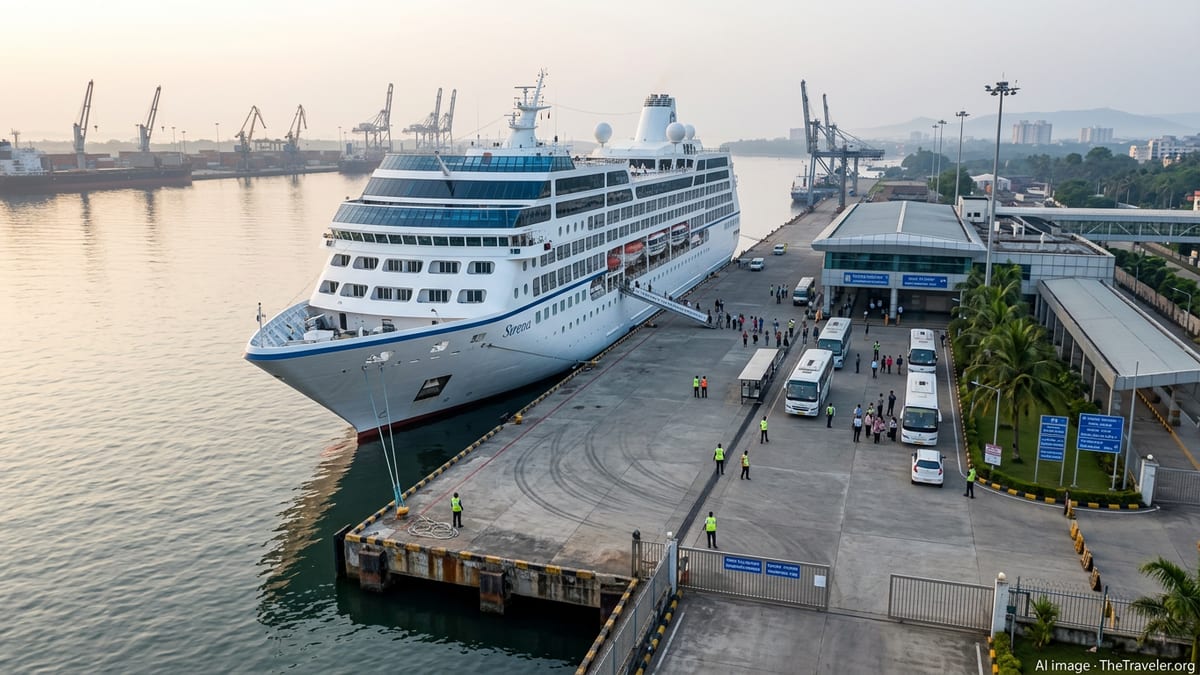
Oceania Cruises is moving to reshape its fleet profile, with industry reports indicating the company has agreed to sell Sirena, one of its four veteran R-Class vessels, in a move widely viewed as a step toward phasing out the line’s oldest ships.
Get the latest news straight to your inbox!
Strategic shift away from legacy R-Class tonnage
Sirena, originally built in 1999 as part of Renaissance Cruises’ R-Class series, joined Oceania Cruises in 2016 after sailing for several brands under different names. Together with near-sisters Regatta, Insignia and Nautica, the 684-guest ship has long formed the backbone of Oceania’s small-ship offering, emphasizing destination-intensive itineraries over large-ship amenities.
Publicly available fleet data and trade coverage indicate that Oceania has now entered into an agreement to transfer Sirena to a new owner, effectively beginning the unwinding of its dependence on the four-ship R-Class platform. While detailed terms have not been made public, the transaction removes one of the brand’s most compact and oldest vessels from its long-term lineup.
The decision comes as the wider cruise sector continues to pivot toward newer, more efficient ships with expanded balcony inventory and modern hotel systems. Analysts note that older tonnage, even when upgraded, presents growing commercial and regulatory pressures compared with purpose-built contemporary vessels.
Sirena underwent a significant refurbishment when it entered the Oceania fleet, and later benefitted from the company’s OceaniaNEXT enhancement program. Even so, its basic footprint, cabin configurations and machinery reflect design standards of the late 1990s, making it increasingly challenging to align with evolving guest expectations and environmental requirements.
Focus turns to newbuilds and larger premium ships
The Sirena sale aligns with a broader investment cycle across Norwegian Cruise Line Holdings, Oceania’s parent company, which is committing capital to new tonnage for each of its three brands. A recent order with Fincantieri includes a new ship for Oceania Cruises that will follow the design language of the line’s latest newbuilds, giving the brand additional capacity in the upper-premium segment.
Oceania has already expanded beyond its original R-Class roots with the introduction of the larger O-Class ships Marina and Riviera, followed by the more recent Vista and a sister ship, Allura, which promise a higher proportion of balcony cabins, expanded dining options and upgraded technical systems. Industry observers see these ships as central to Oceania’s future growth, especially on longer and higher-yield itineraries.
Fleet announcements and orderbook information show that the company is prioritizing vessels that can deliver lower per-berth operating costs and meet tightening emissions rules, while still maintaining the brand’s focus on culinary experiences and destination-rich routes. Moving an aging R-Class ship out of the roster is being interpreted as part of that optimization process, freeing capacity for newer vessels to take on core deployments.
For travel advisors and repeat guests, the shift suggests that itineraries historically assigned to Sirena may gradually migrate to larger, more modern ships that can sail similar routes with enhanced onboard amenities. That transition is expected to be phased, as Oceania works through existing deployment commitments before handing Sirena over to its new owner.
Impact on itineraries and loyal Oceania guests
Sirena has been a workhorse in the Mediterranean and other boutique regions, frequently operating seven to fourteen night voyages that visit smaller ports inaccessible to larger hardware. Published schedules show the ship continuing to appear on near-term deployment, implying that any handover date is being coordinated to minimize disruption to booked guests.
According to publicly available itinerary information, Sirena has been scheduled on a mix of Mediterranean, Atlantic and holiday sailings, reinforcing its role as a flexible deployment asset. The sale introduces a degree of uncertainty about how those routes will be covered in future seasons, particularly in shoulder periods where smaller ships can be advantageous.
Travel trade commentary suggests that Oceania is likely to lean on its remaining R-Class vessels and growing O-Class fleet to cover similar patterns, at least in the medium term. The company has historically emphasized continuity in deployment, favoring gradual transitions rather than abrupt changes that could affect guest satisfaction or travel agent confidence.
For loyal guests who favor the intimate feel of the R-Class ships, the loss of Sirena may be as much emotional as practical. Many repeat passengers associate the vessel with specific itineraries, crew teams and onboard venues that differ in scale and atmosphere from the larger ships now entering the fleet.
Symbolic break from Oceania’s origins
Beyond capacity numbers, the Sirena transaction carries symbolic weight. Oceania was built on the R-Class platform after the collapse of Renaissance Cruises, and for years those ships defined the brand’s identity as a small-ship, destination-focused operator. Trimming that original core is being read in industry circles as a clear statement that the company’s future will be anchored in purpose-built, next-generation hardware.
Recent refurbishment plans for larger ships, including a substantial “reinspiration” project for Marina, underline this new center of gravity. Investment is increasingly concentrated on vessels that can offer more suites and verandas, a wider array of specialty restaurants and lounges, and updated spa and wellness facilities that appeal to a younger, more globally mobile premium customer.
At the same time, Oceania appears intent on retaining some of the hallmarks that made the R-Class ships successful, including relatively low guest counts by contemporary standards and a strong emphasis on port time. Newer ships in the fleet have been designed to balance increased scale with a layout that preserves a sense of intimacy in public spaces.
Viewed in that context, the Sirena sale marks an inflection point: the brand that began on repurposed tonnage is increasingly defined by ships conceived specifically for its culinary and destination strategy. While three R-Class vessels are expected to remain in service for now, the path ahead points toward a fleet where legacy hardware plays a steadily smaller role.