


More news on this day
Portugal has emerged as Europe’s worst performer for flight delays, with recent European aviation data indicating that passengers traveling to and from the country collectively lost millions of hours in disrupted journeys.
Get the latest news straight to your inbox!
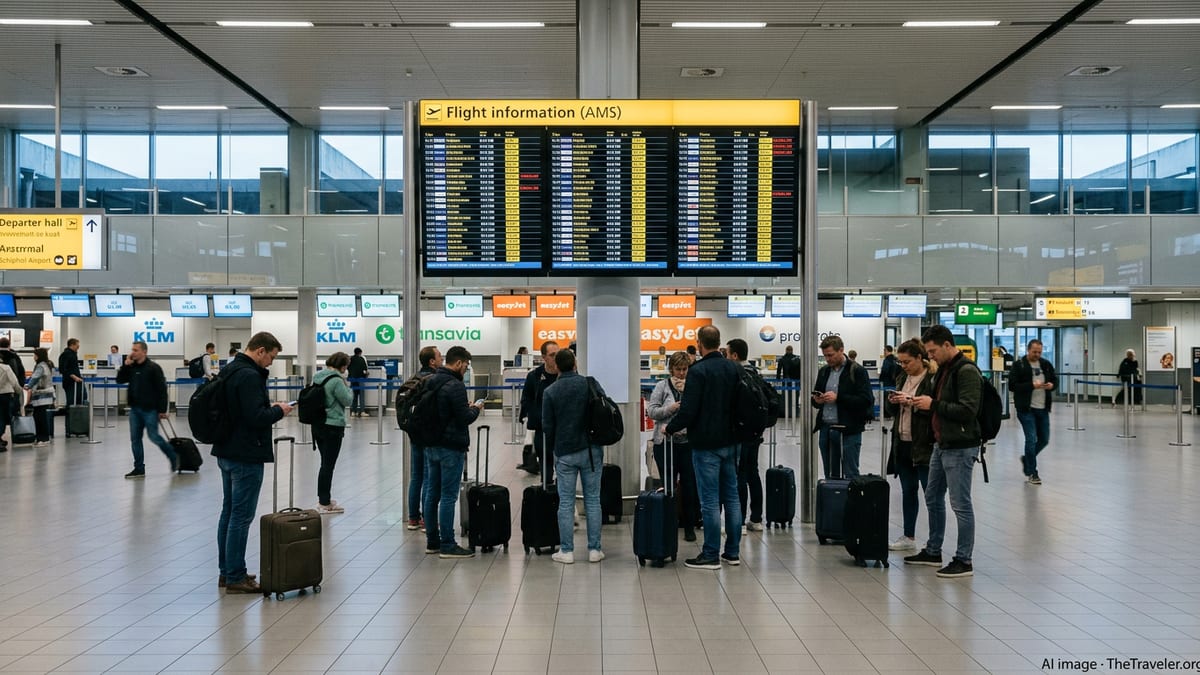
New figures highlight Portugal’s mounting punctuality problem
Recent punctuality analyses from European aviation bodies point to Portugal as the continent’s most severely affected country for flight delays, both in terms of frequency and accumulated disruption time. Data tracking air traffic management and airport performance across Europe show that delays affecting Portuguese airspace and airports have risen sharply compared with pre-pandemic baselines, outpacing the rest of the region.
Portuguese hubs, particularly Lisbon and Porto, have been repeatedly singled out in punctuality reports as among the most delay-prone airports in Europe. While other major hubs have gradually improved on-time departure and arrival rates over the past two years, publicly available summaries of European network performance indicate that key Portuguese gateways remain outliers, with high levels of reactionary and capacity-related delays.
Industry reporting frames this as a systemic issue rather than a series of isolated incidents. Network-wide overviews describe persistent bottlenecks concentrated on Europe’s south-west axis, where Portugal sits alongside parts of Spain and France in bearing a disproportionate share of en‑route and airport-related disruption.
For travelers, this statistical picture translates into longer queues, missed connections and a steady erosion of confidence in schedules involving Portuguese airports. Travel forums and consumer reports have increasingly highlighted Portugal as a high-risk point in European itineraries for those on tight connections.
Millions of hours lost as delays accumulate across the network
European aviation performance snapshots show that delay minutes linked to Portuguese airspace and airports now represent a significant share of total disruption across the continent. When aggregated over the course of a year, these minutes amount to millions of hours lost by passengers waiting on tarmac, circling in holding patterns or rebooking missed onward flights.
En‑route air traffic flow management delays across southern and western Europe have climbed, with Portugal repeatedly cited among the worst-affected areas. Even modest average delays per flight, when multiplied by hundreds of daily movements and peak summer traffic, can rapidly sum to substantial lost time. Reports on the European network underline that during peak months, daily delay totals routinely reach into the tens of thousands of minutes, with Portuguese sectors featuring prominently in the statistics.
At airport level, the situation compounds the strain on passengers. Lisbon and Porto appear frequently in league tables of airports with the heaviest disruption, behind only a handful of Europe’s largest hubs. According to aviation trend bulletins, prolonged reactionary delays, congestion on departure and weather disruption have all contributed to keeping Portugal near the top of the rankings for average minutes lost per flight.
For airlines, these millions of lost passenger hours translate into additional operational costs, crew rescheduling complications and reputational damage on routes to and from Portugal. For tourists and business travelers, they mean truncated holidays, missed meetings and more time spent in terminals than originally planned.
Why Portugal is struggling: capacity, geography and staffing
Multiple strands of publicly available analysis point to a combination of structural and operational factors behind Portugal’s poor delay performance. Geographically, the country sits on a busy intersection of north–south leisure flows and transatlantic traffic, concentrating a high volume of flights into a relatively small number of airports and airspace sectors.
Capacity constraints at Lisbon in particular have been a longstanding concern, with the airport operating close to or at its declared limits during peak periods. Industry reports highlight that insufficient runway and terminal capacity, combined with limited room for schedule growth, mean even minor disruptions can cascade into extended delays. This is reflected in high levels of so‑called reactionary delays, where a late-arriving aircraft triggers knock-on effects across the network.
Staffing pressures in air traffic control and ground handling have also been cited in broader European assessments as a key driver of disruption in south-west Europe. When airspace capacity is reduced because of controller shortages, flights are held on the ground or rerouted, increasing congestion in already busy sectors such as those over Portugal.
Weather adds another layer of complexity. Western Europe’s episodic severe weather events, including summer storms and winter disruptions, frequently affect Atlantic-facing approaches and coastal airports. Even when adverse conditions are short-lived, the recovery can be slow where airports and airlines have little slack in schedules or resources.
Consumer frustration grows as EU compensation rules tested
For passengers, the statistical picture of mounting delays has been mirrored by a surge in complaints and compensation claims involving flights to and from Portugal. Public discussions on travel forums, social media and consumer advocacy platforms frequently reference extended waits at Lisbon and other Portuguese airports, missed connections and difficulties in recovering costs.
Under European Union rules, passengers on flights departing from EU airports or operated by EU carriers may be entitled to fixed compensation for long delays, cancellations and denied boarding, provided certain conditions are met. As Portugal’s delays have intensified, these regulations have become increasingly central to how travelers and consumer groups respond to disrupted itineraries.
Reports indicate that many affected travelers are turning to specialist claim firms or national enforcement bodies to pursue cases, particularly where airlines contest responsibility on grounds such as weather or air traffic control restrictions. The growing volume of claims adds an additional layer of complexity and cost to airline operations on Portuguese routes.
Frequent travelers through Portugal highlight not only the immediate inconvenience but also the psychological impact of uncertainty, describing itineraries that require larger buffer times, overnight stays near airports and a general shift away from tight connections through Lisbon and Porto.
Implications for Portugal’s tourism brand and future reforms
Portugal’s emergence as Europe’s worst performer for flight delays poses a challenge for a country that relies heavily on international tourism. Visitor numbers to Portuguese destinations have grown strongly in recent years, and air connectivity is central to that success. Persistent disruption risks undermining the country’s reputation for hassle-free city breaks, beach holidays and business travel.
Travel industry observers note that tour operators and corporate travel planners are increasingly factoring reliability into route choices and connection strategies. If Portugal continues to appear at the top of European delay rankings, there is a risk that some itineraries will be rerouted through competing hubs with better punctuality records, even if fares are higher.
Publicly discussed solutions range from accelerating airport infrastructure projects around Lisbon to strengthening staffing and technology investment in air traffic management. European performance reviews have pointed to the need for coordinated action between airports, airlines and network managers in south-west Europe, suggesting that isolated measures are unlikely to resolve a problem that has regional dimensions.
For now, the data underline a stark reality for travelers: flights involving Portugal carry a higher-than-average risk of significant delay compared with much of the rest of Europe. Until structural bottlenecks are eased and operational resilience improves, passengers are likely to keep losing valuable hours in transit when their journeys pass through Portuguese skies.