


More news on this day
A fast-moving summer storm that swept across the Northeast on August 4 grounded at least 726 flights and delayed hundreds more, while widespread complaints about malfunctioning and lagging airline apps left stranded travelers struggling to rebook tickets or even confirm whether their flights were operating.
Get the latest news straight to your inbox!
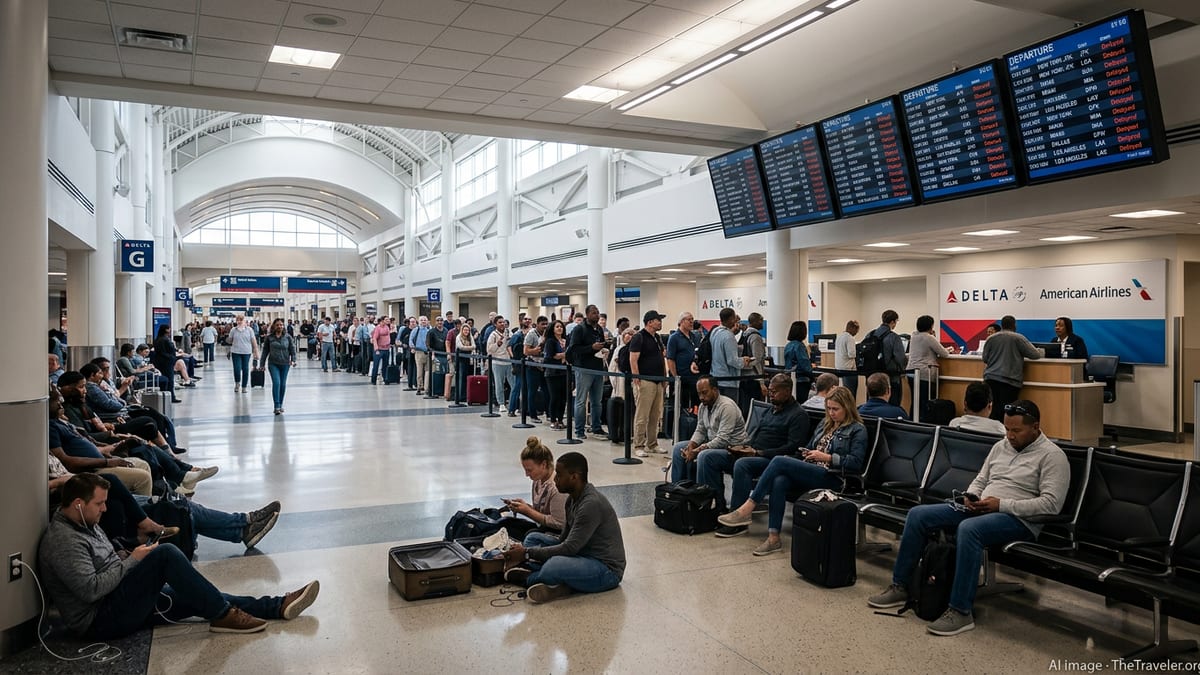
Storm Slams Key Northeast Hubs, Forcing Rapid Cancellations
Publicly available aviation data shows that a potent line of thunderstorms tracking from Washington, D.C., through New York and Boston triggered significant air-traffic restrictions on Monday, disrupting operations at some of the country’s busiest hubs. The brunt of the problems was concentrated at New York-area airports, Boston Logan, Philadelphia and the three major Washington facilities.
By late afternoon, flight-tracking dashboards indicated that at least 726 flights within, into or out of the United States had been canceled, with a large share tied to the storm’s footprint over the Northeast. Hundreds more were delayed as air-traffic controllers slowed departures and arrivals to manage lightning, low visibility and rapidly shifting wind patterns.
Weather-related cancellations have become a recurring feature of peak summer travel in the region, but today’s totals added another difficult day to what has already been a volatile season for Northeast operations. Aviation observers noted that the concentration of major hubs and older, heavily trafficked airspace makes the corridor particularly vulnerable when fast-building storms roll through at peak hours.
While airlines generally cited adverse weather and related air-traffic programs as the reason for grounding flights, the wider impact rippled far beyond the storm zone. Aircraft and crew imbalances quickly spread disruption to cities in the Midwest, South and on some transcontinental routes that rely on planes cycling through the Northeast.
Digital Tools Overwhelmed Just as Passengers Needed Them Most
As cancellations mounted, travelers increasingly turned to airline mobile apps and websites in an attempt to rebook. Social media posts and user reports, however, described repeated error messages, timeouts and mismatched information between apps, desktop sites and airport departure boards.
Some passengers reported that apps showed their flights as “on time” even after airport display screens and gate announcements identified the same services as canceled. Others described being automatically rebooked for itineraries several days later, with no obvious way inside the apps to search for earlier options on alternative routes.
The performance issues do not appear to have stemmed from a single, systemwide outage. Instead, consumer-facing tools across several major U.S. carriers appeared to struggle under heavy load, with session timeouts and stalled payment or ticket-change screens emerging as common complaints. Aviation analysts say that, during sudden mass disruptions, backend reservation and crew systems can quickly bottleneck, leaving apps to surface incomplete or outdated information.
Industry specialists have long argued that real-time transparency is crucial during irregular operations, yet the experience for many travelers today underscored the gap between marketing promises of seamless digital service and the reality of complex, legacy reservation platforms linked to modern app interfaces.
Ground Experience Marked by Long Lines and Limited Support
At airports from Boston to Newark, images shared publicly showed snaking lines at customer-service counters and kiosks as travelers who were unable to make changes in the apps sought help in person. With many flights scrubbed late in the boarding process, some passengers described being sent back to ticket halls to queue for new itineraries alongside hundreds of others in the same situation.
Customer-service capacity has been a recurring flashpoint during this year’s storm and outage episodes across several airlines. While carriers have added some self-service options, published accounts indicate that phone queues and chat channels were also heavily backlogged during today’s disruption, leaving travelers to juggle multiple devices while standing in line at the airport.
The strain was especially acute at key connection hubs, where a single canceled leg can cause travelers to misconnect on onward international or cross-country segments. In those cases, limited remaining seat availability made same-day rebooking difficult, and some travelers reported being offered itineraries one or two days later than originally planned.
With many flights full at the height of the summer season, re-accommodating passengers from 726 canceled services required airlines to consolidate remaining capacity, encourage voluntary date changes and, in some cases, prioritize travelers with tight international or cruise connections. For those at the back of the queue, overnight stays or extended delays became unavoidable.
Recent Tech Stumbles Heighten Scrutiny of Airline IT
Today’s frustrations arrived on the heels of several high-profile technology stumbles across the airline industry this summer, including scheduling-system issues, ground stops tied to software problems and previous days when particular carriers led the nation in cancellations. These incidents have intensified questions about the resilience of airline IT at a time when companies are heavily promoting their digital platforms.
Publicly available coverage in recent weeks has highlighted concerns from pilot groups and passenger advocates about aging reservation backbones, fragmented crew-scheduling tools and the complexity of integrating newer mobile features with decades-old systems. The result, critics argue, is that apps often work well when operations are smooth but falter precisely when travelers need them most.
Industry analysts note that investment in mobile interfaces and loyalty-program features has often outpaced spending on less visible infrastructure such as real-time data integration and automated recovery tools. When major storms or air-traffic programs hit, the lack of robust automation can force airlines to rely on manual workarounds, which then choke customer-service channels and slow rebooking.
As another disruptive weather event pushes airline apps into the spotlight, observers say regulators and consumer advocates are likely to examine how clearly carriers disclose limitations of digital tools and what recourse passengers have when technology barriers prevent them from using time-sensitive rebooking options.
What Today’s Chaos Means for Summer Travelers
With the heart of the August travel period still ahead, aviation experts say today’s storm-related meltdown offers a preview of how fragile the system can be when weather, congestion and technology all intersect. Even without a single catastrophic outage, moderate storms can cascade into widespread cancellations when networks are tightly scheduled and recovery buffers are thin.
Public guidance from aviation agencies and consumer organizations emphasizes the importance of monitoring multiple information sources, including airport departure boards, third-party flight-tracking services and carrier alerts, rather than relying on a single app screen. Travelers are also encouraged to have backup plans, such as alternative routes or nearby airports, especially when flying through the Northeast in the late afternoon and evening.
For airlines, the latest disruption renews pressure to accelerate investments in back-end technology that can support real-time rebooking, more accurate status updates and better coordination between apps, call centers and airport staff. Analysts suggest that, as storms and extreme weather become more frequent, reliable digital tools will be as critical to operational resilience as additional aircraft and crew.
For passengers caught in today’s 726 canceled flights, those improvements cannot come soon enough. Many ended the day where they started, in terminals along the stormy Northeast corridor, watching their phone screens refresh in the hope that the next update would finally bring a confirmed seat out.