


More news on this day
Israeli flag carrier El Al and several foreign airlines have petitioned Israel’s High Court of Justice to scale back generous passenger protections for flight disruptions during recent wartime airspace closures, opening a high stakes battle over who should pay for stranded travelers’ care when conflict halts commercial flying.
Get the latest news straight to your inbox!
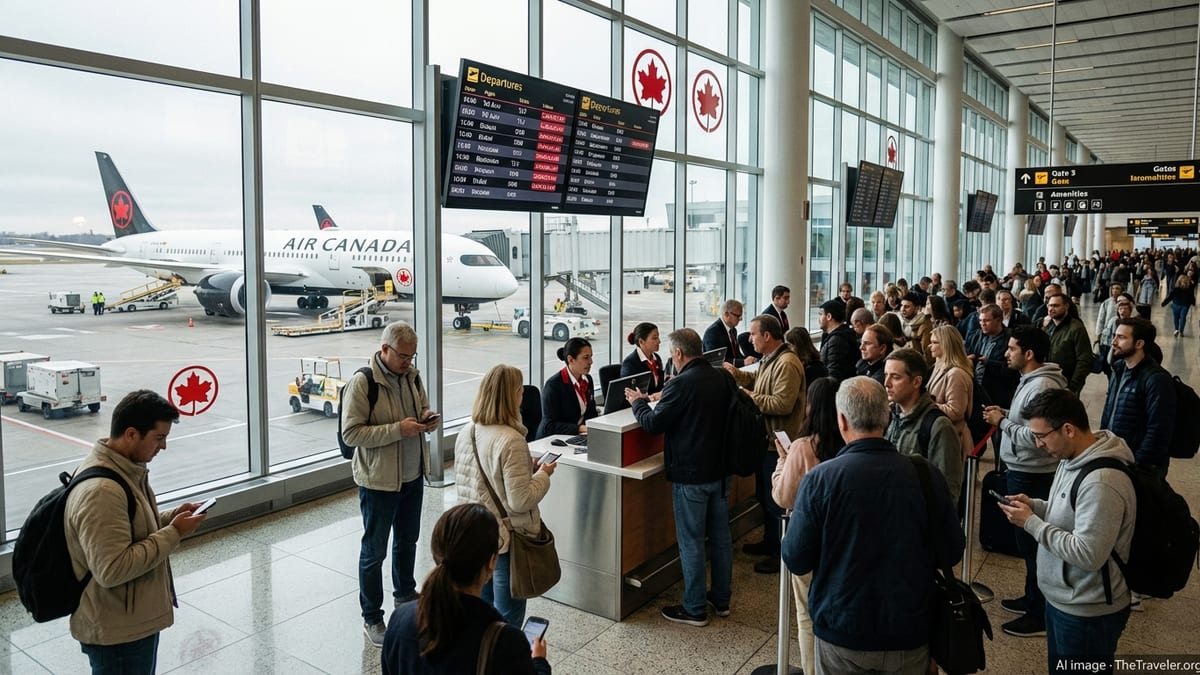
Carriers Challenge Israel’s Robust Passenger Rights Law
The petition focuses on Israel’s Aviation Services Law, widely known as the Tibi Law, which grants passengers on flights to and from Israel extensive rights to care and fixed monetary compensation when flights are cancelled, heavily delayed or significantly changed. Publicly available guidance from airlines and legal analyses describe the law as one of the more protective passenger rights regimes worldwide, covering meals, hotel accommodation, ground transport and standardized cash payments in many disruption scenarios.
According to recent legal and industry coverage, the airlines argue that these protections become unworkable when Israel closes its airspace for security reasons, such as during the large scale confrontation with Iran referred to as Operation Roaring Lion. When the state orders a shutdown of commercial flights, carriers contend that they cannot reasonably be expected to shoulder unlimited hotel, meal and rerouting costs for thousands of stranded passengers over an open ended period.
Reports indicate that the petition does not seek to abolish the Tibi Law, but to carve out a clearer exemption for war related cancellations and prolonged airspace closures. The airlines are asking the High Court either to interpret the existing legislation as limiting their obligations in such circumstances, or to prod the government to activate emergency mechanisms within the law that can temporarily ease carrier responsibilities.
Published material on the case highlights a central tension at the heart of the dispute: the law was designed to protect travelers from commercial decisions by airlines, but is now being tested against disruptions caused by state security measures that lie outside carriers’ control.
What Airlines Want the High Court To Change
Summaries of the petition indicate that the carriers are seeking narrower and more predictable duties to assist passengers when war or severe security crises force the closure of Israel’s skies. One key request reportedly involves limiting the obligation to pay for hotel accommodation to a defined number of nights, with some accounts pointing to a proposed cap of two nights’ lodging per passenger in war related disruptions.
The airlines also appear to ask the court to confirm that they are exempt from fixed cash compensation in situations where flights were grounded due to state security orders, similar in spirit to the “extraordinary circumstances” concept that applies under Europe’s EU261 regime. Under that approach, passengers would still receive assistance such as rebooking and limited care, but not additional lump sum payments when the cause of disruption is deemed beyond the airline’s control.
Another element concerns the law’s emergency clause, which allows the government to modify or suspend some airline obligations in exceptional circumstances. Published coverage notes that during the recent conflict the responsible ministry did not activate this mechanism, even as airlines canceled large numbers of flights and scrambled to provide ad hoc support. The petition argues that leaving the full weight of passenger care on airlines during a state mandated shutdown created “unsustainable” liabilities and legal uncertainty.
The case asks the High Court to clarify how that emergency clause should function in future wars or major attacks, so that both airlines and passengers know in advance what level of support to expect when airspace is abruptly closed by the state.
How the Dispute Arose From Recent Wartime Disruptions
The legal challenge is rooted in the chaotic days surrounding Israel’s confrontation with Iran, when missile and drone attacks prompted authorities to close the country’s airspace for periods of time and to impose tight operating restrictions when flights resumed. During these closures, hundreds of flights were cancelled or diverted, leaving many passengers stranded overseas or unable to reach Israel as planned.
Reports describe airlines scrambling to arrange hotel rooms, meals and alternative routings while also dealing with fast changing security guidance. In some cases, carriers operated limited rescue or repositioning flights for citizens and residents, but most regular commercial schedules were cut back sharply until the threat level eased.
As operations stabilized, passenger complaints and legal demands began to surface. Israeli media and court filings referenced class action initiatives and compensation claims alleging that carriers failed to fully honor their duties under the Aviation Services Law during the crisis. The financial impact of such claims, combined with the up front costs of supporting stranded customers, appears to have prompted airlines to seek formal relief from what they describe as disproportionate burdens created by a state mandated shutdown.
The petition now before the High Court consolidates these concerns into a broader legal test case that could define the balance between national security imperatives and consumer protections the next time Israel’s skies are partially or fully closed by conflict.
What the Tibi Law Currently Promises Travelers
Under the Aviation Services Law as currently written and publicly summarized by airlines and law firms, passengers on flights departing from or arriving in Israel are entitled to a structured package of benefits when flights are cancelled, significantly delayed, or subject to substantial schedule changes. These benefits scale with flight distance and length of disruption but typically include food and drink vouchers, access to communications, hotel accommodation when an overnight stay becomes necessary, and ground transportation between the airport and lodging.
In many scenarios, travelers are also entitled to fixed monetary compensation, denominated in Israeli shekels, that is owed regardless of the passenger’s actual financial loss. Legal commentary notes that courts can additionally award exemplary damages if an airline systematically fails to provide required assistance. These remedies sit alongside any refunds or rerouting obligations that arise when a flight is cancelled or heavily changed.
The law applies both to Israeli and foreign airlines serving the country and is broadly aligned with global trends toward stronger air passenger rights. Carriers are required to inform customers of their entitlements and, in some cases, to maintain local representatives in Israel to help passengers exercise those rights. Industry observers have long cited the Tibi Law as a key reason why disruption related costs for flights touching Israel can be significantly higher than in markets with weaker consumer protections.
Until now, questions about how the law operates during wartime or severe security crises have been handled case by case in the courts or through private settlements. The current petition marks the first concerted attempt by a coalition of airlines to obtain a general ruling on the reach of the law in war related shutdowns.
Implications for Travelers Planning Flights To and From Israel
For travelers, the High Court’s eventual decision could shape what level of support they receive in future conflicts that disrupt air travel to and from Israel. If the court accepts the airlines’ arguments and narrows wartime care obligations, passengers affected by security driven cancellations might face shorter paid hotel stays and no entitlement to standardized cash compensation, even when they are stranded abroad through no fault of their own.
On the other hand, if the court preserves the existing interpretation of the Tibi Law, airlines warn that operating flights to Israel during volatile periods may become more financially risky. Industry commentary suggests that higher exposure to passenger care and compensation costs could influence route planning, insurance arrangements and pricing, potentially affecting the availability and cost of seats on Israel routes when security conditions deteriorate.
In the near term, currently available information indicates that the petition does not change passenger rights for trips already booked or underway. Until the High Court issues a ruling or the government activates the law’s emergency mechanisms, airlines remain bound by the Aviation Services Law as presently interpreted. Travelers whose flights are cancelled or heavily disrupted can still rely on the published rights notices provided by carriers for flights touching Israel.
For those planning travel during a period of elevated tension in the region, consumer advocates advise monitoring airline advisories closely and keeping flexible travel arrangements where possible. However the High Court rules, the case underscores how quickly air travel rights can become entangled with broader security decisions, and how important it is for passengers to understand the legal framework that applies when conflict interrupts their journeys.