


More news on this day
New internal assessments reviewed by US media suggest the State Department is describing security conditions in parts of Latin America very differently to asylum officers than it is to American travelers, raising fresh questions about how Washington measures risk across the region.
Get the latest news straight to your inbox!
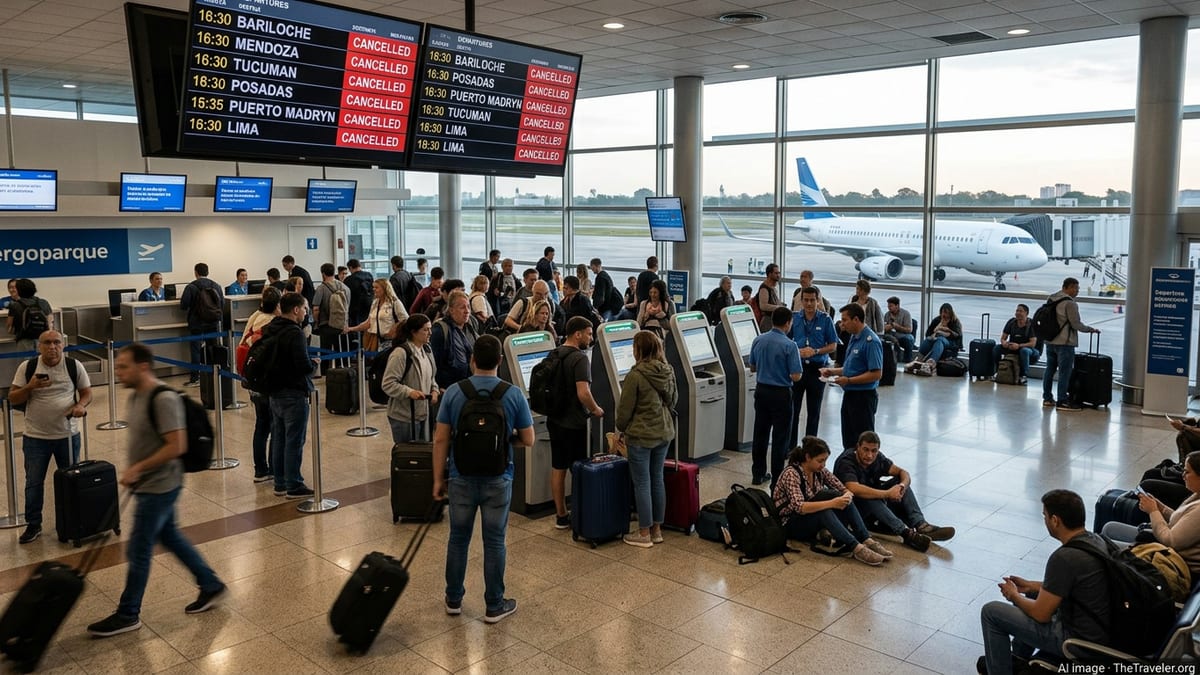
Public travel warnings paint a region of high risk
Publicly available State Department advisories, updated on a rolling basis in 2026, continue to caution US citizens about violent crime, kidnapping and extortion in several Latin American destinations, including Mexico, Honduras, Guatemala and El Salvador. The alerts urge travelers to reconsider or avoid travel to specific states and departments where cartel activity, gang violence and limited local law enforcement capacity are described as serious concerns.
The travel guidance for Honduras, for example, cites violent crime and terrorism and singles out the remote Gracias a Dios department for its high levels of criminal activity. Similar notices for parts of Mexico reference armed robbery, carjacking and roadblocks on intercity highways, warning that emergency services may have limited ability to reach travelers quickly in certain regions.
These advisories form the basis for many US travelers’ decisions and are frequently cited by airlines, tour operators and insurance providers when assessing itineraries, routes and coverage. For vacation hot spots that depend heavily on visitors from the United States, each change in risk level can have immediate repercussions for bookings and perceived safety.
For travel planners, the message appears straightforward: many areas across these four countries are portrayed as facing persistent and sometimes extreme security challenges, and American visitors are told to calibrate their plans accordingly.
Private country assessments for asylum cases strike a different tone
Internal documents described in recent CNN and other media coverage tell a contrasting story. Prepared for US Citizenship and Immigration Services adjudicators and immigration courts, these assessments reportedly argue that conditions in parts of Mexico, Honduras, Guatemala and El Salvador are no more dangerous than in some major US cities such as Baltimore, Houston and Memphis.
Instead of foregrounding human rights abuses, widespread extortion and the influence of organized crime, the internal reviews compare homicide and violent crime rates with selected US urban areas. In some passages, certain regions of Mexico and El Salvador are described as having violent crime rates an order of magnitude lower than those recorded in the most affected American cities.
The stated purpose of these materials, according to published descriptions, is to provide background on country conditions for officials determining asylum claims. Applicants must show a well founded fear of persecution in their home country, and these comparative crime statistics are poised to play a role in whether a person is judged to face a threat beyond what might be encountered in parts of the United States.
By emphasizing that violence can be severe in pockets of the United States as well as abroad, the new assessments appear to set a higher bar for demonstrating that a Latin American country is uniquely dangerous. That shift could narrow the path for people seeking protection even as they flee regions that remain under strict travel warnings for Americans.
High denial rates and the stakes for asylum seekers
The timing of the internal assessments coincides with a sharp tightening in US asylum outcomes. Data compiled by academic researchers and cited in recent coverage indicate that denial rates in mid 2026 hovered in the mid 90 percent range, compared with around 50 percent two years earlier. This change has unfolded alongside a series of policy revisions aimed at accelerating screenings and limiting eligibility.
Country conditions have long been a central factor in these decisions. Adjudicators routinely consider whether a government is able and willing to protect an individual from persecution, and whether that person could safely relocate within their home country instead of remaining in the United States. The new Latin America assessments directly address both questions, describing police forces as generally capable of responding to requests for assistance and populations as able to move freely between regions.
Migrant advocates and policy analysts quoted in recent reports interpret the shift as more than a technical update. They note that State Department human rights reporting in previous years documented collusion between security forces and criminal networks in parts of Central America, as well as impunity for abuses. The softer language in the internal guidance is seen by critics as downplaying these risks at a moment when asylum standards are already becoming more restrictive.
For travelers, the divergence may not be immediately visible, but for would be asylum seekers the consequences are concrete. If a country is framed internally as broadly comparable to the United States in terms of security, it becomes harder to argue that returning there would expose a person to persecution beyond generalized crime.
Travel, perception and policy collide for US visitors
The contrasting narratives arrive as American travel to Latin America continues to rebound from the pandemic era. Airlines have expanded nonstop routes from US hubs to Mexican beach destinations, colonial cities in Guatemala and emerging surf and ecotourism spots in El Salvador and Honduras. Many of these areas remain under some level of security advisory, yet tourist arrivals have grown as travelers seek warmer climates and lower prices.
Tourism boards and private operators often highlight that violence is concentrated away from resort corridors or popular trekking routes, arguing that visitors who follow local guidance and avoid certain neighborhoods can minimize risk. Public travel alerts, by contrast, are designed to address national and regional conditions, not specific hotel zones, leading to a persistent gap between official wording and on the ground marketing.
The internal assessments now add a third layer of perception. While they are not written for tourists, their comparisons to US cities implicitly normalize a degree of urban violence in Latin America by placing it in a familiar American frame. For some readers, that may underscore that danger is not unique to one region; for others, it may appear to contradict the tone of the travel alerts they rely on when choosing where to go.
Travelers trying to reconcile these messages face a complex picture. A country that is portrayed publicly as risky enough to warrant strong cautions can simultaneously be described, in internal immigration guidance, as having manageable security conditions and functioning law enforcement. The result is a layered narrative in which the same streets can be framed as too perilous for short term visitors yet sufficiently safe for residents asked to return.
What this means for future trips to Latin America
For Americans considering travel to Mexico, Honduras, Guatemala or El Salvador in late 2026 and into 2027, the emerging discrepancy between public advisories and private assessments underscores the importance of reading multiple sources before booking. Official travel alerts remain the most authoritative expression of the US government’s view of risk for its own citizens abroad, and they continue to advise caution in specific provinces, border regions and transit corridors.
At the same time, on the immigration side, the new internal documents suggest a trend toward describing violence in statistical terms that parallel high crime pockets of the United States. While these internal assessments are not intended as travel guidance, their existence highlights how differently the same conditions can be framed depending on the policy question at hand.
For the travel industry, the episode is a reminder that security narratives are never purely about tourism. Decisions taken in Washington about asylum standards, deportation practices and regional diplomacy can influence how destination countries are portrayed worldwide. Hotels, airlines and tour companies operating in Latin America will likely continue pressing for more granular distinctions between high risk and relatively stable areas, even as national level advisories stay cautious.
For now, travelers heading south from the United States into Latin America will encounter a familiar pattern: stern warnings on official websites, reassuring messages from tourism providers and, behind the scenes, a separate set of internal assessments shaping the fate of those seeking to stay rather than simply visit.