


More news on this day
Mounting disruption at Sydney Airport during the current school holiday period is drawing unusually sharp criticism from airlines, which argue that chronic congestion, weather disruptions and rigid curfew rules are creating avoidable chaos for passengers.
Get the latest news straight to your inbox!
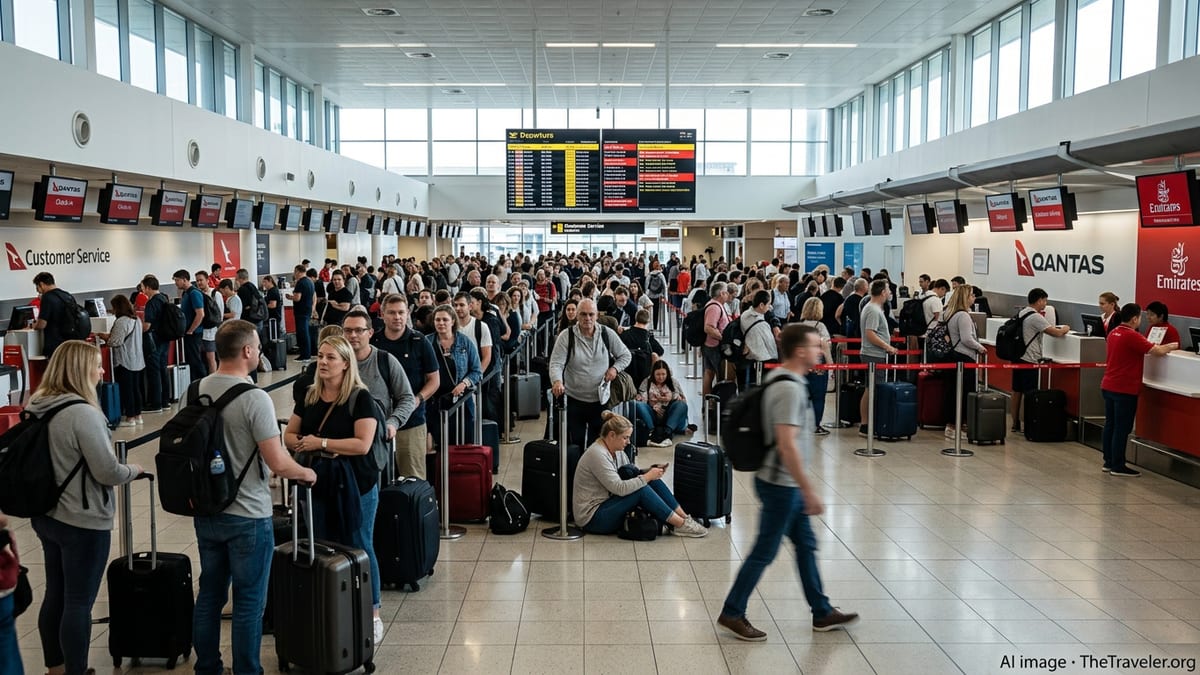
School Holiday Surge Exposes Fragile System
The latest wave of delays and cancellations has hit as domestic and international travel through Sydney climbs back toward pre‑pandemic levels, with school holidays again amplifying the strain on the country’s busiest airport. Publicly available data shows Sydney handled more than 25 million domestic passengers in 2024, underscoring how quickly demand has returned even as staffing and infrastructure remain stretched.
Reports from passengers and local media describe packed check‑in halls, long security queues and repeated last‑minute schedule changes on key east coast routes. Families attempting to start winter breaks have faced hours‑long waits and missed connections, particularly when bad weather or air‑traffic restrictions trim the number of movements allowed on Sydney’s tightly capped runway system.
Travel industry observers note that peaks are becoming more acute. School holiday weekends, major sporting events and long‑haul arrival banks are converging onto an airfield limited by legislated caps and a strict night‑time curfew, leaving little margin when storms or operational glitches strike.
In this context, airline frustration has spilled into the open, with several carriers using public statements to argue that the status quo is untenable for both operators and travelers.
Airlines Say Slot Rules Reward Cancellations
The strongest criticism has focused on Sydney’s slot management regime, which governs how take‑off and landing times are allocated. Airlines and industry groups argue that current rules allow carriers to maintain coveted peak‑time slots even when flights are repeatedly cancelled, as long as they operate a threshold proportion of services over a season.
According to recent coverage of proposed reforms, the federal government has been considering tougher measures that would make it easier to withdraw or reassign underused slots. Some airlines have welcomed this direction, contending that consistently operating carriers are being squeezed while others can over‑schedule at popular times and later pare back their program, pushing the pain onto passengers.
Trade associations representing airports and airlines have framed the issue as one of accountability and network efficiency rather than rivalry between specific carriers. Their position, reflected in industry submissions, is that meaningful enforcement of “use it or lose it” rules is essential if holiday peaks are to be managed without repeated waves of last‑minute cancellations.
One senior executive, speaking in a published commentary on recent disruptions, characterised the pattern of scheduling and cancellations as unfair to travelers and competitors, and argued that it “has to stop” if Sydney is to operate reliably during peak periods.
Weather, Curfew and Capacity Collide
Behind the scenes, several structural constraints continue to interact in ways that magnify school holiday chaos. Sydney’s legislated hourly cap on aircraft movements, combined with the overnight curfew, creates narrow windows for recovering from disruption. When evening thunderstorms roll across the city or low cloud forces additional spacing between aircraft, the backlog can spill well into the next day.
Travel advisories and media footage from recent holiday periods show long lines snaking out of terminals as morning banks of flights struggle to depart on time after overnight disruption. Because flights cannot simply be pushed deeper into the night once the curfew takes effect, airlines are often forced to cancel or significantly delay services, stranding passengers far from home at the very start or end of school breaks.
Operational incidents have added further pressure. Coverage of a 2025 ground‑handling mishap, in which an aerobridge struck the engine of a Qantas A380 at Sydney’s international terminal, highlighted how a single event can cascade through tightly packed schedules and leave hundreds of passengers waiting for rebooking and accommodation.
Airlines contend that these recurring problems show the system is operating too close to its limits. They argue that without changes to capacity rules, investment in resilience and more flexible curfew management during extreme events, the same scenes are likely to play out every school holiday period.
Calls for Coordinated Reform and Better Communication
Public documents from industry bodies and government consultations indicate there is growing recognition that Sydney’s congestion problems cannot be solved by airlines alone. Proposals canvassed in recent policy discussions include clearer performance standards for slot usage, stronger penalties for persistent late changes, and a requirement for more transparent reporting on on‑time performance at peak travel times.
Airlines are also pressing for improvements inside the terminals, arguing that passenger processing remains a weak link during busy holiday weekends. Longer opening hours for security and check‑in, additional staff deployment during peak hours and better real‑time information for passengers are among the suggestions put forward in recent commentary.
Consumer advocates, meanwhile, are using the latest chaos to renew calls for stronger passenger protections. Some have pointed to overseas regimes where airlines must proactively offer meal vouchers, hotel rooms or cash compensation for long delays and cancellations that fall within the carrier’s control, arguing that similar rules in Australia could sharpen incentives to maintain reliable schedules.
Government agencies have so far emphasised ongoing reviews and white papers examining aviation capacity, but travel and tourism groups are warning that without timely, concrete action, Sydney’s reputation as a gateway for international visitors risks being undermined by recurring school holiday bottlenecks.
Western Sydney Airport Raises Expectations
The looming opening of Western Sydney International Airport is adding a new dimension to the debate. The multibillion‑dollar project, which has been progressing ahead of schedule, is being promoted as a modern, unconstrained alternative that will help relieve pressure on Kingsford Smith once commercial flights commence.
Publicly available information on the project highlights features such as advanced air‑traffic technology and a design geared around high peak flows, including during school holidays. Airlines see the new airport as an opportunity to diversify their operations and offer more resilient schedules, particularly for domestic and short‑haul international services.
However, industry analysts caution that the benefits will not be immediate. Slot constraints and curfew rules at the existing Sydney Airport are expected to remain in place for years, and many long‑haul routes are likely to continue using the established hub. For families queuing today, the promise of future relief at a second airport does little to shorten current lines.
Until that additional capacity is fully integrated into airline networks, carriers say they want more decisive reform around slot management, curfew flexibility during exceptional events and better coordination across the aviation system. With each school holiday period bringing renewed scenes of congestion, the pressure to act quickly is intensifying.