


More news on this day
Travelers moving through Salt Lake City International Airport in Utah on Sunday, July 5 faced a wave of schedule disruptions, with publicly available data indicating 27 delayed flights and 3 cancellations affecting major U.S. carriers and a mix of domestic and international routes.
Get the latest news straight to your inbox!
Broad Impact Across Major Airlines and Routes
The disruptions at Salt Lake City International Airport involved some of the largest carriers in the United States. Flight status trackers and airport data showed operational impacts for Delta Air Lines, Southwest Airlines, United Airlines, American Airlines, Alaska Airlines, and several low cost operators serving the region.
Delays ranged from modest schedule slips of around half an hour to more extensive hold ups stretching well beyond an hour. The affected services linked Salt Lake City to a wide network of destinations, including high demand domestic hubs such as Los Angeles, Denver, Seattle, Atlanta, Phoenix, Las Vegas, and Chicago.
International connectivity was also affected. Reports indicate that at least one long haul service between Salt Lake City and Amsterdam experienced knock on effects within the day’s disrupted schedule, highlighting how a concentrated cluster of delays at a key connecting airport can ripple through broader networks.
The combined total of 27 delayed departures and arrivals, along with 3 outright cancellations, represented a noticeable interruption for a facility that generally posts strong on time statistics compared with many other large U.S. airports.
Operational Factors Behind the Day of Disruption
While a single dominant cause had not been clearly identified, the pattern of flight changes suggested a confluence of operational pressures rather than a major safety incident or extended infrastructure shutdown. Recent Federal Aviation Administration construction impact documentation shows continuing airfield and taxiway projects at Salt Lake City through 2026, which can constrain ground movements and reduce flexibility during peak periods or when schedules are already tight.
Such work, particularly on taxiways and runway adjacent areas, can lengthen taxi times and limit routing options when traffic builds up. When several banks of departures and arrivals converge, even small slowdowns can cascade into more significant delays for subsequent flights waiting for gates or departure slots.
In addition, national airspace advisories in recent weeks have periodically flagged volume related congestion and weather sensitive programs in surrounding regions, which can impose flow restrictions or reroute aircraft. These conditions can leave airlines at hub airports like Salt Lake City juggling late inbound aircraft, crew duty time constraints, and the need to reposition planes for later operations.
Airlines often respond by combining services, adjusting departure times, or canceling a small number of flights to protect the rest of the schedule. The three cancellations recorded at Salt Lake City on Sunday appeared consistent with this type of network management, where carriers weigh passenger reaccommodation options against the risk of wider disruption later in the day.
Passengers Face Missed Connections and Lengthy Waits
The uneven nature of the delays meant some travelers experienced only minor schedule changes, while others saw connection plans unravel. Salt Lake City serves as an important connecting point for western U.S. traffic, and even moderate delays on trunk routes to cities such as Phoenix, Las Vegas, and Denver can jeopardize onward itineraries to smaller regional airports.
Publicly accessible accounts from recent weeks have described how cascading delays on individual carriers can turn what appears to be a routine schedule adjustment into an extended ordeal for passengers, particularly when weather or air traffic issues limit the availability of alternative flights. Sunday’s pattern of disruptions risked similar outcomes for some travelers, especially those on full summer weekend services where spare seats are scarce.
Domestic passengers bore the brunt of the inconvenience as the majority of the delayed and canceled flights operated within the United States. However, disruptions on transatlantic or cross country routes can be especially challenging to rebook, since they are less frequent and more tightly scheduled around aircraft rotations.
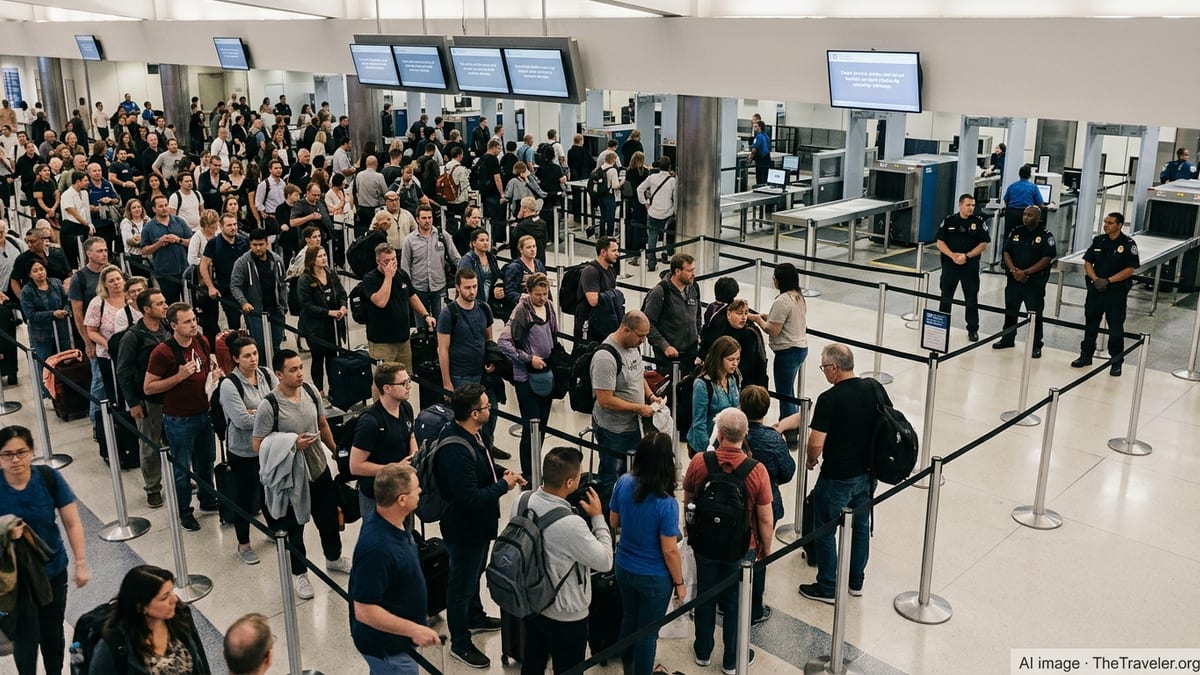
At the terminal level, operational data and previous traveler reports indicate that security screening and gate areas at Salt Lake City can become crowded when several departure banks are pushed back simultaneously. This can add another layer of stress for passengers trying to adjust plans on short notice or monitor rapidly changing departure boards.
Context for an Airport Known for Reliability
The wave of delays stood out in part because Salt Lake City International Airport typically ranks among the more reliable large airports in the country. Recent statistics highlight comparatively low cancellation rates and strong on time performance despite continued construction and modernization projects on the airfield and terminal complex.
Ongoing work on runways, taxiways, and terminal area infrastructure is part of a multi year effort to expand capacity and streamline operations. Federal aviation reports describe extensive upgrades to taxiway systems and runway lighting intended to improve efficiency and resilience in the long term, even if intermittent work periods occasionally reduce flexibility in the short term.
Because of that baseline of reliability, individual days of heavier disruption can feel more acute to travelers who have grown accustomed to relatively smooth operations at the airport. Industry observers often note that on peak travel weekends, even airports with strong track records can experience issues when high demand intersects with construction, weather, and wider network constraints.
For airlines, the challenge lies in balancing the need to keep schedules attractive during busy summer periods with the operational buffers necessary to absorb unexpected delays. The cluster of disruptions on Sunday suggests that margins were thin enough for several flights to be pushed into late departures or cancellations once early irregularities started to surface.
What Travelers Can Expect in the Coming Days
As of Sunday afternoon, publicly available tracking information did not indicate a continuing stoppage or long term capacity reduction at Salt Lake City International Airport. That suggests airlines and airport operations teams were working to restore more typical flow as aircraft and crews cycled back into position.
However, residual delays can linger into subsequent days, particularly for long haul or late evening flights that arrive or depart off schedule and then form the basis for morning rotations. Passengers traveling through Salt Lake City in the short term may still encounter adjusted departure times or tighter connection windows as airlines work their schedules back into alignment.
Travel planning services and flight trackers consistently recommend monitoring flight status closely on days following notable disruption events, checking in early, and allowing extra time for connections where possible. With a busy summer travel season underway, even an isolated day of irregular operations at a key hub can have knock on effects across multiple routes and carriers.
For Salt Lake City, the episode underscores how a combination of infrastructure work, network pressures, and seasonal demand can converge to strain even well regarded airports. While current indications point toward a return to more routine operations, Sunday’s disruptions offered a reminder that passengers remain vulnerable to sudden schedule shifts, particularly when flying through major connection points at peak times.