


More news on this day
American Airlines is preparing a major shift in its onboard experience, moving to reinstall seatback entertainment screens across much of its narrowbody fleet after years of relying primarily on passengers’ personal devices for in-flight entertainment.
Get the latest news straight to your inbox!
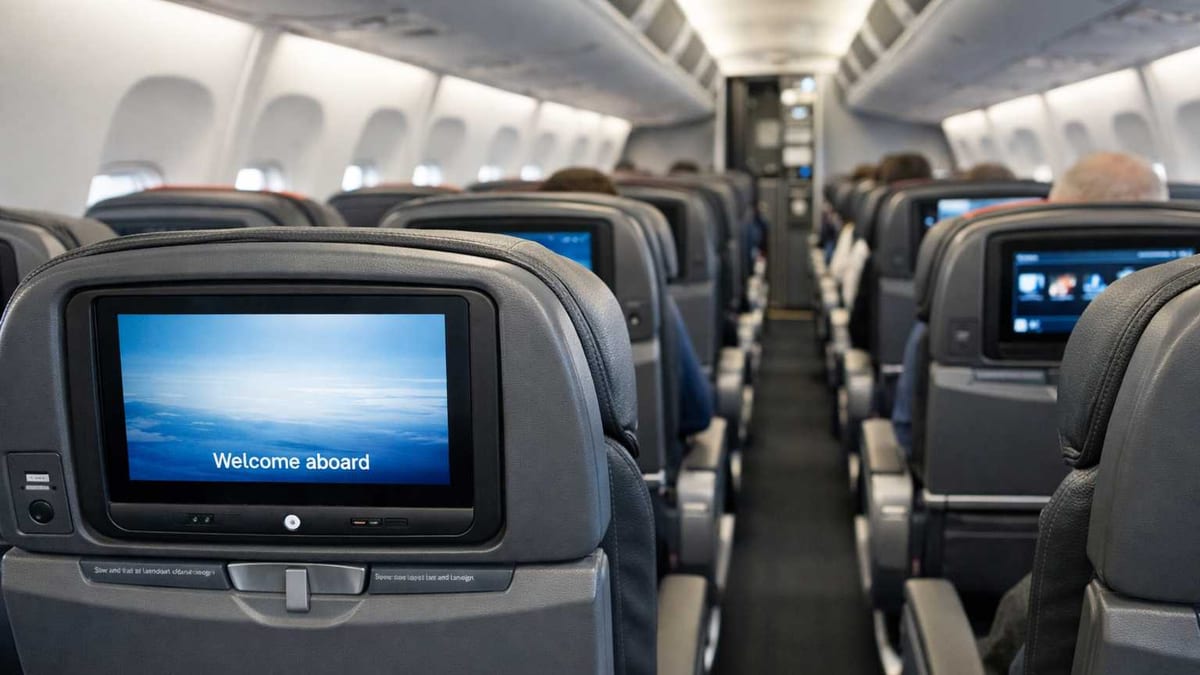
A Reversal After Nearly a Decade of Screen Removals
The latest move represents a notable turnaround for the Fort Worth based carrier, which spent much of the past decade removing built in monitors from domestic single aisle aircraft in favor of a bring your own device model. Industry coverage indicates that by the mid 2020s, American had stripped the last seatback units from its legacy Airbus A319s and other narrowbodies while maintaining embedded systems mainly on widebody jets used for long haul flying.
The earlier strategy focused on cutting weight and maintenance costs associated with fixed entertainment hardware, as well as simplifying cabin configurations. At the time, executives publicly emphasized the ubiquity of smartphones and tablets and invested heavily in streaming platforms that allowed customers to watch movies and television shows over onboard Wi Fi.
As competitors including Delta Air Lines and United Airlines continued to market the presence of individual screens as a key differentiator, American increasingly stood out as the only large U.S. network carrier without consistent seatback entertainment in its domestic mainline cabins. Passenger forums and customer satisfaction surveys over recent years have frequently highlighted the absence of built in screens as a perceived service gap, even as American upgraded its digital catalog and connectivity.
New Customer Experience Strategy Drives the Change
The decision to reintroduce embedded entertainment is widely viewed as part of a broader reset of American’s customer experience strategy. Recent industry briefings describe a coordinated push that includes expanded free connectivity for loyalty program members, new partnerships for faster satellite Wi Fi, and refreshed cabins across both widebody and narrowbody fleets.
Analysts note that the airline’s latest interior plans go beyond cosmetic updates, pairing redesigned seats and updated lighting with a more robust in flight entertainment and connectivity package. In that context, returning to seatback screens on single aisle aircraft is seen as a logical extension of investments already made on long haul jets, where personal monitors have remained a standard feature.
Publicly available fleet information suggests that the retrofit program will be staged over several years, prioritizing newer aircraft types and high demand routes where American faces the stiffest competition from rivals that already advertise screens at every seat. While specific hardware suppliers have not been disclosed, industry commentary points to a new generation of lighter, more energy efficient displays designed to minimize the weight penalties that motivated the earlier removals.
Balancing Seatback Screens With Streaming and Wi Fi
American’s latest entertainment strategy does not abandon the bring your own device approach that has defined its domestic cabins for much of the last decade. The airline continues to promote a large streaming library available on phones, tablets and laptops, supported by increasingly widespread high speed satellite Wi Fi, including complimentary access for many loyalty members on select routes.
In practice, the return of seatback monitors is expected to complement, rather than replace, personal device streaming. Travelers who prefer to watch content on their own phones or tablets will still be able to do so, while those who value a larger, dedicated screen or who may not have charged devices will have an embedded option. Industry observers suggest that this hybrid model reflects the evolving norm across full service carriers, where airlines seek to meet a wide range of passenger preferences.
Reports on American’s entertainment updates also point to plans for enhanced content partnerships, including potential tie ins with major streaming platforms, educational programming and kid friendly offerings that work well on both built in screens and personal devices. That mix could be particularly important on family heavy routes and during peak holiday travel periods, when in seat screens are often cited as a stress reliever for parents and caregivers.
Competitive and Financial Implications
Reinstalling thousands of screens across a large single aisle fleet represents a substantial capital project, and analysts highlight that the program will likely span several years of aircraft visits to retrofit lines. Industry estimates suggest that outfitting each narrowbody with modern in flight entertainment hardware and associated power and connectivity upgrades can run into the hundreds of thousands of dollars per aircraft, depending on configuration and technology choices.
Despite the cost, aviation strategists argue that the move could help American narrow a perceived product gap relative to key competitors that have spent recent years touting expansive entertainment options as a core part of their brand. With many travelers now using seatback screens as a shorthand measure of full service quality, the airline’s decision is seen as an investment in customer satisfaction scores, corporate travel appeal and loyalty program engagement.
Some industry commentary also notes potential revenue opportunities tied to the new hardware. Modern seatback systems can support targeted advertising, destination information, retail offers and loyalty integrations, creating ancillary streams that may offset part of the up front spend. Combined with a more consistent premium experience across aircraft types, this could bolster American’s position in joint ventures and global alliance partnerships where product alignment is increasingly scrutinized.
What Flyers Can Expect in the Cabin
For travelers, the most visible change over the coming years will be the gradual appearance of slimline, high definition monitors across rows of seats on aircraft that previously had only tablet holders and power outlets. These screens are expected to be paired with enhanced storage, updated seat designs and expanded access to in seat power, reflecting a broader refresh of the cabin rather than a single feature swap.
Because the rollout will take time, customers are likely to encounter significant variation across the fleet. Booking tools and aircraft information pages are expected to play a growing role in helping travelers determine whether a given flight offers built in screens, streaming only entertainment, or a mix of both. Travel planners and frequent flyers will be watching closely to see how quickly American can bring its narrowbody cabins in line with the product already found on many of its long haul jets.
As the retrofits progress, the airline’s evolving entertainment strategy will remain a focal point in the wider debate over what matters most to modern passengers. For now, the planned return of seatback screens signals that, despite the rise of personal devices and streaming platforms, a dedicated screen at every seat still carries considerable weight in the competition for traveler loyalty.