


More news on this day
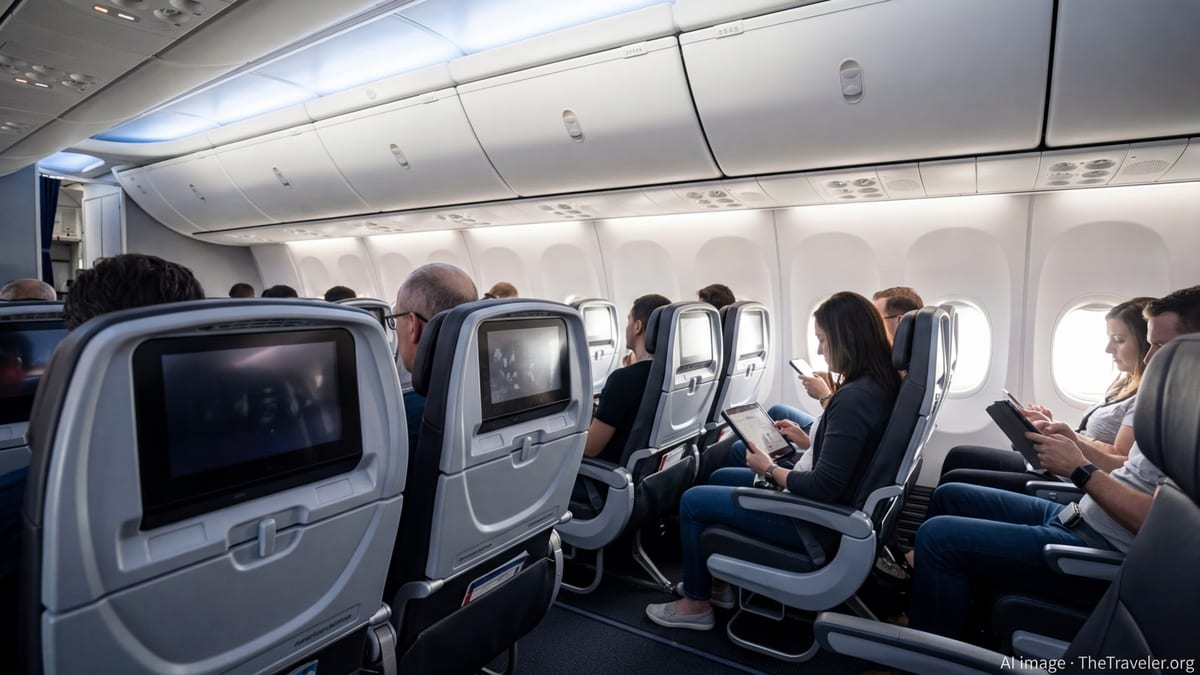
American Airlines is reversing course on a major inflight entertainment decision, announcing plans to bring seatback screens back to its domestic narrowbody aircraft after years of prioritizing personal devices and streaming over Wi-Fi.
Get the latest news straight to your inbox!
A Strategic Shift After a Decade Without Screens
The move marks a significant change in strategy for the Texas based carrier, which spent much of the past decade removing seatback monitors from many mainline aircraft in favor of streaming content to passengers’ own phones, tablets and laptops. Industry coverage over the years has documented how the airline emphasized lighter cabins, lower fuel burn and the growing prevalence of personal devices as justification for taking out traditional embedded systems.
Reports indicate that American’s new plan focuses on its workhorse narrowbody fleet, the backbone of its domestic and short haul international network. These aircraft, including Boeing 737 and Airbus A321 models, handle the bulk of the airline’s daily departures and have been central to customer complaints about the lack of built in entertainment when compared with key rivals.
The decision comes at a time when American has already invested heavily in high speed connectivity, including a shift toward complimentary inflight Wi Fi on many routes. Publicly available information shows that leadership has framed connectivity as a core part of the onboard experience, positioning the return of seatback screens as a complement rather than a replacement for streaming to personal devices.
By restoring screens to the cabin, American is signaling that passengers still place a high value on a dedicated, easy to use entertainment option that does not depend on battery life, device storage or familiarity with airline apps and portals.
What the New Seatback Experience Will Look Like
According to published coverage and company materials, the new generation of seatback systems will depart sharply from the bulky, low resolution monitors that many travelers associate with older aircraft. Reports describe larger 4K capable displays with improved touch response, designed to be more intuitive and responsive during gate to gate use.
The screens are expected to integrate seamlessly with American’s existing wireless entertainment platform, giving customers the choice to watch the same library of films, television series and live programming either on the built in display or on their own device. This hybrid model reflects broader industry trends in which airlines seek to support multiple viewing preferences without duplicating content pipelines.
In addition to higher resolution, the refresh is expected to emphasize connectivity. Publicly available information points to widespread installation of AC and USB power at every seat so that laptops, tablets and phones can remain charged throughout the flight. Bluetooth audio pairing, which has been introduced on some of American’s newer widebody and premium cabins, is also expected to expand so that customers can use their own wireless headphones with the seatback system.
American is also expected to use the screens as a platform for flight information and onboard services, from real time maps and connection details to food and beverage menus. This mirrors developments at other large carriers, which increasingly treat seatback displays as a digital customer service channel as well as an entertainment hub.
Implementation Timeline and Fleet Coverage
Based on current reporting, the rollout will occur in stages and is not expected to transform the fleet overnight. New deliveries of Airbus and Boeing narrowbody aircraft are slated to arrive from the factory with the latest seatback systems already installed, while existing jets will be retrofitted during scheduled maintenance over several years.
Analysts following the airline note that a program of this scale typically unfolds over a three to five year window, depending on parts availability, installation capacity and aircraft utilization patterns. That means travelers will likely encounter a mixed experience in the near term, with some aircraft outfitted with the new screens and others still relying entirely on streaming to personal devices.
Industry observers highlight that American is prioritizing aircraft that spend more time on longer domestic segments and popular transcontinental routes, where passengers are most sensitive to comfort and amenities. Shorter hop aircraft may see the upgrade later in the program as the airline balances costs, downtime and customer impact.
Regional jets operated by partner carriers under the American Eagle brand are not expected to receive widespread seatback installations in the first phase. However, recent updates to regional cabins, including refreshed interiors and power outlets, indicate a broader effort to align the experience more closely with mainline standards.
Competitive Pressure From Delta, United and Others
The decision to restore seatback entertainment also reflects competitive dynamics in the North American market. Over the past several years, Delta Air Lines and United Airlines have heavily promoted their investment in personal screens, particularly on single aisle jets that compete head to head with American on domestic routes.
Travel industry coverage has repeatedly contrasted American’s focus on streaming over Wi Fi with Delta’s strategy of installing monitors at nearly every seat and United’s high profile retrofit campaigns that add larger displays, upgraded seats and more power outlets. Those efforts have been marketed as part of a broader push toward a more premium onboard experience, even in standard economy cabins.
Customer feedback on social platforms and in travel forums has frequently singled out the absence of seatback screens as a drawback when choosing between major U.S. airlines. While many travelers are comfortable watching content on their phones, others prefer a dedicated screen for ease of use, especially on full flights or when traveling with families.
By shifting course, American is aligning itself more closely with the product strategies of its largest competitors. Industry analysts suggest the move could reduce a perceived gap in cabin quality and make it easier for the airline to compete for high value customers who weigh onboard comfort alongside schedule and price.
Balancing Cost, Weight and Customer Expectations
For years, carriers that removed seatback systems pointed to the cost and weight of embedded hardware as important factors. Older generation monitors and control boxes added significant mass to each aircraft, requiring more fuel and periodic maintenance at a time when airlines closely scrutinized every extra pound on board.
Newer systems are lighter and more power efficient, which has helped shift the cost benefit calculation. Reports indicate that American’s current strategy is to pair these updated screens with a fully connected cabin, where high speed Wi Fi and streaming remain central but are no longer the sole mode of entertainment.
Industry commentary notes that American is attempting to strike a balance between operational efficiency and rising customer expectations. The airline has invested in cabin densification and other cost focused changes in recent years, and the reintroduction of seatback entertainment may be part of a broader effort to signal renewed attention to comfort and the overall travel experience.
How quickly travelers feel the impact will depend on the pace of deliveries and retrofits, but the shift in policy is already reshaping expectations. For many passengers who had grown accustomed to relying entirely on their own screens when flying American, the prospect of a modern, fully featured seatback system represents a notable change in what it means to fly on one of the country’s largest airlines.