


More news on this day
Major Gulf carriers Emirates and Qatar Airways, along with a growing roster of global airlines, are reinforcing safety measures and contingency plans as the latest surge in Middle East conflict spills into the skies and threatens to prolong severe disruption across key long haul corridors.
Get the latest news straight to your inbox!
Escalating Conflict Throws Regional Airspace into Turmoil
The renewed flare up between Iran, Israel and allied forces since late February 2026 has triggered some of the most extensive airspace closures in the region in years, forcing airlines to rethink how and where they fly. Publicly available information shows that Iran, Iraq, Kuwait, Syria and Israel have all imposed sweeping restrictions at various points, with Gulf states intermittently limiting overflights as missile and drone exchanges raise risk levels along traditional East West routes.
Industry trackers and recent analytical reports indicate that tens of thousands of flights have been affected since the first strikes, with major hubs such as Dubai, Doha, Abu Dhabi and Riyadh all experiencing periods of near shutdown as carriers diverted or cancelled operations. Aviation analysts note that this has severed some of the most heavily used connecting corridors between Europe, Asia and Africa, pushing traffic onto longer and more congested paths through the Caucasus, Central Asia and North Africa.
Even during short ceasefire windows, published coverage suggests that regulators and airlines have been slow to relax restrictions, citing persistent uncertainty, sporadic missile launches and evolving military deployments around the Strait of Hormuz and the Eastern Mediterranean. The result is a backdrop of rolling disruption and volatile schedules that continues to ripple far beyond the region itself.
Emirates Builds “Safe Corridors” and Capacity Buffers
Dubai based Emirates has emerged as a bellwether for how large hub carriers are responding. Recent aviation commentary focused on the airline reports that Emirates has maintained the vast majority of its global network by carving out carefully vetted “safe corridors” that skirt active conflict zones while still allowing long haul connections over and around the Gulf.
Public information on these routings points to increased use of southern tracks over Saudi Arabia and the Arabian Sea, as well as greater reliance on waypoints via Egypt and the eastern Mediterranean when conditions allow. These detours add time and fuel burn, yet they are being treated as a necessary safety margin while airspace advisories from European and global regulators continue to flag elevated risk at all altitudes across much of the northern Gulf region.
To create additional resilience, Emirates has been selectively trimming frequencies on some routes and banking more turn time into rotations that cross the region, effectively building a buffer to absorb delays from last minute reroutes or flow restrictions imposed by air navigation authorities. Industry observers say this approach allows the airline to keep a high percentage of destinations on line, even if schedules remain more fragile than before the conflict.
Qatar Airways Rebuilds Network Under Tight Safeguards
Qatar Airways, whose Doha hub sits closer to several of the most contested flight information regions, initially faced deeper disruption when Qatar’s airspace was closed as a precaution. Published guidance from the airline and regulators described the move as a temporary step to secure the highest possible safety levels amid intense missile and drone activity, followed by a gradual reopening with strict routing limits and slot controls.
Travel alerts and customer advisories now indicate that Qatar Airways is in the process of rebuilding a broad global network from Doha, with a summer schedule that again aims to serve more than 160 destinations. The return, however, is taking place under tightened operational constraints, including continued avoidance of specific corridors over Iran and Iraq when threat levels spike, and the use of extended routings over Saudi Arabia, the Red Sea and North Africa.
Analyst briefings suggest that the airline has at times concentrated operations on a smaller number of high demand trunk routes, parking or redeploying some widebody aircraft to manage capacity swings and preserve crew and maintenance flexibility. For passengers, that has translated into shorter booking windows, frequent timetable changes and a heavier emphasis on real time status checks before heading to the airport.
Global Carriers Widen Safety Shields and Detour Routes
The impact of the Middle East crisis has spread quickly across the wider aviation system, prompting major North American, European and Asian airlines to widen what industry specialists describe as their “safety shields” around the region. These measures encompass not just the avoidance of specific national airspaces, but also conservative stand offs from coastal areas where missile and drone activity has been reported, and altitude restrictions designed to keep civil traffic well away from potential engagement zones.
Recent network updates show that a number of long haul carriers have suspended nonstop services to certain Gulf and Levant destinations, instead funnelling passengers through alternative hubs in southern Europe, Central Asia or Southeast Asia. Others have retained destination access but reprogrammed flights onto extended southern arcs via Egypt, Saudi Arabia and the Arabian Sea, adding two to four hours to some journeys between Europe and South or East Asia.
Industry economic assessments highlight that these longer routes come with higher fuel costs and tighter aircraft utilization, but airlines are treating them as non negotiable safeguards while military operations continue around the Strait of Hormuz, the Red Sea approaches and the Eastern Mediterranean. Insurance requirements, updated risk assessments from global regulators and internal safety reviews are all contributing to a more cautious stance that prioritizes distance from conflict flashpoints over pure schedule efficiency.
Passengers Confront Prolonged Chaos and New Risk Calculus
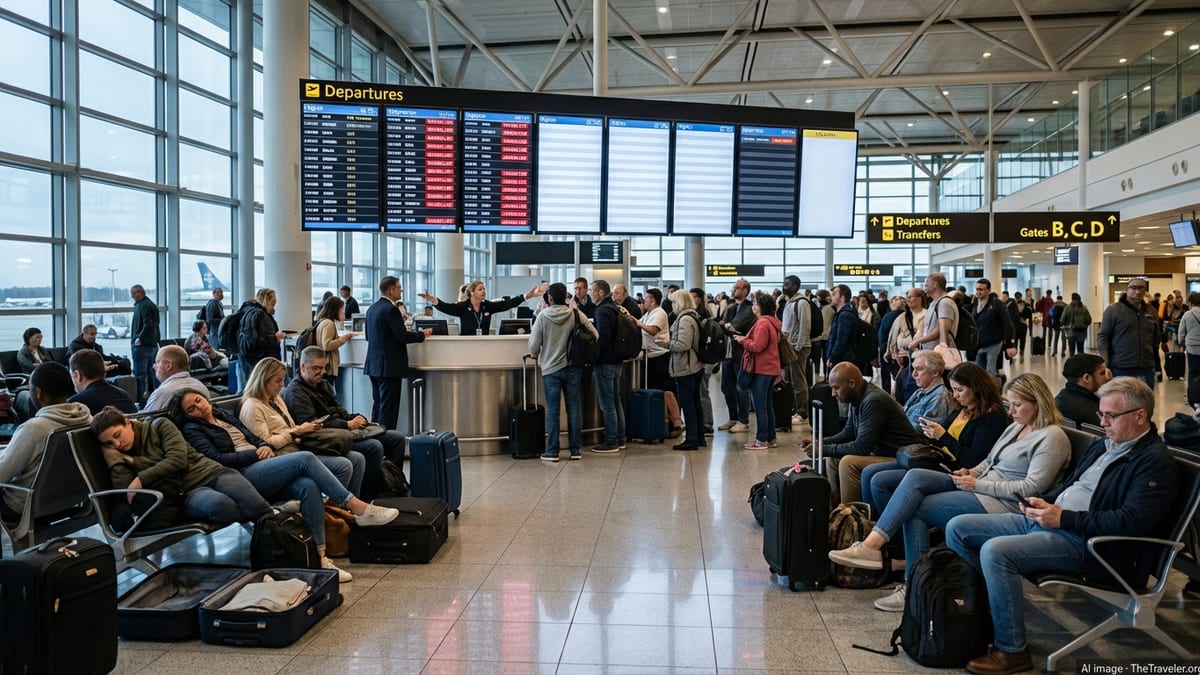
For travelers, the layered safety measures have translated into a level of uncertainty that many industry veterans compare to the early phases of the pandemic. Public travel advisories, consumer advocacy groups and airline communications all stress the importance of flexible tickets, dynamic itineraries and close monitoring of flight status, as routes that appear viable one week can be curtailed or rerouted the next in response to new strikes or intelligence assessments.
Data compiled by aviation analysts indicates that millions of passengers have experienced cancellations, missed connections or forced overnight stays since the latest round of conflict began. Some have resorted to stitching together complex alternatives through secondary hubs in places like Muscat, Jeddah, Athens or Singapore when traditional Gulf super connector routings became unavailable at short notice.
Safety experts note that, despite the disruption, the layered shields deployed by Emirates, Qatar Airways and other carriers are designed to keep commercial aircraft well clear of active hostilities, with multiple fallback routes and rapid reconfiguration plans in place. The trade off is a prolonged period of elevated travel times, unstable schedules and higher fares on certain long haul markets, especially where alternative routings are limited and demand remains strong.
With fresh missile exchanges reported in early June and no durable political settlement in sight, aviation forecasters now expect some of these expanded safety buffers and detour routes to remain in force into the peak northern summer season. For airlines and passengers alike, the focus is shifting from short term crisis management to living with a more constrained and security conscious map of the skies over the Middle East.